
Former Federal Reserve Adviser Sentenced for Lying to Investigators About Chinese Espionage
Here's what it means for you.
The sentencing of John Harold Rogers serves as a stark reminder of the vulnerabilities within U.S. institutions regarding foreign espionage. As concerns about national security and economic integrity grow, this case may lead to increased scrutiny and regulatory measures for officials with foreign ties. The implications extend beyond Rogers, potentially affecting how government agencies manage sensitive information and interactions with foreign entities.
What happened
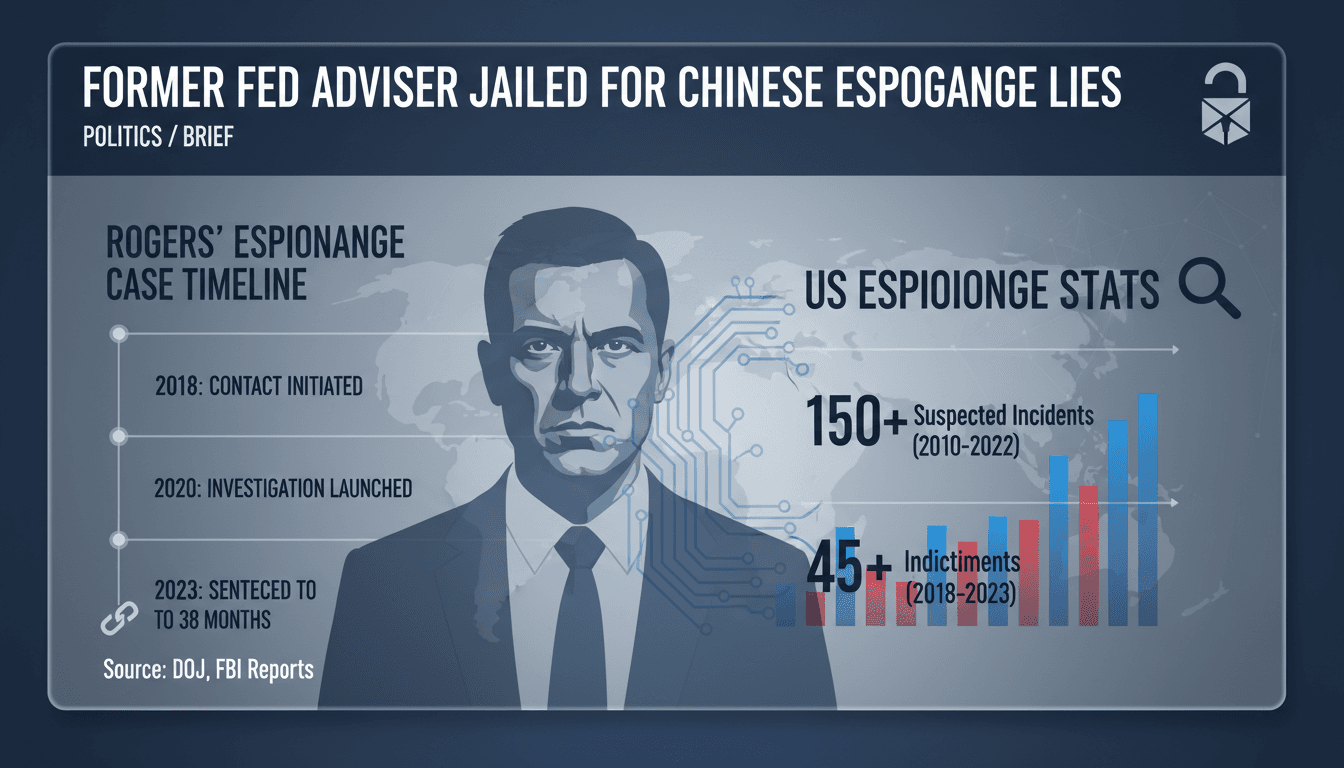
John Harold Rogers, a former senior adviser at the Federal Reserve, has been sentenced to 38 months in prison for providing false statements about his interactions with Chinese intelligence operatives. His conviction highlights serious breaches of trust and raises alarms about national security. Rogers was arrested last year on charges that included conspiracy to commit economic espionage, underscoring the gravity of his actions.
The sentencing took place on July 16, 2026, and reflects the U.S. government's commitment to addressing and penalizing espionage activities. This case is part of a broader narrative concerning foreign interference in U.S. institutions, emphasizing the need for vigilance in safeguarding sensitive information.
The Context
Rogers' case is emblematic of ongoing concerns regarding foreign espionage and its potential impact on U.S. economic and national security. As a senior adviser at the Federal Reserve Board of Governors, his role involved access to critical information, making his actions particularly alarming. The Justice Department's confirmation of charges against him illustrates the seriousness with which the government is treating such offenses.
The timing of this case is significant, as it coincides with heightened awareness of foreign threats and the need for robust protective measures. The outcome may prompt other officials to reconsider their interactions with foreign entities, as the repercussions of similar actions could be severe.
Takeaway
The sentencing of John Harold Rogers underscores the importance of safeguarding sensitive information against foreign espionage. As the U.S. continues to confront threats from foreign actors, this case may lead to stricter regulations and oversight within government agencies. Future measures by the Federal Reserve and other institutions will likely focus on enhancing security protocols to prevent similar incidents.
The implications of this case extend beyond Rogers, potentially influencing how officials with foreign ties are monitored and held accountable. Stakeholders should remain vigilant as the landscape of national security evolves in response to these challenges.
Global business headlines with AI angles.
"General business outlet that frequently covers AI."
— A47 Editor
Former Fed Adviser Covertly Shared Confidential Information With China. Now He Faces Time In Prison
A former Federal Reserve advisor has been sentenced to over three years in prison for lying to investigators about his connections to Chinese intelligence operatives, highlighting serious breaches of trust and confidentiality in sensitive governmenta...
Conservative-leaning political and national coverage.
"The Washington Times is a conservative-leaning newspaper known for its political coverage and advocacy of right-of-center viewpoints."
— A47 Editor
Former Federal Reserve official gets 38 months in prison in espionage case
John Harold Rogers, a former senior adviser at the Federal Reserve, has been sentenced to 38 months in federal prison for lying to investigators about sharing sensitive Fed information with Chinese intelligence operatives. This sentence was announced...
Capitol Hill news, legislation, and policy insight.
"The Hill specializes in U.S. politics and policy, with a focus on Capitol Hill developments and a reputation for insider reporting."
— A47 Editor
Former Federal Reserve adviser sentenced for false statements about China ties
John Harold Rogers, a former senior adviser to the Federal Reserve, has been sentenced to 38 months in federal prison for making false statements regarding his connections with Chinese spies and sharing sensitive central bank information. The Justice...