
Hezbollah Rejects Ceasefire Proposal Leading to Increased Tensions in Israeli Cabinet
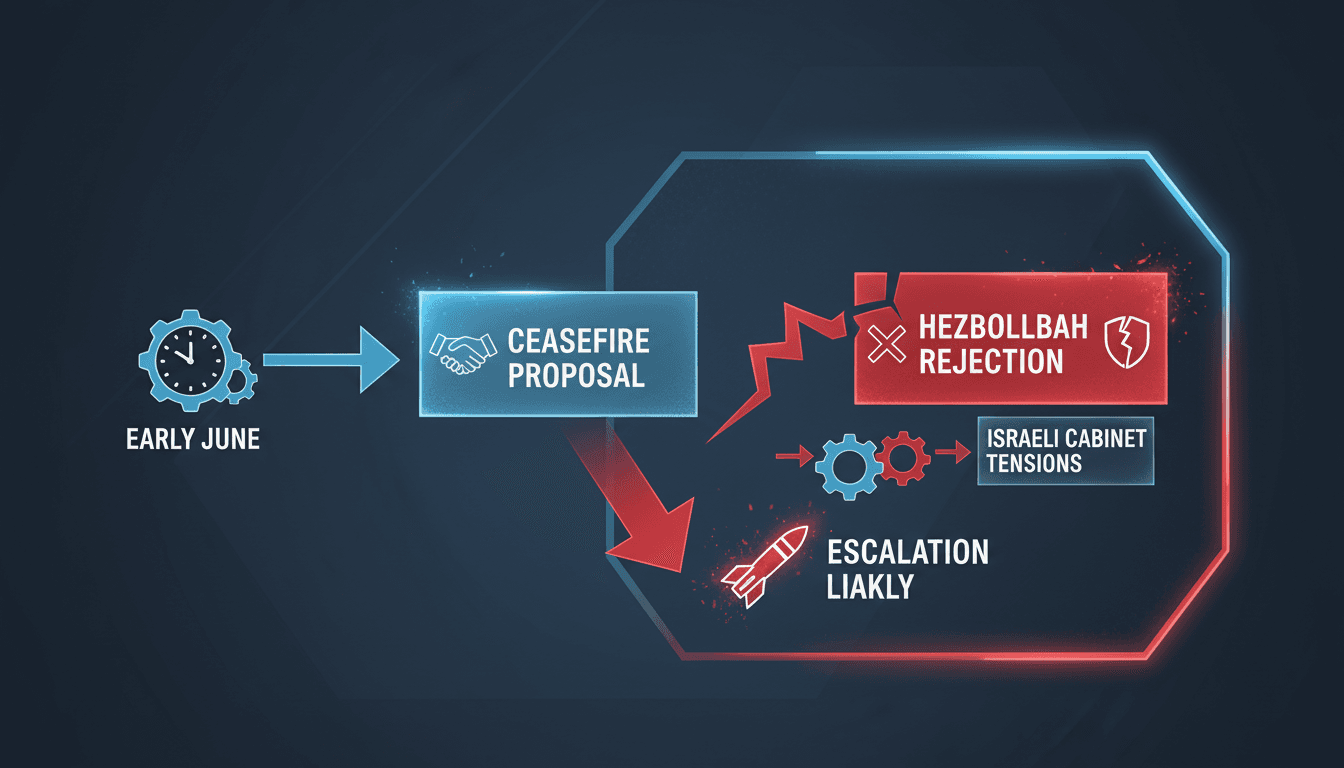
Here's what it means for you.
The rejection of the ceasefire proposal by Hezbollah has significant implications for regional stability and military operations in Lebanon. Israeli Prime Minister Benjamin Netanyahu's cabinet is now facing internal divisions as they navigate the complexities of ongoing military actions. The absence of a ceasefire agreement raises concerns about escalating violence and the potential for broader conflict. As diplomatic efforts falter, the likelihood of a peaceful resolution diminishes, impacting both local and international stakeholders. The situation remains precarious, with military operations expected to continue unless a new diplomatic breakthrough occurs.
What happened
Israeli Prime Minister Benjamin Netanyahu announced that there is currently no ceasefire agreement with Hezbollah, as the group has rejected the proposed terms. Without Hezbollah's acceptance, Netanyahu stated, there can be no ceasefire agreement with Lebanon. This rejection has led to increased tensions within the Israeli cabinet regarding military operations in the region.
The Israeli defense minister confirmed that Israel will not withdraw its forces from southern Lebanon, further complicating the situation. Hezbollah's leader criticized the proposed ceasefire agreement, labeling it an insult to Lebanon. The Lebanese government views the proposed agreement as a last chance to avoid further destruction.
The Context
The backdrop to this situation includes four rounds of direct talks that took place in Washington between Israeli and Lebanese delegations before the proposed agreement was made. Hezbollah's demands for a complete ceasefire across Lebanon, rather than in specific areas, highlight the group's firm stance against the terms offered. The Israeli cabinet has not voted on the ceasefire agreement due to Hezbollah's opposition, indicating a lack of consensus on how to proceed.
The ongoing rejection of the ceasefire by Hezbollah complicates the prospects for peace in the region. As military operations continue, the Lebanese government perceives the proposed agreement as a critical opportunity to prevent further conflict. The stakes are high, with both sides entrenched in their positions.
Takeaway
The likelihood of a peaceful resolution appears slim as both Israel and Hezbollah remain steadfast in their positions. Potential escalation of military operations by Israel in southern Lebanon is a key concern moving forward. Additionally, further diplomatic efforts by the U.S. to mediate between Israel and Lebanon may be necessary to avert a larger conflict.
As tensions rise, the situation will require close monitoring to assess any shifts in strategy or negotiations. The rejection of the ceasefire proposal underscores the fragility of peace in the region and the challenges that lie ahead.
Pan-Arab news coverage spanning politics, business, sports, and regional affairs.
"Asharq Al-Awsat reflects a broad Arab editorial perspective with strong attention to regional geopolitics."
— A47 Editor
نتنياهو يكبح غضب الوزراء في جلسة عاصفة: لا يوجد لدينا اتفاق... ننتظر «حزب الله»
Israeli Prime Minister Benjamin Netanyahu has restrained his angry ministers regarding a ceasefire agreement with Lebanon, stating that no agreement exists as long as Hezbollah has not accepted it. He also opposes extensive ground maneuvers to avoid ...
Arabic-language coverage of political affairs and current events.
"Okaz political coverage typically follows mainstream Saudi framing on national and regional affairs."
— A47 Editor
نتنياهو: لا اتفاق حالياً.. هدنة لبنان تواجه الانهيار
Israeli Prime Minister Benjamin Netanyahu announced that there is currently no agreement on a ceasefire in Lebanon, following Hezbollah's rejection of a proposed deal mediated by the United States. Sources indicate that the Israeli security cabinet d...
Jordanian news and regional updates.
"Roya News is a Jordanian outlet focused on breaking news and local affairs."
— A47 Editor
إعلام عبري: نتنياهو يُبلغ وزراءه بأنه لا اتفاق مع حزب الله بعد رفض نعيم قاسم التهدئة
Israeli media reports indicate that Prime Minister Netanyahu has informed his ministers that there is no agreement with Hezbollah following the rejection of a ceasefire proposal by Hezbollah's deputy leader, Naeem Qassem. This development highlights ...