
UN Secretary-General calls for immediate ceasefire amid escalating Middle East violence
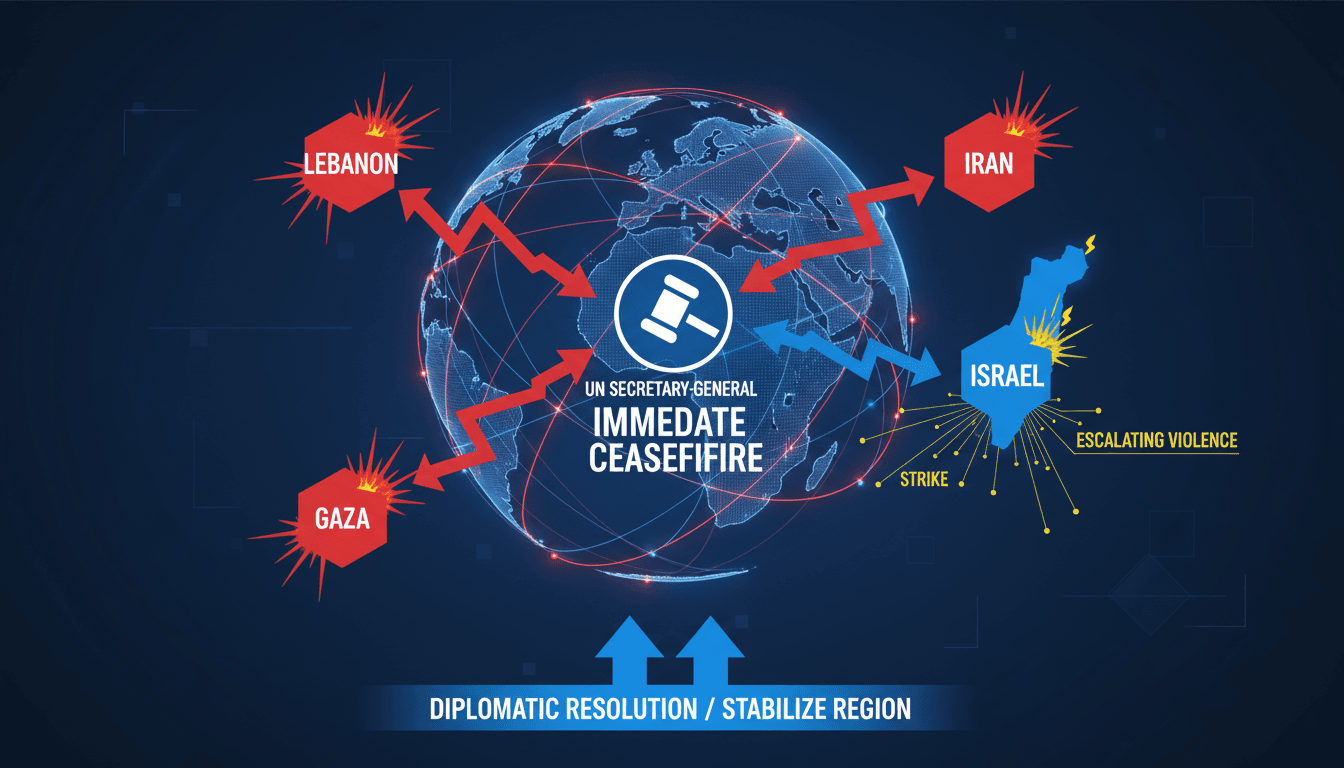
Here's what it means for you.
The call for an immediate ceasefire by UN Secretary-General Antonio Guterres underscores the urgent need for diplomatic engagement in the Middle East. As tensions rise between Israel and Iran, the international community faces pressure to intervene and promote stability. This situation could have significant implications for regional security and international relations, particularly concerning Lebanon and Gaza. The interconnected nature of these conflicts highlights the importance of a coordinated response from global powers. Stakeholders must prioritize dialogue to prevent further escalation and protect civilian lives.
What happened
UN Secretary-General Antonio Guterres has expressed deep concern over the renewed escalation of violence in the Middle East, particularly in Lebanon, Iran, and Gaza. He has called for an immediate cessation of attacks and for all parties to respect ceasefire agreements. This plea comes in light of Israel's recent strikes in Iran, which followed missile attacks from the country, marking a significant increase in hostilities.
Guterres emphasized the need for a diplomatic resolution that respects Lebanon's sovereignty. The situation in Gaza remains critical, with ongoing calls for reopening crossings to facilitate humanitarian aid. His statements reflect a growing urgency for peace in a region fraught with conflict.
The Context
The escalation of violence in the Middle East has drawn international attention, particularly regarding the sovereignty and territorial integrity of Lebanon. Guterres's remarks come after Israel resumed strikes in Iran, a move that has heightened tensions and raised concerns about a broader conflict. The interconnected nature of the conflicts in Lebanon, Iran, and Gaza complicates the situation, as each area is affected by the actions of the others.
The timing of Guterres's call for ceasefires is crucial, as it coincides with a significant uptick in violence. The international community is now faced with the challenge of addressing these tensions while ensuring that diplomatic channels remain open. The potential for further conflict looms large, making the need for a unified response more pressing than ever.
Takeaway
The international community must act swiftly to de-escalate tensions and promote peace in the region. Guterres's call for an immediate end to hostilities highlights the urgency of the situation and the need for all parties to engage in dialogue. Monitoring the responses from Israel and Iran following these statements will be critical in assessing the effectiveness of diplomatic efforts.
Future developments may include potential diplomatic initiatives aimed at addressing the violence in the Middle East. The willingness of involved parties to adhere to ceasefire agreements will play a significant role in shaping the region's stability moving forward.
Pan-Arab news coverage spanning politics, business, sports, and regional affairs.
"Asharq Al-Awsat reflects a broad Arab editorial perspective with strong attention to regional geopolitics."
— A47 Editor
غوتيريش: لبنان في حاجة لوقف النار واحترام سيادته
On Thursday, United Nations Secretary-General António Guterres stated that all parties must work towards a diplomatic resolution that fully respects Lebanon's territorial integrity and sovereignty. This call comes amid ongoing tensions in the region,...
Arabic-language coverage of international news and geopolitics.
"RT Arabic is a Russian state-funded outlet often criticized for promoting Kremlin-aligned narratives."
— A47 Editor
غوتيريش يعرب عن "قلقه العميق" لتجدد التصعيد في الشرق الأوسط
UN Secretary-General António Guterres expressed deep concern over the renewed escalation in the Middle East, urging full compliance with ceasefire agreements in Lebanon, Iran, and Gaza. This statement highlights the ongoing tensions and instability i...
Regional coverage and analysis focused on politics, diplomacy, and business across the Middle East.
"Al-Monitor is known for analytical reporting on Middle East politics and policy developments."
— A47 Editor
UN's Guterres calls for end to violence in Middle East
U.N. Secretary-General Antonio Guterres expressed deep alarm over the renewed escalation of violence in the Middle East, particularly urging Israel to reopen crossings into Gaza and calling for an immediate halt to all attacks. This comes after Israe...