
Oil prices decline following Israel-Lebanon ceasefire agreement
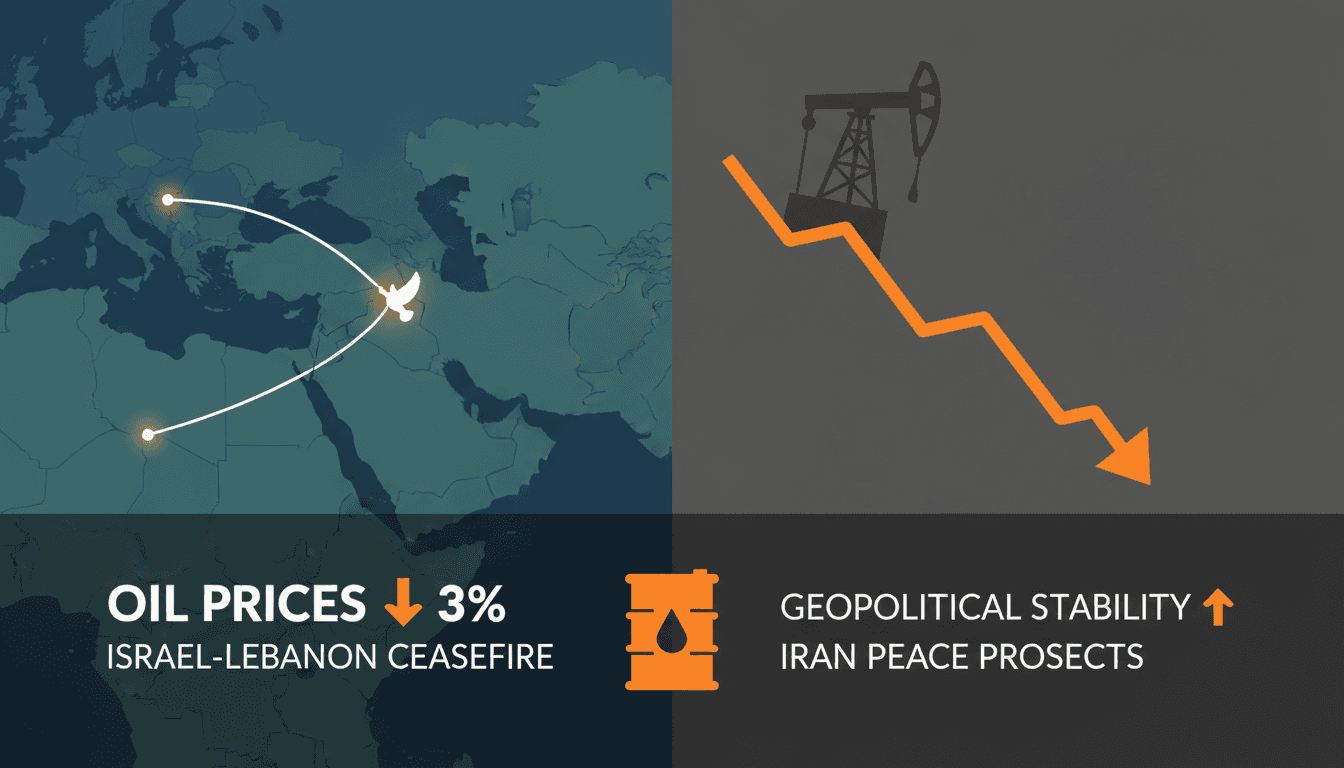
Here's what it means for you.
The recent ceasefire agreement between Israel and Lebanon has led to a notable decline in oil prices, reflecting a shift in geopolitical tensions. This development may signal a potential for broader peace initiatives in the region, particularly concerning Iran, which could stabilize markets in the long run. Investors are likely to keep a close eye on these dynamics, as they could influence both oil prices and stock market performance. The stock market has also reacted positively, with healthcare stocks driving a significant surge in the Dow. This indicates a growing optimism among investors regarding the stability of the region and its impact on economic conditions.
What happened
Oil prices fell by 3% following the announcement of a ceasefire agreement between Israel and Lebanon. This decline in oil prices is attributed to the easing of tensions in the region, which has raised hopes for a broader resolution to ongoing conflicts. The ceasefire was reached on June 4, 2026, marking a significant moment in the ongoing geopolitical landscape.
In addition to the drop in oil prices, the stock market experienced a notable rise, with the Dow gaining 875 points. This surge was primarily driven by strong performance in the healthcare sector, reflecting investor confidence amid the changing geopolitical climate.
The Context
The ceasefire agreement is seen as a crucial step towards a potential wider peace deal in the region. It comes at a time when the U.S. House of Representatives has passed a resolution aimed at limiting presidential war powers, indicating a shift in U.S. policy regarding military engagement. The implications of this ceasefire extend beyond Israel and Lebanon, as they may influence relations with Iran and other stakeholders in the region.
Market fluctuations have also been impacted by the performance of major companies, such as Broadcom, which negatively affected tech stocks. The interplay between geopolitical events and market reactions underscores the importance of monitoring these developments closely.
Takeaway
Looking ahead, the ceasefire may pave the way for further geopolitical stability, which could influence oil prices and market dynamics. It will be essential to monitor developments in U.S.-Iran relations, as these could have significant implications for the region's stability. Additionally, ongoing stock market reactions will provide insights into investor sentiment as geopolitical tensions evolve.
As the situation progresses, the potential for a broader peace agreement remains a key factor to watch. The evolving landscape may lead to further fluctuations in both oil prices and stock markets, making it crucial for stakeholders to stay informed.
Oil, metals, and agriculture: supply/demand headlines, OPEC chatter, inventories, and price action.
"Solid tape for energy and metals traders tracking macro and micro catalysts."
— A47 Editor
Oil snaps three-day win streak after Israel, Lebanon ceasefire eases tensions
Oil prices have snapped a three-day winning streak following a ceasefire agreement between Israel and Lebanon, aimed at easing escalating tensions in the region. This development comes amidst ongoing military confrontations and a backdrop of negotiat...
Markets desk coverage, trading insights, and investor updates.
"WSJ’s markets reporting provides in-depth analysis and context for investors."
— A47 Editor
Stock Market Today: Healthcare Fuels Dow's 875-Point Surge
The Dow Jones Industrial Average surged by 875 points, primarily driven by strong performances in healthcare stocks, while technology shares, particularly those linked to Broadcom, faced declines. This marked a significant rebound following a previou...
Pan-Arab news coverage spanning politics, business, sports, and regional affairs.
"Asharq Al-Awsat reflects a broad Arab editorial perspective with strong attention to regional geopolitics."
— A47 Editor
النفط يتراجع بعد اتفاق إسرائيل ولبنان على وقف إطلاق النار
Oil prices have declined following a ceasefire agreement between Israel and Lebanon, which has raised hopes for a broader resolution to the ongoing conflict involving Iran. This development suggests a potential easing of tensions in the region, which...
Pan-Arab political news and analysis.
"Al-Quds Al-Arabi is a London-based Arabic newspaper known for political coverage."
— A47 Editor
أسعار النفط تتراجع مع اتفاق لبنان وإسرائيل على تنفيذ وقف إطلاق النار
Oil prices declined on Thursday following an agreement between Israel and Lebanon to implement a ceasefire, raising hopes for a broader resolution to the ongoing U.S.-Israeli conflict with Iran. This development coincided with the U.S. House of Repre...