
Middle East conflict exacerbates global food insecurity
Here's what it means for you.
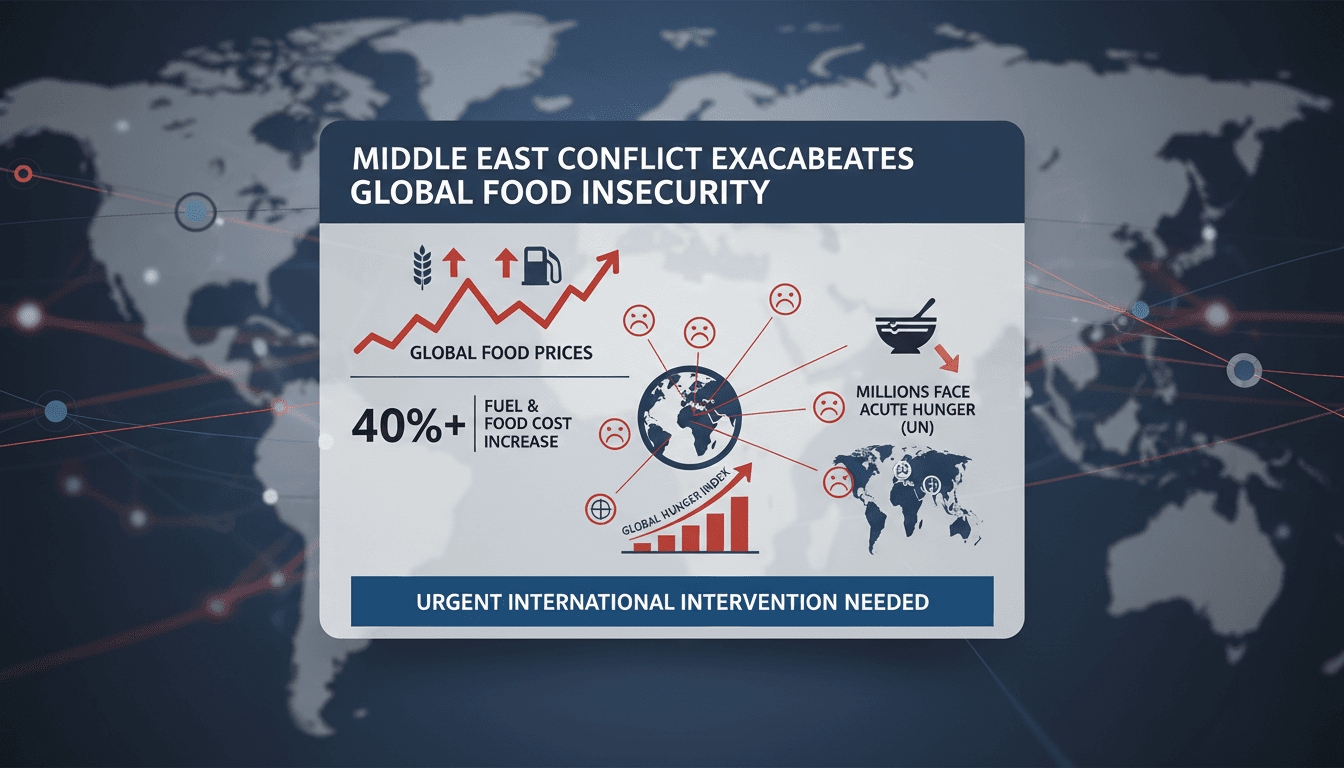
The ongoing conflict in the Middle East is significantly impacting global food security, pushing millions towards acute hunger. Rising fuel and food costs are disrupting supply chains, which could lead to widespread instability in food markets. This situation calls for urgent international intervention to mitigate the potential humanitarian crisis. As the conflict continues, stakeholders across various sectors must prepare for the implications of escalating food prices and supply disruptions. Policymakers and humanitarian organizations are urged to monitor the situation closely and respond proactively to avert a deeper crisis.
What happened
The United Nations and the World Food Programme have reported alarming trends indicating that the conflict in the Middle East is driving millions towards hunger. Rising costs associated with fuel and food are affecting markets well beyond the region, leading to potential supply disruptions. The situation is critical, with tens of millions at risk of acute hunger if the conflict persists.
This crisis is not just a regional issue; it has far-reaching implications for global food security. The ongoing war is creating significant disruptions in food supply chains, which could exacerbate the hunger crisis worldwide.
The Context
The conflict in the Middle East has created a complex web of challenges affecting food security on a global scale. Higher fuel and fertilizer costs are contributing to food price instability, which is felt in markets around the world. The urgency of the situation is underscored by the UN's warnings about the growing hunger crisis linked to the ongoing war.
As the conflict continues, the humanitarian implications are profound, affecting millions of people who rely on stable food supplies. The international community must recognize the interconnectedness of regional conflicts and global food security to address this escalating crisis effectively.
Takeaway
If the conflict persists, the global hunger crisis is likely to deepen, affecting millions more worldwide. Stakeholders should closely monitor food price trends in global markets and prepare for potential humanitarian responses to the crisis. The outlook remains critical, and without resolution to the conflict, the landscape of global food security is expected to deteriorate further.
Immediate international attention and intervention are necessary to prevent a larger humanitarian disaster. The situation demands a coordinated response to ensure that food supplies remain stable and accessible to those in need.
European coverage of Middle East politics and security issues.
"France 24 offers international reporting with a European editorial perspective."
— A47 Editor
Predicted global hunger crisis becoming a reality as Mideast war drags on, UN warns
The United Nations has warned that the ongoing conflict in the Middle East is exacerbating global hunger, with predictions indicating that tens of millions more people could face acute food insecurity due to rising fuel and food costs linked to the w...
Coverage of current events and conflicts in the Middle East.
"France 24 is viewed as a globally focused outlet with balanced coverage and a European perspective."
— A47 Editor
Predicted global hunger crisis becoming a reality as Mideast war drags on, UN warns
The United Nations has warned that the ongoing conflict in the Middle East is exacerbating global hunger, with predictions indicating that tens of millions more people could face acute food insecurity due to rising fuel and food costs linked to the w...
Pan-Arab news coverage spanning politics, business, sports, and regional affairs.
"Asharq Al-Awsat reflects a broad Arab editorial perspective with strong attention to regional geopolitics."
— A47 Editor
«برنامج الأغذية العالمي»: صراع الشرق الأوسط يدفع الملايين إلى الجوع
The World Food Programme has reported that conflict in the Middle East is pushing millions of people towards hunger, highlighting the severe humanitarian crisis in the region. The ongoing violence and instability have disrupted food supply chains and...
Pan-Arab news coverage spanning politics, business, sports, and regional affairs.
"Asharq Al-Awsat reflects a broad Arab editorial perspective with strong attention to regional geopolitics."
— A47 Editor
برنامج الأغذية العالمي: صراع الشرق الأوسط يدفع الملايين إلى الجوع
The World Food Programme (WFP) reported that the ongoing conflict in the Middle East is pushing millions of people towards hunger, exacerbated by rising fuel costs. This situation highlights the severe humanitarian crisis affecting the region, where ...
Markets desk coverage, trading insights, and investor updates.
"WSJ’s markets reporting provides in-depth analysis and context for investors."
— A47 Editor
Food Prices Mostly Stable in May But Middle East Conflict Threatens Broader Shock, UN Says
The United Nations reported that food prices remained mostly stable in May, but ongoing conflicts in the Middle East are creating significant risks for global food markets due to supply disruptions and rising fertilizer costs.