
Discovery of the Largest Deep Whale Graveyard in the Indian Ocean
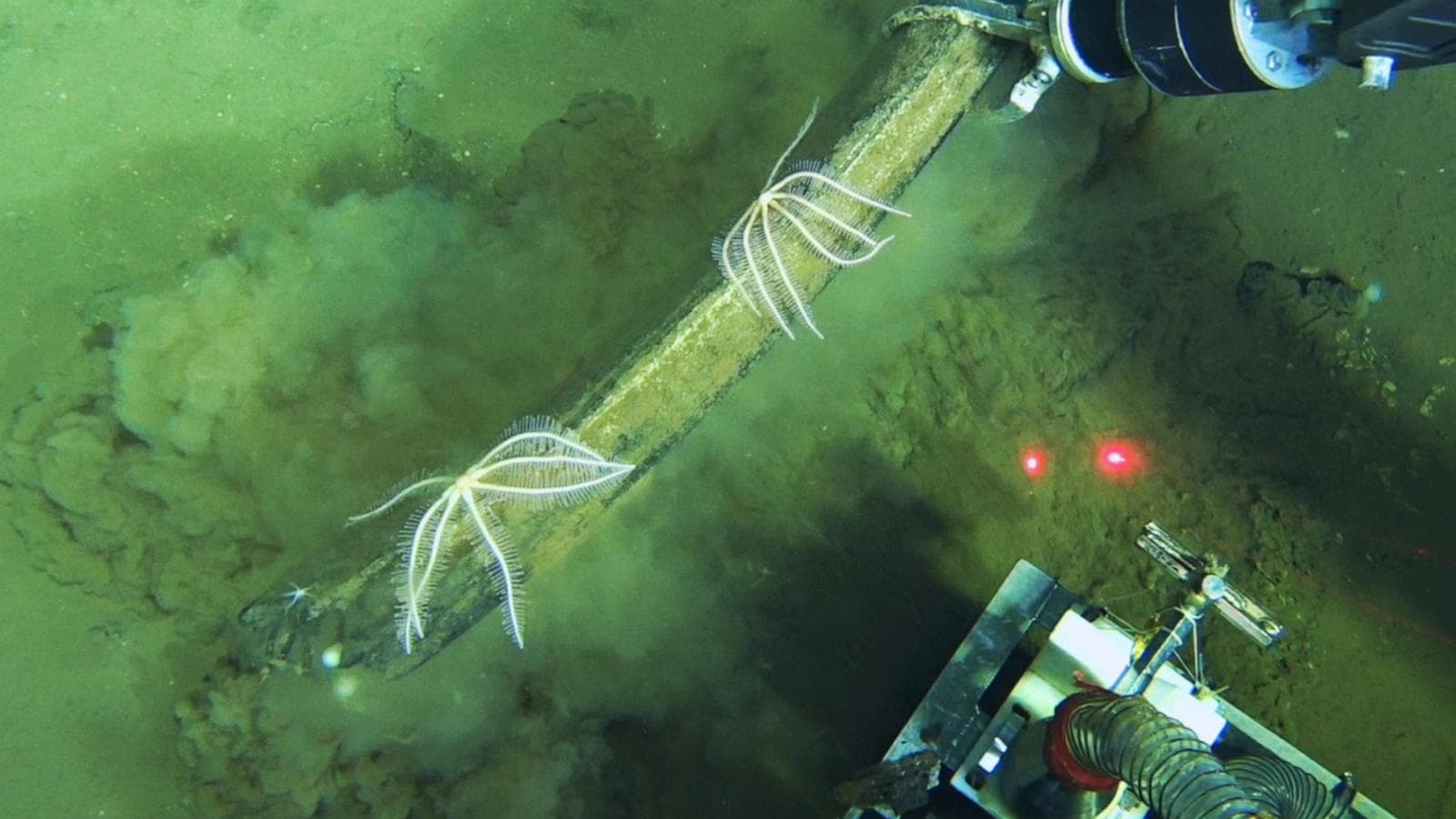
Here's what it means for you.
This discovery could reshape marine research and conservation strategies, impacting climate change discussions globally.
What happened
On June 10, 2026, scientists announced the discovery of the largest and deepest whale-fall necropolis in the southeastern Indian Ocean.
The Context
- New Ecosystem: The site reveals a previously unknown ecosystem thriving in extreme deep-sea conditions, supporting diverse marine life.
- Historical Insights: Fossils dating back 5.3 million years provide crucial information about whale evolution and historical species distribution.
- Carbon Sequestration: The graveyard may sequester approximately 6.7 million tonnes of carbon, highlighting its ecological significance.
The Number
— This is the estimated carbon sequestered by whale carcasses in the graveyard, underscoring the role of deep-sea ecosystems in climate regulation.
Takeaway
Ongoing research will likely uncover more about deep-sea biodiversity and the ecological roles of whale falls, influencing future conservation efforts.
Pan-Arab news coverage spanning politics, business, sports, and regional affairs.
"Asharq Al-Awsat reflects a broad Arab editorial perspective with strong attention to regional geopolitics."
— A47 Editor
اكتشاف مقبرة حيتان عمرها 5 ملايين عام
An international team of researchers has discovered a massive whale graveyard stretching approximately 1,200 kilometers in the southeastern Indian Ocean, dating back 5 million years. This significant find sheds light on the ancient marine ecosystems ...
Scientific discoveries, health, technology, and natural phenomena.
"Live Science reports on scientific discoveries, health, technology, and natural phenomena with a popular science tone."
— A47 Editor
Scientists discover 5 million-year-old whale graveyard stretching for hundreds of miles in the Indian Ocean
Researchers have uncovered a significant whale graveyard in the Indian Ocean, stretching for hundreds of miles and containing fossils dating back approximately 5 million years. This discovery reveals a unique ecosystem where new species of marine lif...
International coverage of politics, culture, and current affairs.
"BBC News is widely regarded as a reputable international news organization, known for its impartial tone and public service mandate."
— A47 Editor
Whale graveyard dating back five million years discovered
A significant discovery has been made in the Indian Ocean, where researchers have uncovered a whale graveyard dating back over five million years. This site, located in the Diamantina fracture zone, is described as the oldest, deepest, and most exten...
Discoveries, research, environment, and health innovations.
"New Scientist is a well-respected publication offering accessible science news, commentary, and expert analysis."
— A47 Editor
Millions of fossil whale bones found in deep-ocean ‘necropolis’
Researchers have uncovered a significant collection of fossilized whale bones in a deep-ocean site, reaching depths of 7 kilometers. This discovery includes fossils that are up to 5 million years old and introduces species previously unknown to scien...
Technology innovations, startups, and trends.
"ABC News delivers broad national coverage with a mainstream editorial stance, focusing on accessibility and balanced reporting."
— A47 Editor
Scientists discover a deep whale graveyard that is teeming with life
Scientists have discovered a deep whale graveyard that is home to thriving marine communities, revealing the ecological significance of these ancient sites. This graveyard, dating back millions of years, showcases a unique ecosystem that has develope...
24/7 international news from a French perspective in multiple languages.
"France 24 is viewed as a globally focused outlet with balanced coverage and a European perspective."
— A47 Editor
World’s largest, deepest, oldest whale graveyard discovered in Indian Ocean
Chinese scientists have discovered a significant whale graveyard in the Indian Ocean, containing approximately 500 skeletons, some of which date back over 5 million years. This discovery, detailed in the journal Nature, highlights the graveyard's rol...
Top international stories selected by The Guardian editors.
"The Guardian is known for its progressive editorial stance and in-depth analysis."
— A47 Editor
Deepest and most extensive whale graveyard discovered in Indian Ocean
The oldest, deepest, and most extensive whale graveyard has been discovered in the south-eastern Indian Ocean, specifically in the Diamantina fracture zone, with fossils dating back over 5 million years. This necropolis extends beyond 7 kilometers de...
Reports on science policy, discoveries, and public debate in the scientific realm.
"The Guardian’s science section is known for thoughtful and critical reporting on global research, ethics, and public understanding of science."
— A47 Editor
Deepest and most extensive whale graveyard discovered in Indian Ocean
The oldest, deepest, and most extensive whale graveyard has been discovered in the south-eastern Indian Ocean, specifically in the Diamantina fracture zone, with fossils dating back over 5 million years. This necropolis extends beyond 7 kilometers de...
News in science and technology, with a focus on consumer and innovation stories.
"Popular Science simplifies complex scientific topics for general audiences and celebrates innovation."
— A47 Editor
745-mile whale graveyard found at the bottom of Indian Ocean
A significant discovery has been made in the Indian Ocean, where a 745-mile whale graveyard has been found, containing fossils that are approximately 5.3 million years old. This extensive whale fall highlights the historical presence of these marine ...
Science and technology stories including AI.
"Longstanding science magazine with thoughtful AI coverage."
— A47 Editor
Largest whale ‘graveyard’ discovered, with skeletons spanning 5 million years
The fossilized remains of over 450 whales have been discovered along a 750-mile stretch of the Indian Ocean floor, representing a significant paleontological find that spans approximately 5 million years. This discovery highlights the historical pres...
Scientific research, technology, environment, and society.
"Scientific American is one of the oldest and most authoritative science magazines, known for deep dives into science, technology, and society."
— A47 Editor
Largest whale ‘graveyard’ discovered, with skeletons spanning 5 million years
The fossilized remains of over 450 whales have been discovered along a 750-mile stretch of the Indian Ocean floor, representing a significant paleontological find that spans approximately 5 million years. This discovery highlights the historical pres...