
EU Imposes New Sanctions on Russian Soldiers Amid Ongoing Ukraine Conflict
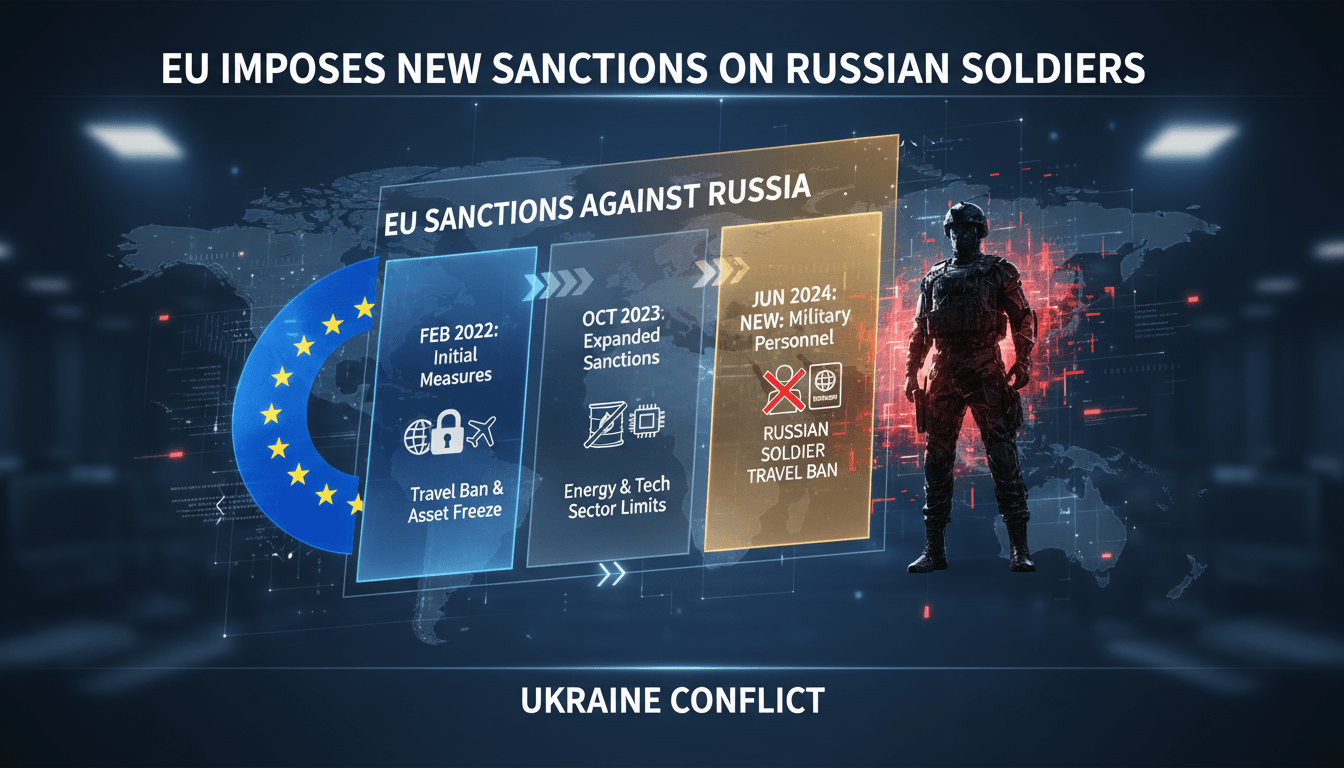
Here's what it means for you.
The European Union's latest sanctions package signifies a robust stance against Russia's military actions in Ukraine. By imposing a travel ban on Russian soldiers, the EU aims to hold accountable those directly involved in the conflict. This move not only reflects the EU's commitment to supporting Ukraine but also indicates a potential escalation in diplomatic tensions with Moscow. As the situation evolves, businesses and policymakers should prepare for further sanctions that may impact various sectors, including finance and energy. The long-term implications could lead to increased isolation of Russia on the international stage.
What happened
The European Union has proposed a travel ban for anyone who has served in the Russian armed forces since the onset of the Ukraine war. This measure is part of the EU's 21st sanctions package aimed at addressing Russia's ongoing military aggression. The sanctions also extend to banks, cryptocurrency firms, and Kremlin oil revenues, reflecting a comprehensive approach to countering Russia's actions.
Ursula von der Leyen, President of the European Commission, announced these sanctions, emphasizing the EU's commitment to holding accountable those involved in the invasion of Ukraine. The travel ban specifically targets individuals who have participated in military actions against Ukraine, aiming to restrict their access to EU countries.
The Context
This latest sanctions package marks the 21st set of measures imposed by the EU since Russia's full-scale invasion of Ukraine. The ongoing conflict has prompted the EU to take increasingly stringent actions against various sectors, including financial institutions and energy resources. By targeting Russian soldiers, the EU seeks to reinforce its stance against military aggression and support for Ukraine.
The sanctions come at a time when diplomatic relations between the EU and Russia are already strained. The EU's actions are part of a broader strategy to isolate Russia economically and politically, which may have significant implications for international relations and regional stability.
Takeaway
As the conflict in Ukraine continues, the EU's sanctions are likely to evolve, potentially leading to more stringent measures against Russia. Observers should monitor Russia's response to these sanctions, as retaliatory actions could further escalate tensions between Moscow and EU member states. The situation remains fluid, and the EU's commitment to supporting Ukraine will likely shape future diplomatic engagements.
In the coming weeks, it will be crucial to watch for any developments regarding the enforcement of these sanctions and their impact on the broader geopolitical landscape.
International coverage from The Guardian's global desks.
"The Guardian is known for its progressive editorial stance and in-depth analysis."
— A47 Editor
EU plans to ban Russian soldiers from bloc in fresh sanctions on Moscow
The European Union has proposed a ban on Russian soldiers entering its territory as part of new sanctions against Moscow, which also target banks, cryptocurrency firms, and Kremlin oil revenues. This marks the 21st set of measures since Russia's full...
Conservative-leaning political and national coverage.
"The Washington Times is a conservative-leaning newspaper known for its political coverage and advocacy of right-of-center viewpoints."
— A47 Editor
EU to ban travel to Europe for Russians who fought against Ukraine
The European Union has announced a ban on travel to its member states for individuals who have fought on Russia's side in the ongoing conflict against Ukraine, as part of its latest sanctions package against Moscow, according to European Commission P...
Pan-Arab news coverage spanning politics, business, sports, and regional affairs.
"Asharq Al-Awsat reflects a broad Arab editorial perspective with strong attention to regional geopolitics."
— A47 Editor
ضمن أحدث العقوبات... الاتحاد الأوروبي يدرس «حظر دخول» المقاتلين الروس
The European Union is considering a travel ban on all Russians who participated in the Ukrainian war as part of a new sanctions package against Moscow. This move reflects the EU's ongoing efforts to respond to Russia's actions in Ukraine and to hold ...