
Armenia holds pivotal election amid rising tensions with Russia and Western integration efforts
Here's what it means for you.
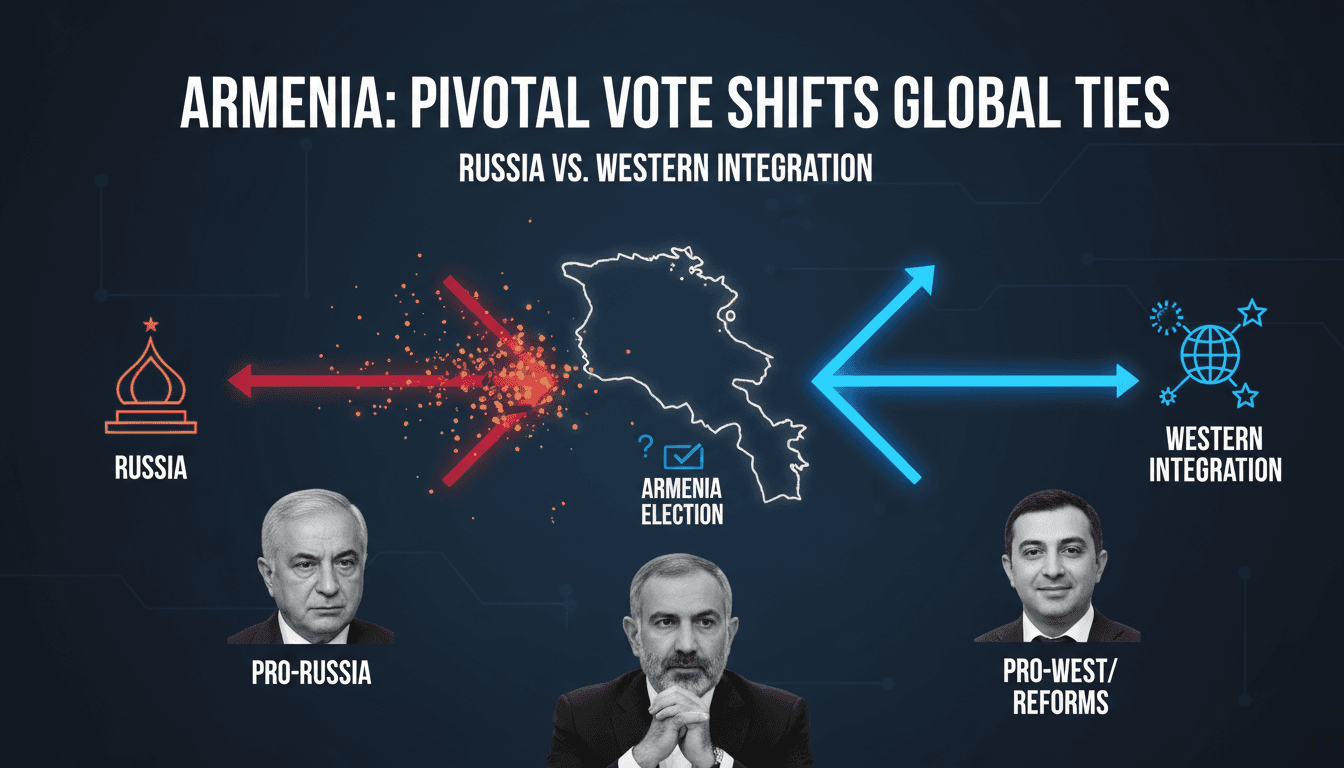
Armenia's recent election represents a critical juncture in its geopolitical landscape, with potential ramifications for both regional stability and international relations. As Prime Minister Nikol Pashinyan seeks to pivot towards the West, the outcome could redefine Armenia's alliances and foreign policy direction. Stakeholders in the region, including Russia and Western nations, will closely monitor the results to gauge future interactions and influence.
What happened
Armenia held an election amid escalating tensions with Russia and a concerted effort to integrate more closely with Western nations. This election is particularly significant as it reflects the shifting political landscape under Prime Minister Nikol Pashinyan, whose relationship with Russia has soured. Opposition candidates, such as Arman Tatoyan, are advocating for pro-Western policies, positioning themselves against the backdrop of Russian influence.
The election is seen as a critical juncture for Armenia's future, with the potential to either reinforce ties with the West or revert to Russia's sphere of influence. As the voting unfolded, concerns about a possible "Ukrainian scenario" loomed large, highlighting the stakes involved in this electoral process.
The Context
The relationship between Armenia and Russia has deteriorated significantly under Pashinyan's leadership, prompting a reevaluation of alliances. Candidates in the election are vying for public support by emphasizing their commitment to pro-Western policies, reflecting a growing sentiment among the populace. The backdrop of economic and political pressures from Russia adds complexity to the electoral dynamics.
This election occurs at a time when Armenia is attempting to deepen its cooperation with the European Union and the United States. The outcome will likely influence not only Armenia's foreign policy but also the broader geopolitical landscape in the region, as neighboring countries watch closely.
Takeaway
The results of this election will be pivotal in shaping Armenia's geopolitical stance and could either bolster or challenge the current government's pro-Western initiatives. Observers should monitor the election results for indications of a shift in Armenia's foreign policy direction. Additionally, reactions from Russia and Western nations will provide insight into the implications of the election outcome for regional stability.
As the dust settles, the international community will be keenly interested in how Armenia navigates its future alliances and the potential for increased tensions or cooperation in the region.
International stories from NPR’s global desk.
"NPR is an American public media organization known for thoughtful reporting and a slightly left-leaning editorial tone."
— A47 Editor
Election in Armenia becomes a test of Russian influence
Armenia is preparing for parliamentary elections on June 7, 2026, amidst significant geopolitical tensions as the country seeks closer ties with Europe and the West, challenging its historical alignment with Russia.
International coverage from The Guardian's global desks.
"The Guardian is known for its progressive editorial stance and in-depth analysis."
— A47 Editor
Armenia heads to polls amid Russian pressure and threat of ‘Ukrainian scenario’
Armenia is preparing for parliamentary elections on June 7, 2026, amid increasing pressure from Russia and a significant shift in its foreign policy under Prime Minister Nikol Pashinyan, who has rejected Moscow's demands for a referendum on EU member...
Regional coverage and analysis focused on politics, diplomacy, and business across the Middle East.
"Al-Monitor is known for analytical reporting on Middle East politics and policy developments."
— A47 Editor
Armenia candidate Tatoyan eyes Pashinyan's pro-West mantle in sea of Russia-backed rivals
Armenian opposition candidate Arman Tatoyan, in an interview from Yerevan, has expressed his intention to adopt a pro-Western stance similar to that of Prime Minister Nikol Pashinyan, emphasizing a commitment to deepen ties with the European Union an...
Regional coverage and analysis focused on politics, diplomacy, and business across the Middle East.
"Al-Monitor is known for analytical reporting on Middle East politics and policy developments."
— A47 Editor
Armenia's election to test Pashinyan's peace drive after war defeat
Armenia is set to hold elections that will test Prime Minister Nikol Pashinyan's peace initiatives following the country's defeat in the recent war. Supporters like Anna Yegoyan cite improvements in infrastructure and national recognition as reasons ...