
US House Fails to Extend FISA Surveillance Powers Amid Political Divisions
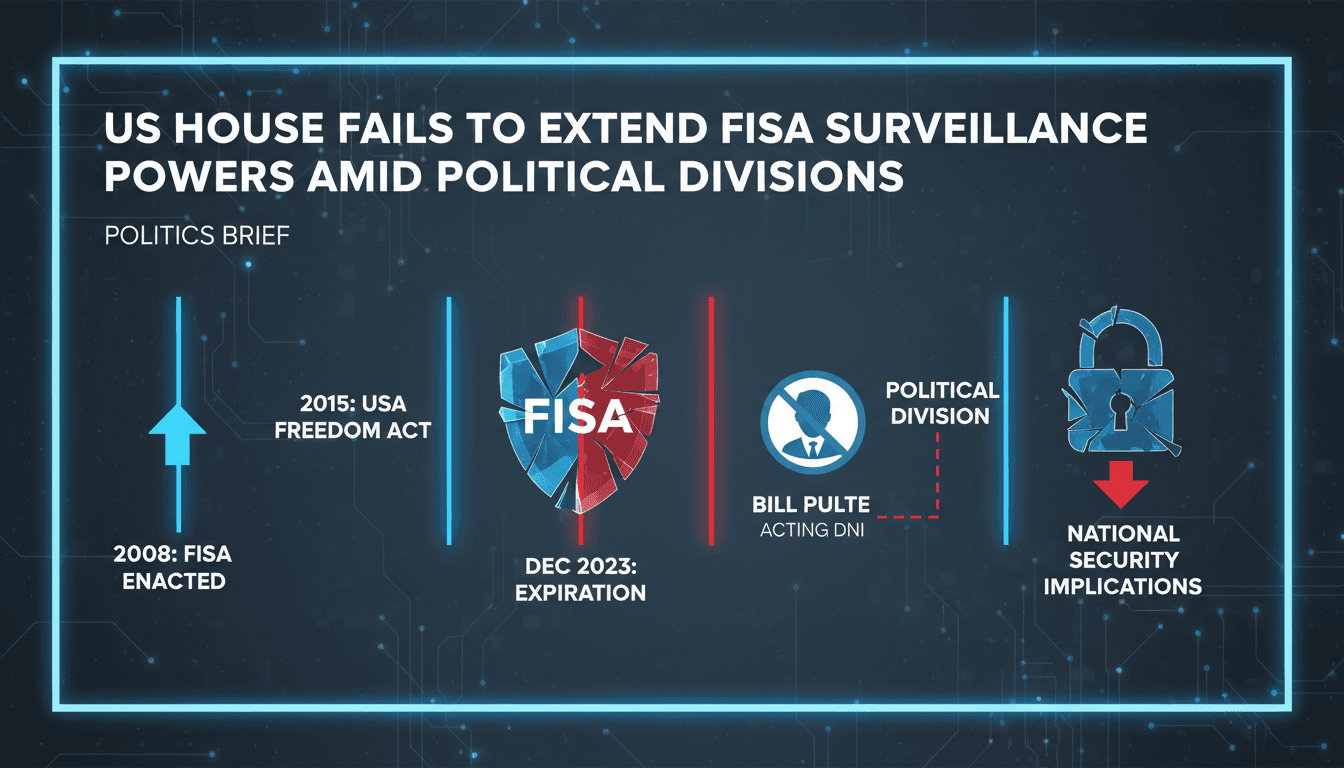
Here's what it means for you.
The recent failure of the US House of Representatives to extend the Foreign Intelligence Surveillance Act (FISA) signals a significant shift in the landscape of national security and intelligence operations. With critical surveillance capabilities set to expire, the implications for law enforcement and intelligence agencies could be profound. This decision underscores the deep political divisions within Congress, particularly surrounding President Trump's controversial appointments. As the expiration of FISA looms, stakeholders in national security must navigate an uncertain environment that could hinder their operational effectiveness. The political fallout from this decision may lead to further negotiations in Congress, as the urgency to address national security concerns becomes paramount.
What happened
The House voted 198-218 against a short-term extension of the Foreign Intelligence Surveillance Act, resulting in the expiration of key surveillance powers. This decision came amid significant controversy surrounding President Trump's appointment of Bill Pulte as acting director of national intelligence. Democratic opposition played a crucial role in the vote, reflecting broader concerns about Pulte's qualifications for the position.
The failure to extend FISA leaves critical surveillance capabilities set to lapse shortly after Congress's recess. This lapse raises questions about the future of U.S. intelligence operations and the ability to monitor potential threats effectively.
The Context
The political landscape surrounding the FISA extension has been fraught with tension, particularly in light of President Trump's appointment of loyalists to key intelligence positions. Democrats have expressed strong opposition to the renewal, citing concerns over Bill Pulte's qualifications and the implications of his leadership on national security. This situation highlights the ongoing struggle between partisan interests and the need for effective intelligence oversight.
As Congress faces a critical deadline, the implications of the FISA expiration could resonate beyond immediate surveillance capabilities. The decision reflects a broader narrative of distrust and division within the legislative body, which may complicate future negotiations on national security legislation.
Takeaway
The expiration of FISA could have significant implications for national security and intelligence operations in the near future. As Congress grapples with the fallout from this decision, potential negotiations may arise to revive FISA reauthorization. Intelligence agencies are likely to respond to the lapse in surveillance powers, which could lead to a reevaluation of their operational strategies.
Moving forward, stakeholders will be closely monitoring developments in Congress, as the urgency to address surveillance capabilities becomes increasingly critical. The political dynamics surrounding this issue will play a pivotal role in shaping the future of U.S. intelligence operations.
News from the United States including domestic politics, society, and culture.
"The Guardian is known for its progressive editorial stance and in-depth analysis, often advocating for social justice, environmental issues, and liberal values."
— A47 Editor
US House blocks extension of powerful surveillance law
The US House of Representatives voted 198-218 against a short-term extension of the Foreign Intelligence Surveillance Act (FISA), primarily due to opposition from Democrats regarding President Donald Trump's appointment of Bill Pulte as acting Direct...
International coverage from The Guardian's global desks.
"The Guardian is known for its progressive editorial stance and in-depth analysis."
— A47 Editor
US House blocks extension of powerful surveillance law
The US House of Representatives voted 198-218 against a short-term extension of the Foreign Intelligence Surveillance Act (FISA), primarily due to opposition from Democrats regarding President Donald Trump's appointment of Bill Pulte as acting Direct...
U.S. political news and right-leaning commentary.
"Fox News is a highly influential conservative news outlet known for right-leaning political commentary and coverage."
— A47 Editor
Spy law used to stop Taylor Swift attack to lapse as Congress skips town, World Cup nears
The U.S. House of Representatives has blocked a short-term extension of Section 702 of the Foreign Intelligence Surveillance Act (FISA), which is set to expire soon. This decision, influenced by Democratic opposition, comes amid ongoing tensions rega...
Conservative-leaning coverage of current events.
"Fox News is a highly influential conservative news outlet known for right-leaning political commentary and coverage."
— A47 Editor
Trump concession breathes new life into stalled FISA spy powers deal
President Trump has made a concession regarding Bill Pulte's role as Acting Director of National Intelligence (DNI), which may help revive the stalled reauthorization of Section 702 of the Foreign Intelligence Surveillance Act (FISA) as Congress appr...