
Israel and Lebanon agree on conditional ceasefire with Hezbollah
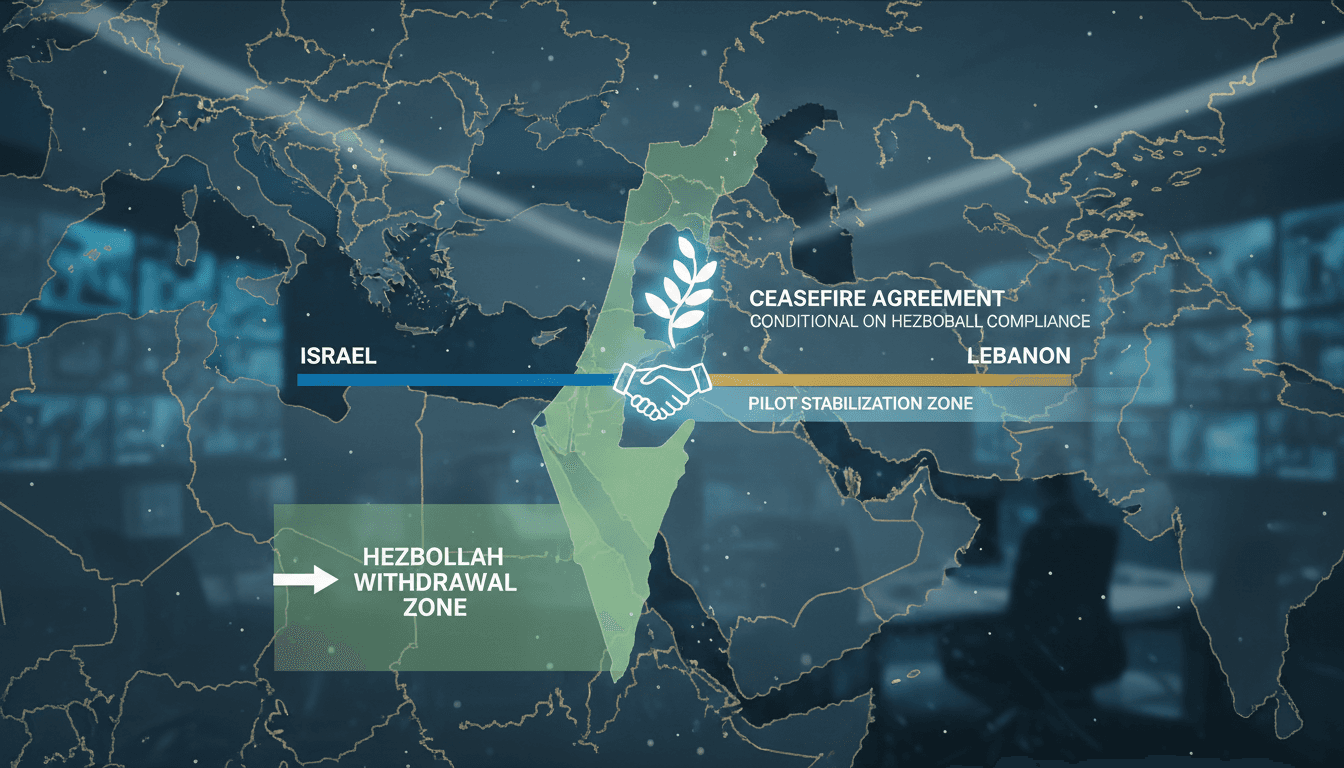
Here's what it means for you.
The recent ceasefire agreement between Israel and Lebanon could signal a pivotal moment in regional stability, particularly concerning Hezbollah's military actions. Should Hezbollah comply with the terms, this could lead to a significant reduction in hostilities and a more secure environment for both nations. The establishment of pilot zones for monitoring compliance underscores the seriousness of this agreement and its potential impact on future diplomatic relations.
What happened
Israel and Lebanon have reached a conditional ceasefire agreement that requires Hezbollah to cease its attacks and withdraw from areas south of the Litani River. This agreement was announced on June 4, 2026, following a period of heightened military activity in the region. The ceasefire includes provisions for pilot zones to facilitate the cessation of hostilities and ensure compliance.
The focus of the ceasefire is singularly on Hezbollah's actions, emphasizing the importance of their adherence to the agreement for lasting peace. If successful, this ceasefire could pave the way for a more stable environment in the region, contingent on Hezbollah's compliance with the terms set forth.
The Context
The ceasefire aims to reduce tensions between Israel and Hezbollah, two long-standing adversaries in the region. The agreement comes at a critical time, following increased military activity that has raised concerns about escalating conflict. By establishing a conditional ceasefire, both nations are taking a proactive step toward stabilizing the area.
The introduction of pilot zones is a strategic move to monitor compliance and ensure that both parties adhere to the terms of the agreement. This development highlights the ongoing complexities of Middle Eastern geopolitics and the delicate balance of power that exists in the region.
Takeaway
The success of the ceasefire will largely depend on Hezbollah's willingness to comply with the terms outlined in the agreement. Observers should closely monitor Hezbollah's response to the ceasefire conditions, as this will be a critical indicator of the agreement's viability. Additionally, potential international reactions to the ceasefire could influence the broader geopolitical landscape.
As the situation unfolds, the focus will remain on whether this agreement can lead to a more stable environment in the region. The implications of this ceasefire extend beyond immediate military concerns, potentially affecting diplomatic relations and regional security dynamics.
Global business headlines with AI angles.
"General business outlet that frequently covers AI."
— A47 Editor
Israel And Lebanon Agree On Ceasefire Conditional On Hezbollah Halting Attacks, Withdrawing From Key Area
Israel and Lebanon have reached an agreement to implement a ceasefire, contingent upon Hezbollah ceasing its attacks and withdrawing from the area south of the Litani River. This development marks a significant step towards reducing hostilities in a ...
Regional and international reporting focused on Middle Eastern politics, diplomacy, and economics.
"Asharq Al-Awsat is a Saudi-owned international newspaper reflecting mainstream Gulf political perspectives."
— A47 Editor
Lebanon-Israel Ceasefire Deal: Complete Cessation of Hezbollah Attacks, Creation of Pilot Zones
A ceasefire deal has been announced between Lebanon and Israel, aiming for a complete cessation of Hezbollah attacks and the establishment of pilot zones, including Beaufort Castle. This agreement follows ongoing military tensions and airstrikes in s...
Pan-Arab news coverage spanning politics, business, sports, and regional affairs.
"Asharq Al-Awsat reflects a broad Arab editorial perspective with strong attention to regional geopolitics."
— A47 Editor
تفاصيل الاتفاق بين لبنان وإسرائيل... ترتيبات جديدة جنوب الليطاني و«مناطق تجريبية»
Lebanon and Israel have agreed to implement a complete ceasefire, contingent upon Hezbollah halting its attacks and withdrawing its forces from the area south of the Litani River. This agreement marks a significant step towards reducing hostilities i...