
Roberto Sanchez leads in Peru's presidential runoff amid political instability
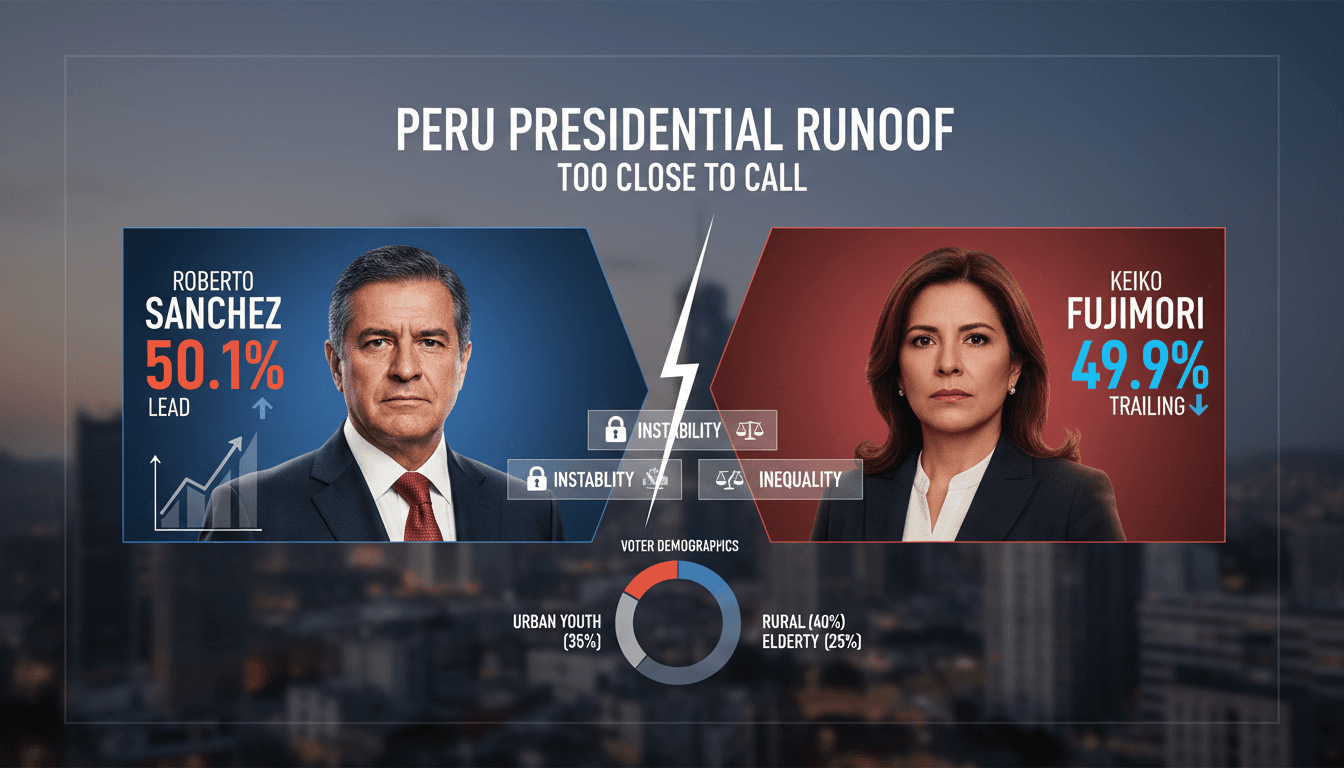
Here's what it means for you.
The ongoing presidential runoff in Peru is a critical moment that could reshape the nation’s political landscape. With Roberto Sanchez narrowly leading, the implications for governance and social equity are significant. Stakeholders across various sectors should closely monitor the final vote count, as the outcome may influence policies addressing crime and inequality. As the political climate remains tense, the results could also impact investor confidence and international relations. The election reflects broader societal concerns that could resonate beyond Peru's borders.
What happened
Roberto Sanchez has taken a slim lead in the presidential runoff against Keiko Fujimori, with fewer than 4,300 votes separating the two candidates. The election is marked by significant concerns over crime and political instability, and the final results are still pending as votes are being counted. This runoff is crucial as it will determine Peru's ninth president in a decade.
Sanchez, an ally of jailed former president Pedro Castillo, aims to address socioeconomic disparities that have plagued the nation. Meanwhile, Fujimori, the daughter of former president Alberto Fujimori, carries the weight of her father's controversial legacy.
The Context
The political backdrop of this election is steeped in instability, with both candidates representing starkly different visions for Peru's future. Sanchez's platform focuses on social equity and reform, while Fujimori's campaign is rooted in a more conservative approach. The stakes are high, as the winner will have to navigate a landscape fraught with challenges, including rising crime rates and public discontent.
The election comes at a time when Peruvians are increasingly frustrated with the status quo, seeking leadership that can effectively address their concerns. The outcome will not only affect governance but also the broader socio-economic fabric of the country.
Takeaway
As the vote counting progresses, the political future of Peru hangs in the balance. The final results will be closely watched, with potential reactions from both candidates likely to shape the immediate political discourse. Observers should pay attention to how the outcome may influence governance and social issues in the coming months.
The implications of this election extend beyond immediate political outcomes, potentially affecting long-term strategies for addressing inequality and crime in Peru.
24/7 international news from a French perspective in multiple languages.
"France 24 is viewed as a globally focused outlet with balanced coverage and a European perspective."
— A47 Editor
Leftist Roberto Sanchez takes lead in Peru's razor-thin presidential runoff
Leftist candidate Roberto Sanchez has taken a narrow lead in Peru's presidential runoff, surpassing conservative Keiko Fujimori by fewer than 4,300 votes. This election follows a first round marked by logistical challenges and allegations of fraud, w...
24/7 international news from a French perspective in multiple languages.
"France 24 is viewed as a globally focused outlet with balanced coverage and a European perspective."
— A47 Editor
Peruvians await results of elections for ninth president in a decade
Peru is currently in the midst of a presidential runoff election, with conservative candidate Keiko Fujimori and leftist Roberto Sanchez vying for the presidency. This election marks the ninth presidential election in a decade for the country, reflec...
International coverage of politics, culture, and current affairs.
"BBC News is widely regarded as a reputable international news organization, known for its impartial tone and public service mandate."
— A47 Editor
Peru election result close as vote counting continues
The presidential runoff election in Peru is currently underway, featuring conservative candidate Keiko Fujimori and leftist Roberto Sánchez. The election follows a first round marked by logistical issues and allegations of fraud, with Fujimori securi...
Comprehensive coverage of Middle Eastern and global issues.
"Al Jazeera is a prominent voice from the Global South, especially the Middle East, with an emphasis on underreported stories."
— A47 Editor
Peru’s Sanchez visits jailed ex-president as votes are counted
Peruvian presidential candidate Roberto Sanchez visited jailed former president Pedro Castillo as the country counted votes for the presidential runoff election. This visit comes amid a tense political climate, with Sanchez facing allegations of fina...