
U.S. military intercepts four Iranian drones near Strait of Hormuz
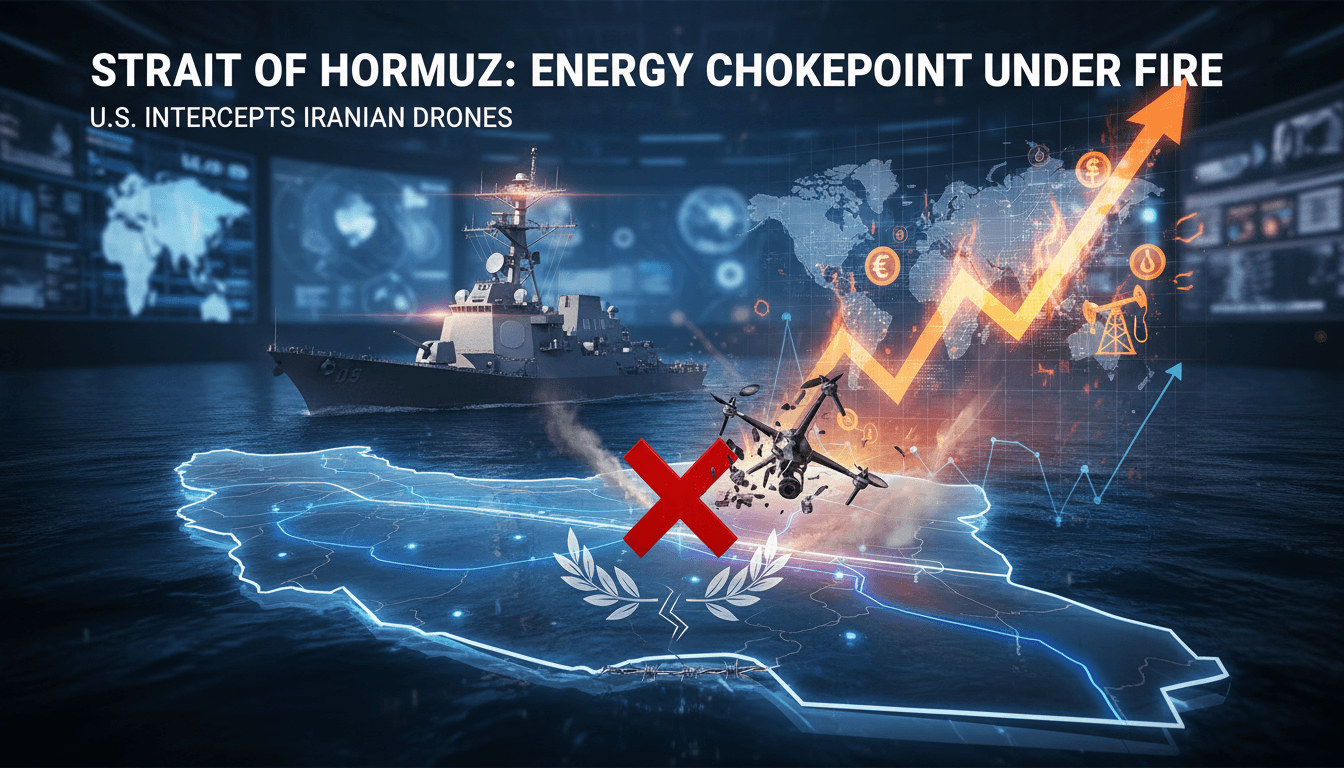
Here's what it means for you.
The recent interception of Iranian drones by the U.S. military signals a significant escalation in tensions between the two nations. This incident could lead to increased military confrontations, which may disrupt global energy markets reliant on the Strait of Hormuz. Stakeholders in the energy sector should remain vigilant as these developments could impact oil and gas prices. As diplomatic efforts for peace become more complicated, businesses and policymakers must prepare for potential volatility in the region. The situation underscores the fragile nature of U.S.-Iran relations and the broader implications for international trade.
What happened
The U.S. military shot down four Iranian drones that were heading toward the Strait of Hormuz, citing an imminent threat to maritime traffic. This action was taken in response to the drones being classified as one-way attack drones, which posed a significant risk to the safety of shipping lanes. The U.S. also targeted Iranian coastal surveillance radar sites as part of its military response.
This incident marks a critical moment in the ongoing conflict between the U.S. and Iran, highlighting the escalating nature of their exchanges. The drones were intercepted on June 5, 2026, further intensifying the already volatile situation in the region.
The Context
The Strait of Hormuz is a vital passage for global oil and natural gas shipments, making any military action in the area particularly concerning for international markets. The U.S. has been enforcing a blockade on Iranian ports due to ongoing tensions, which has contributed to a precarious balance in the region. This incident is part of a series of exchanges that threaten a fragile ceasefire, raising alarms among global stakeholders.
President Trump's recent comments about addressing "unfinished business" with Iran have added to the urgency of the situation. As both nations navigate their complex relationship, the potential for further military engagements looms large, complicating diplomatic efforts for peace.
Takeaway
As tensions continue to rise, the potential for further military confrontations remains a pressing concern. Observers should monitor developments regarding U.S.-Iran negotiations and any retaliatory actions from Iran in response to U.S. military actions. The situation is fluid, and the implications for global energy markets could be significant.
The ongoing conflict underscores the need for careful diplomacy and strategic engagement to prevent escalation. Stakeholders should remain alert to the evolving dynamics in the region, as they could have far-reaching consequences.
News from the United States including domestic politics, society, and culture.
"The Guardian is known for its progressive editorial stance and in-depth analysis, often advocating for social justice, environmental issues, and liberal values."
— A47 Editor
Kuwait and Bahrain targeted by Iran after exchange of fire with US
Iran has launched ballistic missiles and drones targeting Bahrain and Kuwait, following a series of military exchanges with the United States that included the U.S. shooting down Iranian drones and striking Iranian radar sites. This escalation has ra...
International coverage from The Guardian's global desks.
"The Guardian is known for its progressive editorial stance and in-depth analysis."
— A47 Editor
Kuwait and Bahrain targeted by Iran after exchange of fire with US
Iran has launched ballistic missiles and drones targeting Bahrain and Kuwait, following a series of military exchanges with the United States that included the U.S. shooting down Iranian drones and striking Iranian radar sites. This escalation has ra...
Breaking news, politics, business, and entertainment from the U.S. and around the world.
"The New York Post is a tabloid-format newspaper known for its sensationalist headlines and conservative-leaning editorial tone."
— A47 Editor
US shoots down Iranian drones launched toward Strait of Hormuz after Trump said ‘we’re straightening out a little unfinished business’
The U.S. military shot down four Iranian drones targeting the Strait of Hormuz, as confirmed by U.S. Central Command. This action occurred shortly after President Trump remarked on addressing 'unfinished business' during a roundtable discussion in Wi...
Capitol Hill news, legislation, and policy insight.
"The Hill specializes in U.S. politics and policy, with a focus on Capitol Hill developments and a reputation for insider reporting."
— A47 Editor
US military shoots down 4 Iranian drones heading toward Strait of Hormuz
The U.S. military shot down four Iranian one-way attack drones on June 5, 2026, as they were heading toward the strategically significant Strait of Hormuz, posing an imminent threat to maritime traffic. This action was confirmed by the U.S. Central C...