
US Launches Military Strikes Against Iran Following Helicopter Incident
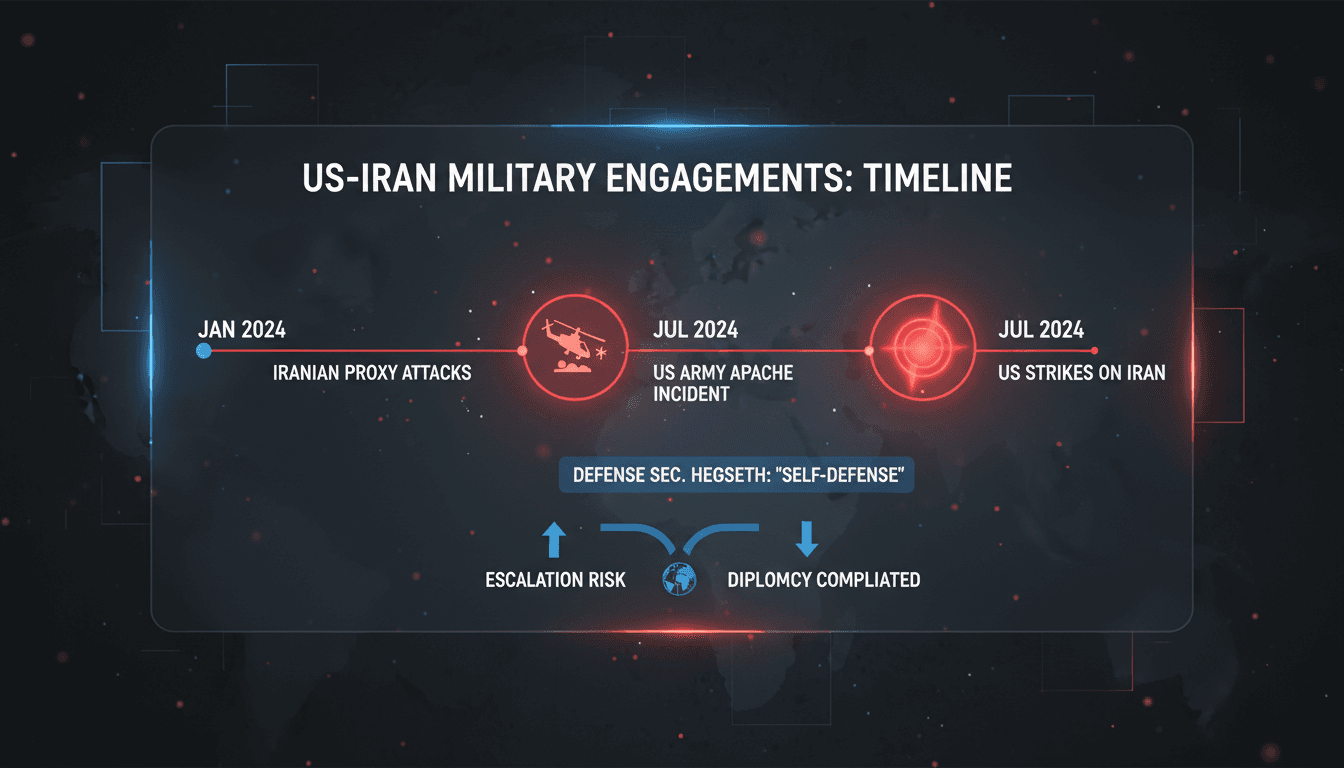
Here's what it means for you.
The recent military strikes by the United States against Iran signal a significant escalation in tensions between the two nations. This development may have far-reaching implications for international relations, particularly in the Middle East, where stability is already precarious. Stakeholders in global markets and policy circles should prepare for potential volatility as military engagements could disrupt diplomatic efforts and economic activities in the region. As the situation unfolds, businesses and governments alike must remain vigilant to the evolving landscape, which could impact energy prices and geopolitical alliances. The potential for further military action raises concerns about the safety of operations in affected areas.
What happened
The United States has launched a series of military strikes against Iran, marking a notable escalation in hostilities. This action follows the downing of a U.S. Army Apache helicopter, which has been cited as a catalyst for the strikes. Explosions were reported across southern Iran, particularly in Hormozgan province and Bandar Abbas, indicating the scale of the military response.
Defense Secretary Pete Hegseth characterized these strikes as acts of self-defense against ongoing Iranian aggression. The strikes began at 5:15 p.m. Eastern Time on June 10, 2026, and involved five enemy projectiles targeting key sites in Iran.
The Context
Tensions between the U.S. and Iran have been escalating since early 2026, driven by a series of confrontations and retaliatory actions. The strikes were ordered by President Trump in direct response to the helicopter incident, which has intensified the already fraught relationship between the two nations. U.S. Central Command has framed the military action as necessary to protect American interests and personnel in the region.
This escalation complicates diplomatic efforts aimed at de-escalating tensions and resolving ongoing conflicts. With both nations entrenched in their positions, the potential for further military engagement looms large, raising concerns among international observers.
Takeaway
The situation remains volatile, with the likelihood of further military actions high as both sides continue to exchange hostilities. Observers should monitor for potential Iranian responses to the strikes, which could further escalate the conflict. Additionally, updates on diplomatic efforts to de-escalate tensions will be crucial in understanding the future trajectory of U.S.-Iran relations.
As military exchanges continue, the implications for regional stability and international diplomacy are significant. Stakeholders should remain alert to developments that could impact economic and security dynamics in the Middle East.
English-language reporting on Saudi politics, policy, and society.
"Saudi Gazette reflects mainstream Saudi institutional perspectives."
— A47 Editor
Tehran targets US bases in Gulf after American forces launch new strikes on Iran
The United States launched new airstrikes against Iranian military targets on June 9, 2026, following the downing of a U.S. Army Apache helicopter near the Strait of Hormuz. In retaliation, Iran targeted U.S. bases in the Gulf, escalating the ongoing...
Capitol Hill news, legislation, and policy insight.
"The Hill specializes in U.S. politics and policy, with a focus on Capitol Hill developments and a reputation for insider reporting."
— A47 Editor
Impact in Iran after Trump orders more strikes
The U.S. military has launched a new series of strikes against Iran, following a warning from Defense Secretary Pete Hegseth about forthcoming strong military actions. This escalation comes after the downing of an American Apache helicopter by Irania...
Global news coverage with extensive reporting on Middle Eastern conflicts and geopolitics.
"Al Jazeera is a Qatar-based broadcaster known for wide regional coverage and alternative perspectives."
— A47 Editor
‘Negotiate with bombs’: Hegseth defends second night of US strikes on Iran
The United States has conducted airstrikes against Iran for the second consecutive night, with US Central Command attributing these actions to Iran's ongoing aggression. This military response follows the downing of an American Apache helicopter, whi...
Comprehensive coverage of Middle Eastern and global issues.
"Al Jazeera is a prominent voice from the Global South, especially the Middle East, with an emphasis on underreported stories."
— A47 Editor
‘Negotiate with bombs’: Hegseth defends second night of US strikes on Iran
The United States has conducted airstrikes against Iran for the second consecutive night, with US Central Command attributing these actions to Iran's ongoing aggression. This military response follows the downing of an American Apache helicopter, whi...
Regional coverage and analysis focused on politics, diplomacy, and business across the Middle East.
"Al-Monitor is known for analytical reporting on Middle East politics and policy developments."
— A47 Editor
Hegseth: U.S. to bomb 'key facilities' in Iran on Wednesday
U.S. Defense Secretary Pete Hegseth announced that the United States will conduct airstrikes against key facilities in Iran on Wednesday, following a series of escalating tensions and military actions between the two nations. This decision comes afte...