
2030 FIFA World Cup to be co-hosted by six nations across three continents
Here's what it means for you.
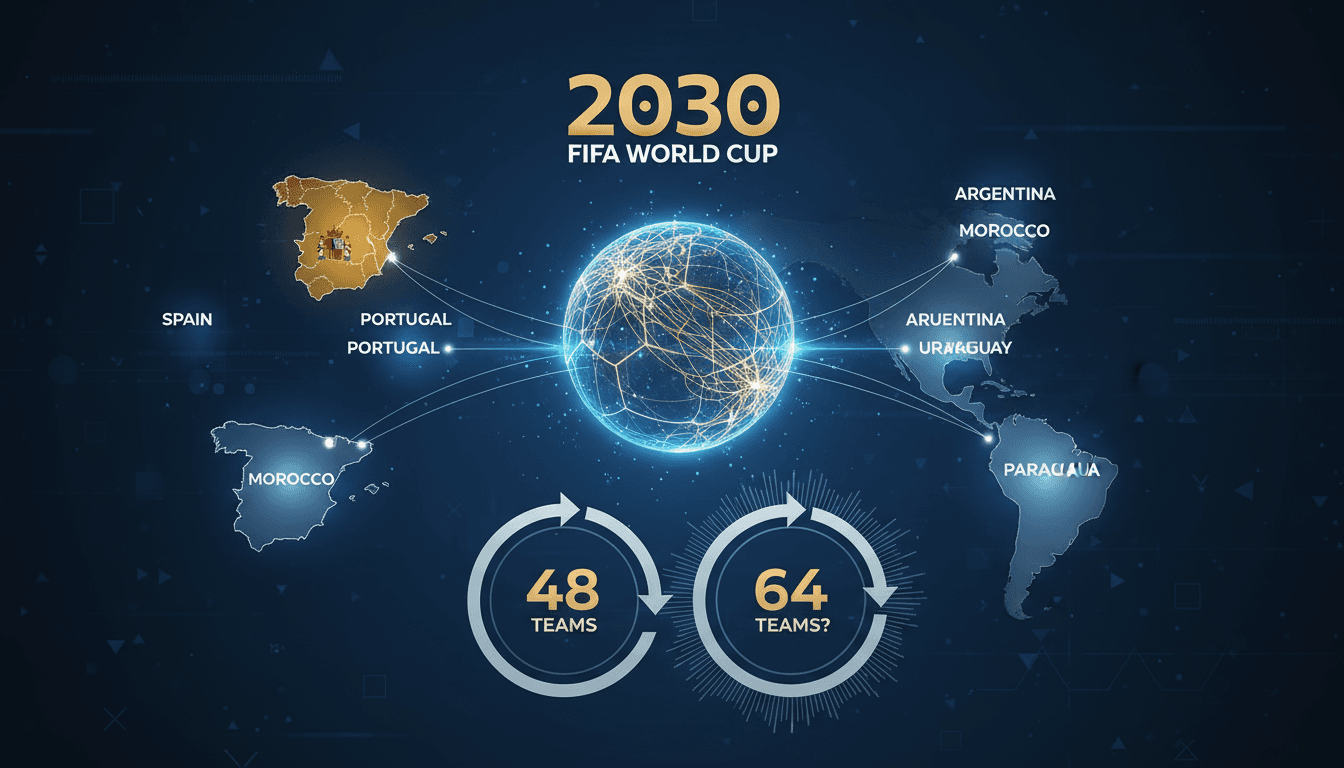
The decision to co-host the 2030 FIFA World Cup across six nations signifies a transformative moment in international football. This unprecedented collaboration among Spain, Portugal, Morocco, Argentina, Uruguay, and Paraguay not only celebrates the tournament's centenary but also sets the stage for potential expansion to 64 teams. Such a move could enhance the tournament's global appeal and economic impact, reshaping how football is experienced worldwide. As discussions unfold, stakeholders from various sectors will be closely monitoring the implications of this co-hosting arrangement. The outcome may influence future international competitions and the overall landscape of global football.
What happened
The 2030 FIFA World Cup will be co-hosted by six countries spanning three continents: Spain, Portugal, Morocco, Argentina, Uruguay, and Paraguay. This decision marks a significant milestone as the tournament approaches its 100th anniversary. The event is expected to celebrate the rich history of the World Cup while also introducing new dynamics through its diverse hosting nations.
Amid this historic announcement, there is ongoing debate regarding the tournament's format, with South American football officials advocating for an expansion to 64 teams. This potential increase in participants could significantly alter the economic landscape of football and enhance global participation in the sport.
The Context
The 2030 World Cup aims to commemorate a century of football excellence, following the 2026 edition, which will feature 48 teams for the first time. The involvement of multiple nations reflects a growing trend in international sports to foster collaboration and inclusivity. Alejandro Domínguez, president of South American football, has been a vocal supporter of expanding the tournament to 64 teams, emphasizing the need to elevate the event's significance.
This co-hosting arrangement not only highlights the unity among the participating nations but also underscores the importance of football as a global connector. As the world prepares for this landmark event, the implications for international football competitions and the sport's future are profound.
Takeaway
Looking ahead, the confirmation of the number of teams for the 2030 World Cup will be a pivotal moment for the sport. Stakeholders will be keen to observe how the co-hosting nations collaborate on logistics and infrastructure to ensure a successful tournament. The decision on team expansion will likely shape the future of international football competitions and influence global participation rates.
As developments unfold, the football community will be watching closely for updates on co-hosting arrangements and the final format of the tournament. The 2030 World Cup promises to be a historic celebration of football, with the potential to redefine the sport's global dynamics.
Pan-Arab news coverage spanning politics, business, sports, and regional affairs.
"Asharq Al-Awsat reflects a broad Arab editorial perspective with strong attention to regional geopolitics."
— A47 Editor
المنتخبات الصاعدة تنذر بنسخة أكثر إثارة في «كأس العالم 2030»
Following the conclusion of the 2026 FIFA World Cup, discussions are rapidly shifting towards the upcoming 2030 edition of the tournament. The anticipation is building around the potential for emerging teams to make a significant impact in this globa...
Breaking news, scores, player stats, and analysis across all major sports.
"Yahoo Sports is a comprehensive digital sports destination known for stats, fantasy sports, and real-time updates."
— A47 Editor
How a 64-team World Cup could transform football’s economics
The 2030 FIFA World Cup is set to be co-hosted by Spain, Portugal, and Morocco, with discussions ongoing regarding the expansion of the tournament from 48 to 64 teams. This potential increase aims to enhance the competition and inclusivity of the eve...
Global news coverage with extensive reporting on Middle Eastern conflicts and geopolitics.
"Al Jazeera is a Qatar-based broadcaster known for wide regional coverage and alternative perspectives."
— A47 Editor
How a 64-team World Cup could transform football’s economics
Spain, Portugal, and Morocco have been confirmed as the co-hosts for the 2030 FIFA World Cup, with discussions ongoing about whether the tournament will feature 48 or 64 teams. This decision marks a significant milestone in the tournament's history, ...
Breaking news, scores, player stats, and analysis across all major sports.
"Yahoo Sports is a comprehensive digital sports destination known for stats, fantasy sports, and real-time updates."
— A47 Editor
South American football boss calls for 64 teams in 2030
Alejandro Domínguez, the president of South American football, has proposed expanding the 2030 World Cup to include 64 teams, marking the tournament's centenary. The event is set to take place across six countries: Spain, Portugal, Morocco, Argentina...