
Two Iranian female footballers granted Australian citizenship after protest against regime
Here's what it means for you.
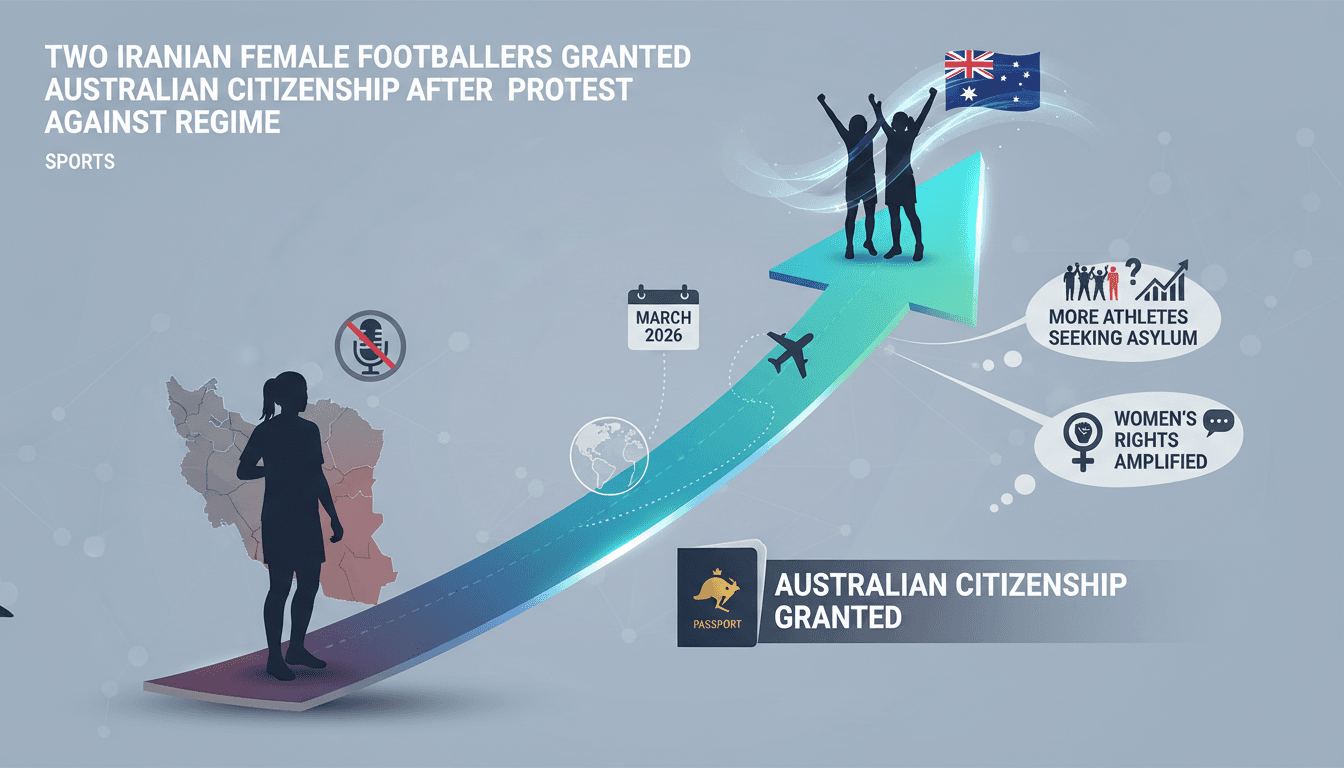
The granting of Australian citizenship to Fatemeh Pasandideh and Atefeh Ramezanisadeh marks a significant moment for athletes seeking refuge from oppressive regimes. Their protest against the Iranian national anthem during the women's Asian Cup has not only highlighted the struggles of women in Iran but may also inspire other athletes to pursue asylum. This event could catalyze broader discussions on women's rights and human rights within the context of sports. As these athletes celebrate their new status, their actions may encourage a wave of solidarity among Iranian sports figures. The implications extend beyond individual stories, potentially influencing policy discussions regarding asylum and the treatment of athletes in Iran.
What happened
Fatemeh Pasandideh and Atefeh Ramezanisadeh, two former Iranian female footballers, have been granted Australian citizenship after seeking asylum. Their decision to protest by refusing to sing the Iranian national anthem during the women's Asian Cup in March 2026 led to significant backlash from the Iranian government. Following their protest, they fled to Australia, where they were part of a group of seven players seeking protection.
While five of their teammates returned to Iran after initially seeking asylum, Pasandideh and Ramezanisadeh persevered and ultimately achieved their goal of citizenship. Their actions have drawn attention to the challenges faced by athletes in oppressive regimes and the risks they take for their beliefs.
The Context
The protest by Pasandideh and Ramezanisadeh occurred during a pivotal moment in the women's Asian Cup, highlighting the ongoing struggle for women's rights in Iran. Their refusal to sing the national anthem was met with condemnation from the Iranian government, underscoring the risks athletes face when they challenge the status quo. The players' decision to seek asylum in Australia reflects a growing trend among Iranian athletes who are increasingly vocal about their rights and freedoms.
This event is significant not only for the individuals involved but also for the broader discourse on human rights in Iran. The successful acquisition of citizenship by these athletes may encourage others to follow suit, potentially leading to a shift in how athletes are treated both domestically and internationally.
Takeaway
The citizenship granted to Pasandideh and Ramezanisadeh may pave the way for more Iranian athletes to seek asylum in the future. Their actions could inspire further protests and discussions surrounding women's rights in Iran, amplifying the voices of those who challenge oppressive systems. Observers should monitor the Iranian government's reactions to this development, as it may influence the treatment of athletes and women in the country.
As the situation evolves, the international community will likely pay closer attention to the implications of these athletes' actions. The ongoing discourse surrounding human rights and women's rights in Iran is poised to gain momentum, driven by the courage of those willing to stand up for their beliefs.
Pan-Arab news coverage spanning politics, business, sports, and regional affairs.
"Asharq Al-Awsat reflects a broad Arab editorial perspective with strong attention to regional geopolitics."
— A47 Editor
لاعبتان إيرانيتان تحصلان على الجنسية الأسترالية بعد لجوئهما الإنساني
Iranian women's national football team players Atifeh Ramazani Zadeh, 34, and Fatemeh Pasandideh, 22, have been granted Australian citizenship following their humanitarian asylum. This significant milestone marks a new chapter in their lives after se...
Top international stories selected by The Guardian editors.
"The Guardian is known for its progressive editorial stance and in-depth analysis."
— A47 Editor
Two Iranian female footballers granted Australian citizenship after protest
Two Iranian female footballers, Fatemeh Pasandideh and Atefeh Ramezanisadeh, have been granted Australian citizenship after their protest during the Asian Cup, where they refused to sing the Iranian national anthem. This act of defiance led to their ...
Pan-Arab news coverage spanning politics, business, sports, and regional affairs.
"Asharq Al-Awsat reflects a broad Arab editorial perspective with strong attention to regional geopolitics."
— A47 Editor
لاعبتان إيرانيتان سابقتان «فخورتان» بالحصول على الجنسية الأسترالية
Two former players of the Iranian women's national football team expressed their pride in obtaining Australian citizenship on Thursday. This significant milestone highlights their journey and the opportunities that come with their new nationality.
International coverage of politics, culture, and current affairs.
"BBC News is widely regarded as a reputable international news organization, known for its impartial tone and public service mandate."
— A47 Editor
Iranian footballers who defied Tehran become Australian citizens
Seven Iranian footballers who previously played in Australia have been granted humanitarian visas and have become Australian citizens, while five others opted to return to Iran. This decision highlights the ongoing challenges faced by athletes in Ira...
Global news coverage with extensive reporting on Middle Eastern conflicts and geopolitics.
"Al Jazeera is a Qatar-based broadcaster known for wide regional coverage and alternative perspectives."
— A47 Editor
Iran anthem protest: Female footballers ‘proud’ to become Australian
Fatemeh Pasandideh and Atefeh Ramezanisadeh, two Iranian female footballers, have been granted Australian citizenship after their refusal to sing the Iranian national anthem during the Asian Cup. This act of defiance highlights their commitment to pe...
Comprehensive coverage of Middle Eastern and global issues.
"Al Jazeera is a prominent voice from the Global South, especially the Middle East, with an emphasis on underreported stories."
— A47 Editor
Iran anthem protest: Female footballers ‘proud’ to become Australian
Fatemeh Pasandideh and Atefeh Ramezanisadeh, two Iranian female footballers, have been granted Australian citizenship after their refusal to sing the Iranian national anthem during the Asian Cup. This act of defiance highlights their commitment to pe...
Regional and international reporting focused on Middle Eastern politics, diplomacy, and economics.
"Asharq Al-Awsat is a Saudi-owned international newspaper reflecting mainstream Gulf political perspectives."
— A47 Editor
Former Iranian Women Footballers 'Proud' to Become Australian
Two former Iranian women footballers, Fatemeh Pasandideh and Atefeh Ramezanisadeh, have expressed their pride in becoming Australian citizens after their notable protest against the Iranian national anthem during the Asian Cup. This act of defiance h...