
Travis Kelce Identified as Victim in $31.35 Million Ponzi Scheme Sentencing
Why it matters
This case highlights vulnerabilities in investment practices, especially among high-net-worth individuals.
What happened (in 30 seconds)
- Travis Kelce was publicly identified as a victim in a $31.35 million Ponzi scheme during federal court proceedings.
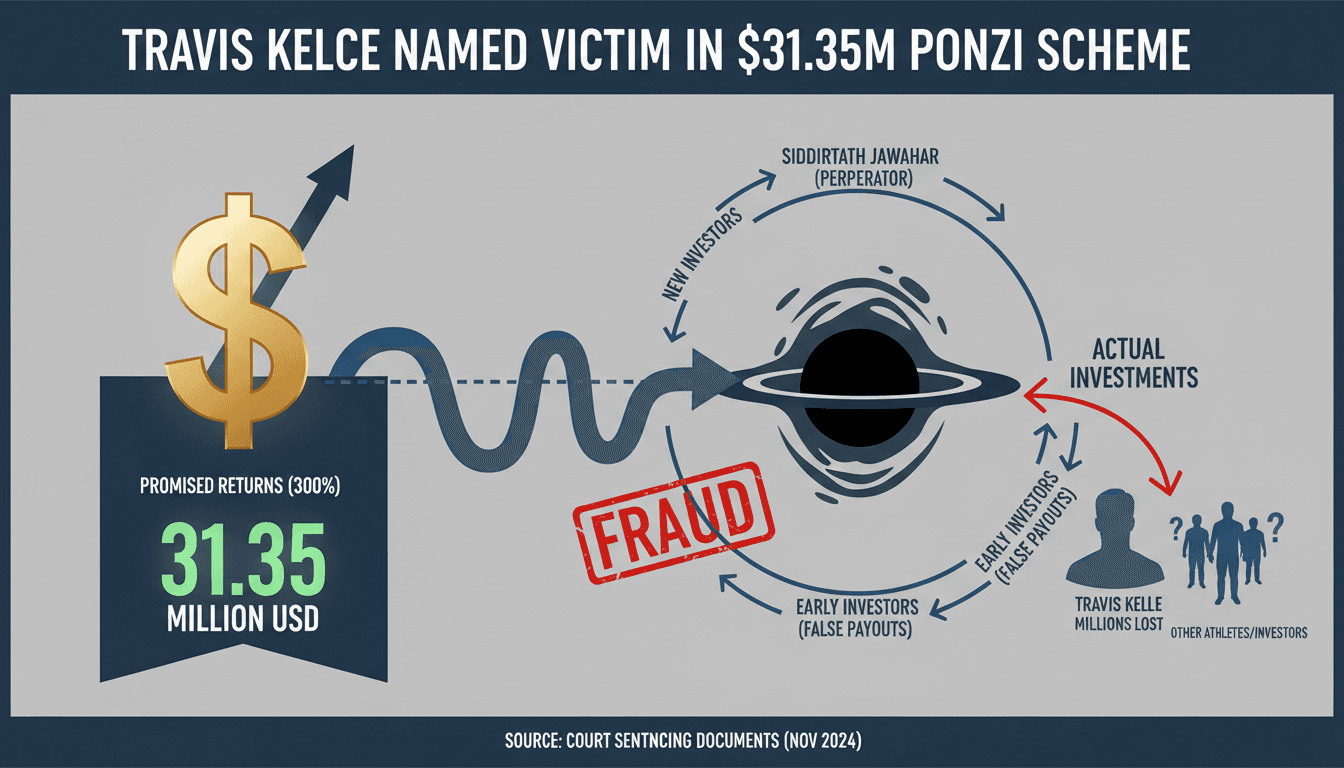
- Siddharth Jawahar, the perpetrator, raised over $35 million from investors, misappropriating funds primarily into a declining stock.
- Jawahar was sentenced to 11 years in prison and ordered to pay restitution, emphasizing the severity of financial fraud.
The context you actually need
- Jawahar operated Swiftarc Capital LLC from 2016 to 2023, soliciting investments from professional athletes and high-net-worth individuals.
- The scheme misallocated funds, with approximately 99% directed into Philip Morris Pakistan stock, which lost value while Jawahar falsely reported profits.
- The case underscores a breach of trust in financial advisory services, particularly affecting those who rely on expert guidance for investment decisions.
What's really happening
The Ponzi scheme orchestrated by Siddharth Jawahar reveals a troubling trend in the investment landscape, particularly for high-net-worth individuals like Travis Kelce. Between 2016 and 2023, Jawahar raised over $35 million, promising lucrative returns while misappropriating nearly all funds into a single declining stock. This misallocation not only resulted in significant financial losses for investors but also highlighted the systemic issues within investment advisory practices.
Jawahar's operation was characterized by a classic Ponzi structure, where returns to earlier investors were paid using the capital from new investors rather than from profit earned by the investment. This deceptive practice allowed him to maintain the illusion of a successful investment firm while living a lavish lifestyle funded by investor capital. His expenditures included private jets, luxury apartments, and high-end dining, which further illustrates the personal incentives that can drive fraudulent behavior in financial markets.
The sentencing of Jawahar to 11 years in prison and the restitution order of $31.35 million serve as a stark reminder of the legal repercussions of such fraud. However, the broader implications extend beyond the courtroom. The case raises critical questions about the integrity of financial advisory services and the trust placed in them by investors. High-profile victims like Kelce, who are accustomed to financial success, may find their confidence shaken, leading to a more cautious approach to investment in the future.
Moreover, this incident could trigger a ripple effect across the investment community, prompting regulatory bodies to scrutinize investment firms more closely. Investors may demand greater transparency and accountability, leading to potential changes in how investment firms operate. The fallout from this case could also influence the behavior of financial advisors, who may become more risk-averse in their dealings to avoid similar pitfalls.
In essence, the Kelce-Jawahar case is not just about one individual’s financial loss; it reflects a larger narrative about trust, accountability, and the need for reform in the investment advisory sector. As the dust settles, the implications for both investors and financial professionals will likely be profound, reshaping the landscape of investment practices.
Who feels it first (and how)
- High-net-worth individuals: Increased scrutiny and potential hesitance in investment decisions.
- Financial advisors: Pressure to enhance transparency and accountability in their practices.
- Regulatory bodies: Likely to implement stricter regulations to prevent similar frauds.
What to watch next
- Regulatory changes: Watch for new regulations aimed at increasing transparency in investment firms, which could reshape industry standards.
- Investor behavior: Monitor shifts in how high-net-worth individuals approach investments, particularly regarding trust in financial advisors.
- Legal repercussions: Keep an eye on any additional legal actions against Jawahar or similar cases that may emerge, which could influence public perception of investment safety.
Jawahar has been sentenced and ordered to pay restitution.
Increased regulatory scrutiny on investment firms will follow.
The long-term impact on investor confidence and behavior remains to be seen.
Frequently Asked Questions
- Why it matters?
- This case highlights vulnerabilities in investment practices, especially among high-net-worth individuals.
- What happened (in 30 seconds)?
- Travis Kelce was publicly identified as a victim in a $31.35 million Ponzi scheme during federal court proceedings. Siddharth Jawahar, the perpetrator, raised over $35 million from investors, misappropriating funds primarily into a declining stock. Jawahar was sentenced to 11 years in prison and ordered to pay restitution, emphasizing the severity of financial fraud.
- What's really happening?
- The Ponzi scheme orchestrated by Siddharth Jawahar reveals a troubling trend in the investment landscape, particularly for high-net-worth individuals like Travis Kelce. Between 2016 and 2023, Jawahar raised over $35 million, promising lucrative returns while misappropriating nearly all funds into a single declining stock. This misallocation not only resulted in significant financial losses for investors but also highlighted the systemic issues within investment advisory practices. Jawahar's ope
- Who feels it first (and how)?
- High-net-worth individuals: Increased scrutiny and potential hesitance in investment decisions. Financial advisors: Pressure to enhance transparency and accountability in their practices. Regulatory bodies: Likely to implement stricter regulations to prevent similar frauds.
- What to watch next?
- Regulatory changes: Watch for new regulations aimed at increasing transparency in investment firms, which could reshape industry standards. Investor behavior: Monitor shifts in how high-net-worth individuals approach investments, particularly regarding trust in financial advisors. Legal repercussions: Keep an eye on any additional legal actions against Jawahar or similar cases that may emerge, which could influence public perception of investment safety.
Breaking news, scores, player stats, and analysis across all major sports.
"Yahoo Sports is a comprehensive digital sports destination known for stats, fantasy sports, and real-time updates."
— A47 Editor
Travis Kelce among victims of a $31M Ponzi scheme
Travis Kelce, the Kansas City Chiefs tight end, has been identified as a victim in a $31 million Ponzi scheme orchestrated by Siddharth Jawahar, who received an 11-year prison sentence and was ordered to pay restitution to victims. The scheme, which ...
Corporate leadership, finance, technology, and market trends.
"Fortune covers financial trends, leadership, and innovation with a pragmatic editorial approach."
— A47 Editor
Man sentenced in $35 million Ponzi scheme that defrauded Travis Kelce: ‘He did this out of greed’
Siddharth Jawahar has been sentenced to 11 years in prison for orchestrating a $35 million Ponzi scheme that defrauded several investors, including NFL star Travis Kelce. The scheme, driven by greed, has raised significant concerns about the integrit...
Business, investment, entrepreneurship, leadership, and innovation.
"Forbes is known for its coverage of business leaders, market trends, and entrepreneurial ventures with a pro-business editorial stance."
— A47 Editor
Travis Kelce Named Victim In Fraudster’s Multi-Million Dollar Ponzi Scheme
Travis Kelce, the tight end for the Kansas City Chiefs, has been identified as a victim in a multi-million dollar Ponzi scheme orchestrated by Siddharth Jawahar, who has been sentenced to 11 years in prison. This case highlights the risks associated ...