
Manchester City Found Guilty of 114 Financial Charges by Premier League Commission
Why it matters
This verdict could set a precedent for financial accountability in sports, impacting club operations and fan engagement globally.
What happened (in 30 seconds)
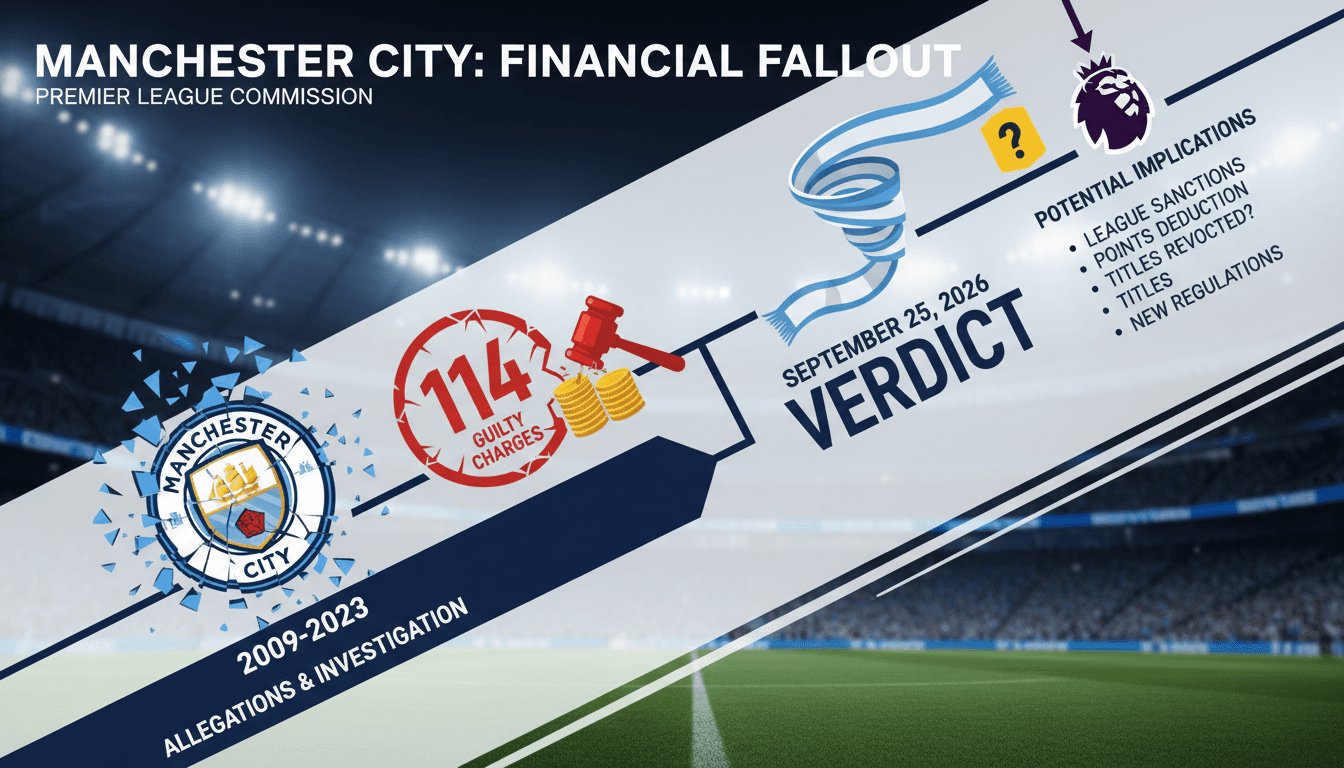
- Manchester City was found guilty on 114 of 115 financial charges by an independent commission, primarily for breaching financial fair play rules.
- The club has denied wrongdoing and plans to appeal the decision, which could lead to sanctions including points deductions or title stripping.
- The case stems from investigations initiated in 2018 following leaked documents that alleged financial misconduct dating back to 2009.
The context you actually need
- Manchester City’s ownership by Sheikh Mansour has transformed the club into a football powerhouse, winning multiple titles since 2008.
- Financial fair play (FFP) regulations were introduced to ensure clubs operate within their financial means, limiting the influence of wealthy owners.
- The investigation was triggered by leaks from Der Spiegel that suggested the club circumvented FFP rules through inflated sponsorship deals.
What's really happening
The recent verdict against Manchester City is a culmination of a lengthy investigation that began in December 2018, following allegations of financial misconduct. The independent commission found the club guilty of 114 out of 115 charges, primarily related to inaccurate financial reporting and breaches of financial fair play (FFP) regulations. This case is significant not only for Manchester City but for the entire football ecosystem, as it raises questions about the integrity of financial practices in elite sports.
The FFP rules, introduced by UEFA in 2011 and adopted by the Premier League in 2013, were designed to prevent clubs from spending beyond their means, ensuring a level playing field. However, the enforcement of these rules has often been inconsistent, leading to skepticism about their effectiveness. Manchester City's rapid rise to prominence, fueled by substantial investment from its Abu Dhabi owners, has drawn scrutiny and allegations of financial manipulation.
The club's resistance to document requests during the investigation led to legal challenges, which were ultimately resolved against them by 2021. The charges brought forth in February 2023 encompassed a wide range of financial discrepancies, including inaccurate reporting of revenues and expenses, as well as non-cooperation with the league's inquiries. The independent commission's findings have now confirmed that the club breached these regulations, raising the stakes for both Manchester City and the Premier League.
As the club prepares to appeal the decision, the potential sanctions loom large. These could include points deductions, which would significantly impact their current standing in the league, or even the stripping of titles won during the period in question. The implications of this case extend beyond Manchester City; they could influence how other clubs approach financial management and compliance with FFP regulations.
Moreover, the case has broader ramifications for the reputation of the Premier League and its governance. If the league is perceived as unable to enforce its own rules effectively, it could undermine confidence among fans, sponsors, and investors. The outcome of this case may also affect the financial landscape of football, prompting discussions about the need for stricter regulations and oversight.
In the context of global sports, the case highlights the ongoing tension between financial investment and competitive integrity. As clubs continue to seek ways to attract investment and enhance their brand, the balance between financial power and fair competition will remain a critical issue.
Who feels it first (and how)
- Football fans: Potential changes in league standings and club reputations could alter fan engagement and loyalty.
- Club owners and investors: Increased scrutiny on financial practices may lead to more cautious investment strategies.
- Regulatory bodies: The Premier League and UEFA may face pressure to tighten enforcement of financial regulations.
- Sponsorship partners: Companies associated with clubs may reassess their partnerships based on reputational risks.
What to watch next
- Sanction outcomes: The nature and severity of any penalties imposed on Manchester City will set a precedent for future cases.
- Appeal process: The timeline and results of the club's appeal could influence public perception and regulatory approaches.
- Financial regulation discussions: Ongoing debates about the effectiveness of FFP rules and potential reforms will shape the future of football finance.
Manchester City was found guilty on 114 of 115 charges.
The club will appeal the decision, and sanctions may include points deductions.
The long-term impact on financial regulations in football and how other clubs will respond.
Frequently Asked Questions
- Why it matters?
- This verdict could set a precedent for financial accountability in sports, impacting club operations and fan engagement globally.
- What happened (in 30 seconds)?
- Manchester City was found guilty on 114 of 115 financial charges by an independent commission, primarily for breaching financial fair play rules. The club has denied wrongdoing and plans to appeal the decision, which could lead to sanctions including points deductions or title stripping. The case stems from investigations initiated in 2018 following leaked documents that alleged financial misconduct dating back to 2009.
- What's really happening?
- The recent verdict against Manchester City is a culmination of a lengthy investigation that began in December 2018, following allegations of financial misconduct. The independent commission found the club guilty of 114 out of 115 charges, primarily related to inaccurate financial reporting and breaches of financial fair play (FFP) regulations. This case is significant not only for Manchester City but for the entire football ecosystem, as it raises questions about the integrity of financial pract
- Who feels it first (and how)?
- Football fans: Potential changes in league standings and club reputations could alter fan engagement and loyalty. Club owners and investors: Increased scrutiny on financial practices may lead to more cautious investment strategies. Regulatory bodies: The Premier League and UEFA may face pressure to tighten enforcement of financial regulations. Sponsorship partners: Companies associated with clubs may reassess their partnerships based on reputational risks.
- What to watch next?
- Sanction outcomes: The nature and severity of any penalties imposed on Manchester City will set a precedent for future cases. Appeal process: The timeline and results of the club's appeal could influence public perception and regulatory approaches. Financial regulation discussions: Ongoing debates about the effectiveness of FFP rules and potential reforms will shape the future of football finance.
UK and international business news, economics, and corporate coverage.
"The Guardian’s business section covers finance and markets with a progressive editorial tone."
— A47 Editor
How drawn-out saga of Manchester City’s alleged cheating came to this
Manchester City has been found guilty of breaching the majority of over 115 financial rules set by the Premier League, with violations occurring between 2009 and 2018. This ruling follows a lengthy investigation that began in December 2018, during wh...
Top international stories selected by The Guardian editors.
"The Guardian is known for its progressive editorial stance and in-depth analysis."
— A47 Editor
How drawn-out saga of Manchester City’s alleged cheating came to this
Manchester City has been found guilty of breaching the majority of over 115 financial rules set by the Premier League, with violations occurring between 2009 and 2018. This ruling follows a lengthy investigation that began in December 2018, during wh...
United Kingdom-focused news including local politics, business, and social issues.
"BBC News is widely regarded as a reputable international news organization, known for its impartial tone and public service mandate."
— A47 Editor
Relegation? Titles stripped? Appeals? What next for Man City
Manchester City has been found guilty of breaching the majority of 115 financial rules set by the Premier League, with violations occurring between 2009 and 2018. This judgment marks a significant development after more than two years of investigatio...
Corporate news, economic trends, and markets with UK and global scope.
"BBC News is widely regarded as reputable and impartial, with a public service mandate."
— A47 Editor
Man City found guilty of breaking financial rules
Manchester City has been found guilty of the majority of 115 breaches of the Premier League's financial rules, which occurred between 2009 and 2018. The club has denied any wrongdoing and is expected to appeal the decision.
United Kingdom-focused news including local politics, business, and social issues.
"BBC News is widely regarded as a reputable international news organization, known for its impartial tone and public service mandate."
— A47 Editor
Man City found guilty of majority of 115 financial rule breaches
Manchester City has been found guilty of the majority of 115 breaches of the Premier League's financial rules, which occurred between 2009 and 2018. The club has denied any wrongdoing and is expected to appeal the decision.