
MLB and MLBPA Deadlock Over Salary Cap Proposal Ahead of December 1 CBA Expiration
Why it matters
The clash over fixed spending boundaries threatens to trigger a prolonged league lockout in December 2026, fundamentally reorganizing the economic distribution of billions of dollars across professional sports franchises, broadcast schedules, and guaranteed player compensation.
What happened (in 30 seconds)
- Owners drew an absolute line on spending limits: During meetings on November 18–19, 2026, in New York, Commissioner Rob Manfred stated that franchise owners will not compromise on instituting a hard salary cap and floor system.
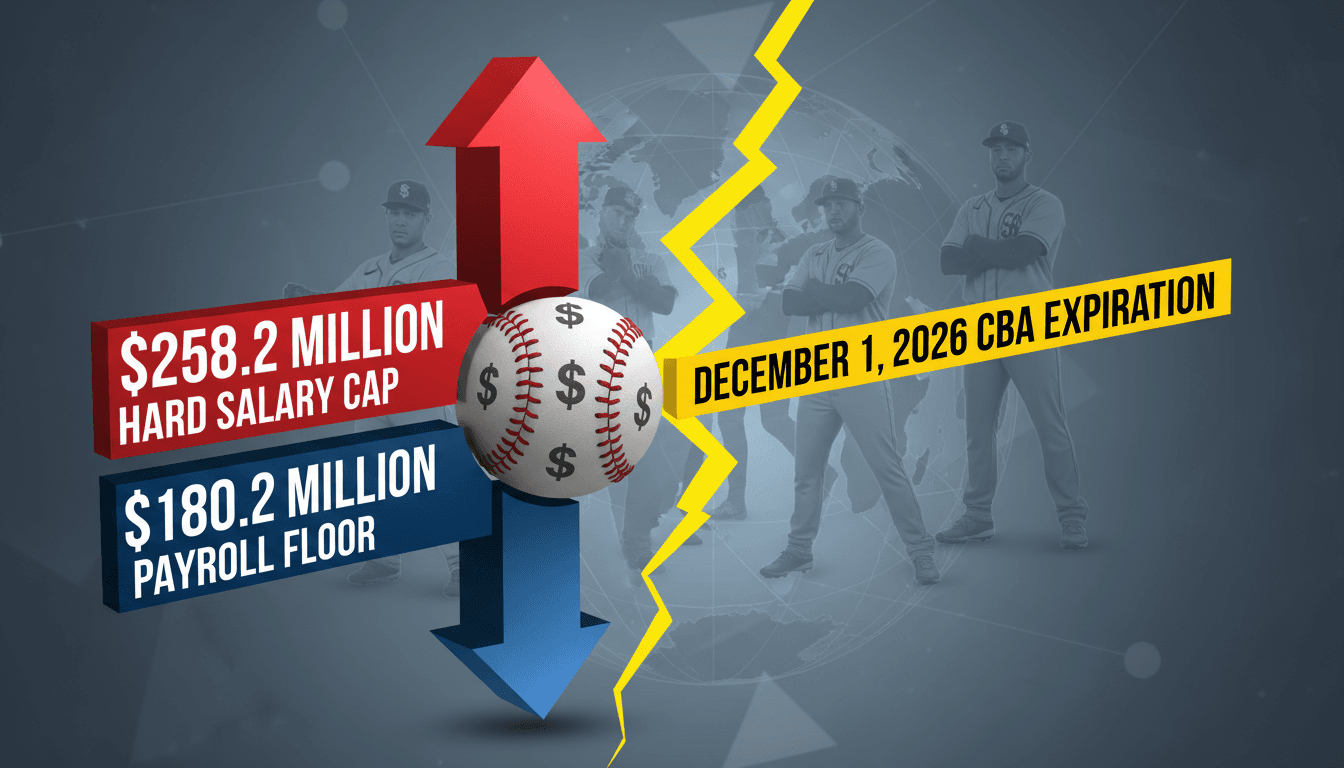
- The specific economic formula was defined: The league put forward a proposal setting a $258.2 million hard salary cap alongside a $180.2 million payroll floor, designated to take effect during the 2028 season.
- The players union firmly rejected the parameters: MLBPA Interim Executive Director Bruce Meyer stated the union views the hard cap framework as a mechanism that suppresses total compensation and dismantles fully guaranteed contracts, cementing a standoff ahead of the December 1, 2026 collective bargaining agreement expiration.
The context you actually need
- Three decades of cap-free operations: Major League Baseball remains the lone major North American sports league without a hard cap, having resolved previous revenue-sharing disputes without one following the 1994–95 strike.
- Persistent balance arguments versus open earning potential: Franchise owners argue that vast payroll disparities between high-revenue and low-revenue clubs harm competitive balance and consumer interest, while the MLBPA maintains that an open market and fully guaranteed contracts reflect true asset value.
- Parallel negotiations remain split: While non-economic items like drug policies and internal grievance procedures have achieved negotiating progress, broader economic talks have been stalled since May 2026 due to the league conditioning financial talks on cap acceptance.
What's really happening
The current labor dispute is an operational clash driven by two irreconcilable economic models: an institutional push for fixed cost certainty versus an organized workforce defending unlimited market upside.
Franchise owners are operating under incentive structures dictated by franchise asset valuations, localized media revenues, and operational margins. In their view, uncontrolled payroll discrepancies create structural competitive imbalances across markets. By introducing a $258.2 million ceiling linked to an $180.2 million floor for 2028, owners seek to compress the operating payroll spread between market extremes. The floor mechanism attempts to force lower-spending franchises to allocate capital toward field talent, while the hard cap establishes a rigid barrier against payroll inflation in major media hubs. For ownership, establishing cost control guarantees balance-sheet predictability across all 30 member clubs, insulating bottom lines from escalating bidding cycles.
Conversely, the MLB Players Association operates under a mandate to safeguard labor pricing leverage. The union’s opposition centers on the mechanics of compensation limits: a hard ceiling caps aggregate player share, alters contract structures, and historically threatens the status of fully guaranteed contracts. The MLBPA views the proposed $258.2 million hard limit not as an equalizer, but as an artificial barrier preventing elite talent from extracting competitive value in an open marketplace. Because the union has historically rejected salary caps across multiple collective bargaining cycles since 1994, accepting a cap system represents a permanent concession of structural power.
Because Commissioner Manfred has publicly positioned the cap and floor mechanism as non-negotiable, standard collective bargaining mechanisms are constrained. When management ties all economic discussions to a single operational condition that labor fundamentally rejects, intermediate compromises regarding revenue sharing or luxury tax modifications become structurally impossible. The impending expiration on December 1, 2026 creates an immediate deadline: without an operational consensus or a temporary extension, a lockout beginning December 2, 2026 will halt transactional labor markets, free agency signings, and operational planning for the 2027 season.
Who feels it first (and how)
- Top-tier pending free agents: Elite players approaching the winter 2026 market face immediate contract freezes, transaction freezes, and suspended contract negotiations during a December lockout.
- Franchise business operations and ticket sales teams: Front-office corporate units encounter frozen season-ticket sales cycles, deferred partnership renewals, and marketing delays without a confirmed 2027 championship schedule.
- Sports media networks and regional broadcasters: Domestic and international distribution partners face programming voids, disrupted advertising commitments, and unfulfilled broadcast contracts if work stoppages bleed into spring 2027.
- Global sports agency executives: Talent agencies face liquidity and commission bottlenecks as trades, international signings, and multi-year contract executions are halted nationwide.
What to watch next
- The December 1, 2026 expiration: The formal termination of the current collective bargaining agreement will dictate whether owners immediately institute a lockout on December 2 or agree to temporary operational extensions.
- Union economic counter-proposals: Watch whether the MLBPA presents alternative non-cap financial frameworks—such as revised luxury tax brackets or modified revenue redistribution formulas—to bypass the current binary impasse.
- The 2027 spring training timeline: Any labor freeze extending past January 2027 directly threatens the scheduled start of spring operational camps, providing the first measurable threat to the regular-season calendar.
The current collective bargaining agreement expires on December 1, 2026; MLB owners proposed a $258.2 million hard cap with a $180.2 million floor for 2028; the MLBPA has officially rejected this framework.
A management lockout will take effect on December 2, 2026, freezing all player acquisitions, major trades, and off-season roster construction until an economic agreement is reached.
Whether either party will compromise on the hard cap threshold before the dispute impacts the 2027 regular season, or whether legal challenges will emerge regarding guaranteed contract enforcement.
Frequently Asked Questions
- Why it matters?
- The clash over fixed spending boundaries threatens to trigger a prolonged league lockout in December 2026, fundamentally reorganizing the economic distribution of billions of dollars across professional sports franchises, broadcast schedules, and guaranteed player compensation.
- What happened (in 30 seconds)?
- Owners drew an absolute line on spending limits: During meetings on November 18–19, 2026, in New York, Commissioner Rob Manfred stated that franchise owners will not compromise on instituting a hard salary cap and floor system. The specific economic formula was defined: The league put forward a proposal setting a $258.2 million hard salary cap alongside a $180.2 million payroll floor, designated to take effect during the 2028 season. The players union firmly rejected the parameters: MLBPA Interi
- What's really happening?
- The current labor dispute is an operational clash driven by two irreconcilable economic models: an institutional push for fixed cost certainty versus an organized workforce defending unlimited market upside. Franchise owners are operating under incentive structures dictated by franchise asset valuations, localized media revenues, and operational margins. In their view, uncontrolled payroll discrepancies create structural competitive imbalances across markets. By introducing a $258.2 million cei
- Who feels it first (and how)?
- Top-tier pending free agents: Elite players approaching the winter 2026 market face immediate contract freezes, transaction freezes, and suspended contract negotiations during a December lockout. Franchise business operations and ticket sales teams: Front-office corporate units encounter frozen season-ticket sales cycles, deferred partnership renewals, and marketing delays without a confirmed 2027 championship schedule. Sports media networks and regional broadcasters: Domestic and international
- What to watch next?
- The December 1, 2026 expiration: The formal termination of the current collective bargaining agreement will dictate whether owners immediately institute a lockout on December 2 or agree to temporary operational extensions. Union economic counter-proposals: Watch whether the MLBPA presents alternative non-cap financial frameworks—such as revised luxury tax brackets or modified revenue redistribution formulas—to bypass the current binary impasse. The 2027 spring training timeline: Any labor freeze
Breaking news, scores, player stats, and analysis across all major sports.
"Yahoo Sports is a comprehensive digital sports destination known for stats, fantasy sports, and real-time updates."
— A47 Editor
Why MLBPA continues to miss the point in salary cap standoff with MLB
MLB and the MLBPA remain deadlocked over a proposed salary cap and floor as the collective bargaining agreement approaches expiration. MLB has argued the measure would help address local TV blackouts, while the players' union contends it would strip ...
Conservative-leaning coverage of current events.
"Fox News is a highly influential conservative news outlet known for right-leaning political commentary and coverage."
— A47 Editor
New statements from Rob Manfred, MLBPA, guarantee baseball is shut down indefinitely in two weeks | Ian Miller
MLB commissioner Rob Manfred said owners will not compromise on a salary cap and floor in collective bargaining talks with the MLBPA, as the two sides approach a December 2 lockout that could halt baseball indefinitely.
Sports news with an emphasis on business, economics, and strategy behind major events and leagues.
"WSJ’s sports coverage is distinguished by its focus on financial and strategic aspects of the sports world."
— A47 Editor
MLB Insists It Will Not Compromise on Salary Cap
MLB Commissioner Rob Manfred said on Wednesday that he could not imagine a new labor agreement without spending limits, signaling the league will not compromise on a salary cap and raising the prospect of a lengthy work stoppage as the collective bar...
General sports headlines, features, and player interviews.
"Yahoo Sports offers broad sports coverage including exclusive interviews and multimedia content."
— A47 Editor
With lockout imminent, Rob Manfred 'can't imagine' MLB owners ratifying new CBA without salary cap, floor
Rob Manfred said MLB owners "can't imagine" ratifying a new collective bargaining agreement without a salary cap and floor, as the current MLB-MLBPA agreement is set to expire on December 1 and a lockout appears imminent.
Top international stories selected by The Guardian editors.
"The Guardian is known for its progressive editorial stance and in-depth analysis."
— A47 Editor
MLB commissioner Manfred cites fan support for salary cap as baseball heads towards lockout
MLB commissioner Rob Manfred said owners will not drop their demand for a salary cap with a cap and floor, putting the league on track for a lockout starting 2 December that could threaten the 2027 season. Players have said they will never accept a c...
Covers global sporting events, athlete news, and cultural perspectives on sports.
"The Guardian is known for progressive editorial analysis, often exploring social and cultural dimensions of sports."
— A47 Editor
MLB commissioner Manfred cites fan support for salary cap as baseball heads towards lockout
MLB commissioner Rob Manfred said owners will not drop their demand for a salary cap with a cap and floor, putting the league on track for a lockout starting 2 December that could threaten the 2027 season. Players have said they will never accept a c...
News from the United States including domestic politics, society, and culture.
"The Guardian is known for its progressive editorial stance and in-depth analysis, often advocating for social justice, environmental issues, and liberal values."
— A47 Editor
MLB commissioner Manfred cites fan support for salary cap as baseball heads towards lockout
MLB commissioner Rob Manfred said owners will not drop their demand for a salary cap with a cap and floor, putting the league on track for a lockout starting 2 December that could threaten the 2027 season. Players have said they will never accept a c...