
FIFA Changes Attribution of First Arab Goal in 2026 World Cup from Qatari Player to Swiss Defender
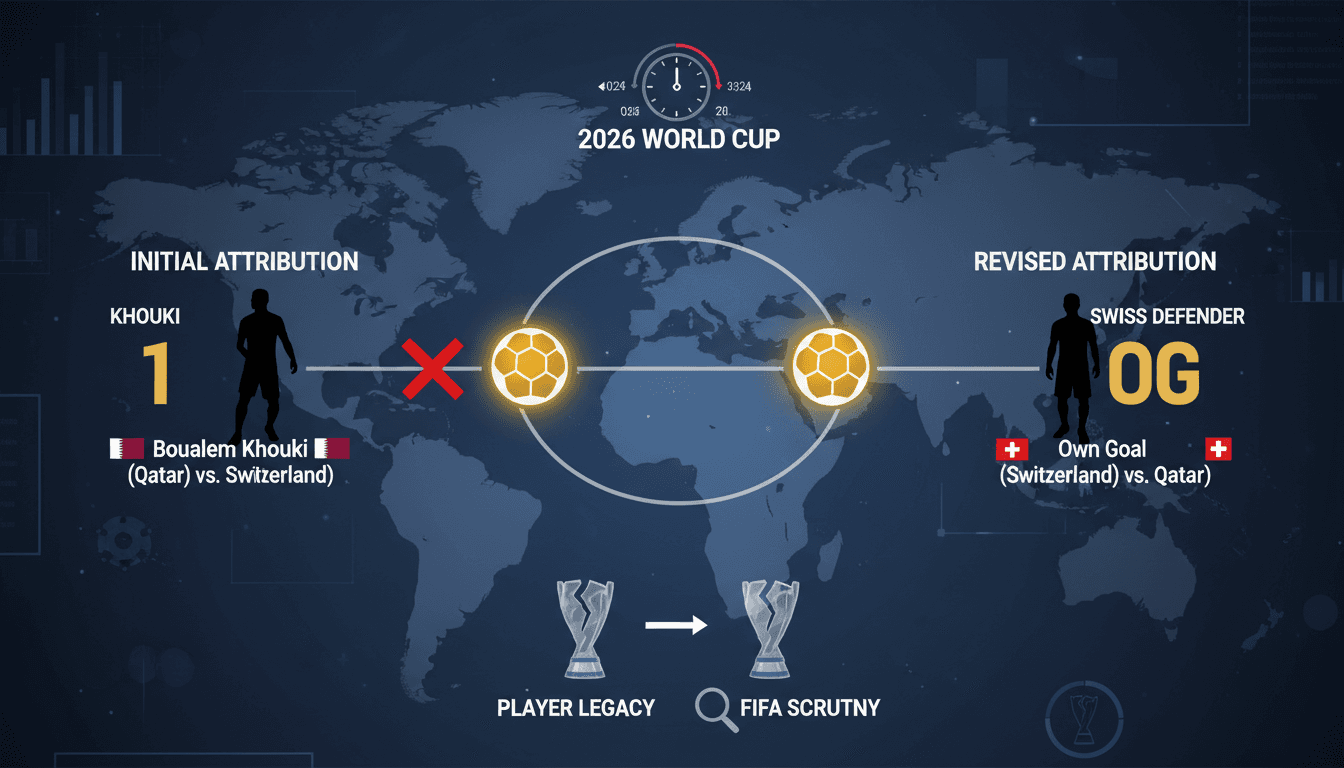
Here's what it means for you.
FIFA's decision to reattribute the first Arab goal in the 2026 World Cup has significant implications for player recognition and legacy. This incident raises questions about the integrity of goal attribution processes in international tournaments. As the football community reacts, the focus will likely shift to how FIFA manages similar situations in the future. The disappointment felt by Boualem Khouki and the Qatari team underscores the emotional weight of such milestones in sports. This event may prompt a reevaluation of FIFA's policies regarding goal recognition.
What happened
FIFA has officially changed the attribution of the first Arab goal in the 2026 World Cup from Qatari player Boualem Khouki to a Swiss defender. This decision was announced on June 14, 2026, following the initial celebration of Khouki's goal during a match against Switzerland. The reattribution has left Khouki and his supporters feeling disheartened, as they believed they had achieved a historic milestone.
The goal was initially credited to Khouki, marking a significant moment for Arab football. However, FIFA's subsequent decision has sparked discussions about the complexities involved in goal attribution during international tournaments.
The Context
This incident highlights the challenges surrounding goal recognition in high-stakes competitions like the World Cup. The timing of FIFA's announcement, immediately following the match, has intensified the scrutiny of their decision-making processes. Stakeholders, including players, teams, and fans, are now questioning the reliability of FIFA's goal attribution methods.
The implications of this decision extend beyond Khouki and the Qatari team, as it raises concerns about how such changes can affect players' legacies in international tournaments. As the tournament progresses, the focus will likely shift to FIFA's management of similar situations and the potential impact on players' reputations.
Takeaway
The reattribution of the first Arab goal raises important questions about FIFA's goal recognition processes and their long-term effects on players' legacies. Observers should monitor FIFA's future decisions regarding goal attributions, as they may influence how players are remembered in the annals of football history.
Reactions from the Qatari football community and Boualem Khouki himself will be crucial in understanding the broader impact of this decision. As discussions unfold, the football world will be watching closely to see how FIFA addresses these challenges moving forward.
Arabic-language coverage of international news and geopolitics.
"RT Arabic is a Russian state-funded outlet often criticized for promoting Kremlin-aligned narratives."
— A47 Editor
"الفيفا" يصدم نجم منتخب قطر بوعلام خوخي ويحرمه من هدف تاريخي في مرمى سويسرا
FIFA delivered an unexpected blow to Qatari defender Boualem Khouki by disallowing a crucial goal he scored against Switzerland, which ended in a 1-1 draw during the opening match of the 2026 World Cup. This decision has sparked controversy and disap...
Arabic-language UAE news coverage spanning domestic, public-interest, and current affairs reporting.
"Emarat Al Youm is a major UAE newspaper with broad mainstream coverage and strong attention to national developments."
— A47 Editor
"فيفا" ينسب أول هدف عربي في كأس العالم 2026 إلى مدافع سويسرا "فيفا" ينسب أول هدف عربي في كأس العالم 2026 إلى مدافع سويسرا
FIFA has announced a significant change regarding the attribution of the first Arab goal in the 2026 World Cup, now credited to a Swiss defender instead of an Arab player. This decision highlights the complexities involved in goal attribution during ...
Pan-Arab news coverage spanning politics, business, sports, and regional affairs.
"Asharq Al-Awsat reflects a broad Arab editorial perspective with strong attention to regional geopolitics."
— A47 Editor
«فيفا» ينسب أول هدف عربي في مونديال 2026 إلى مدافع سويسرا
FIFA has announced a change regarding the identity of the first Arab goal scorer in the 2026 World Cup, attributing it to a Swiss defender instead. This decision highlights the complexities and nuances surrounding goal attribution in international to...