
FIFA considers expanding World Cup to 64 teams after 48-team edition
Here's what it means for you.
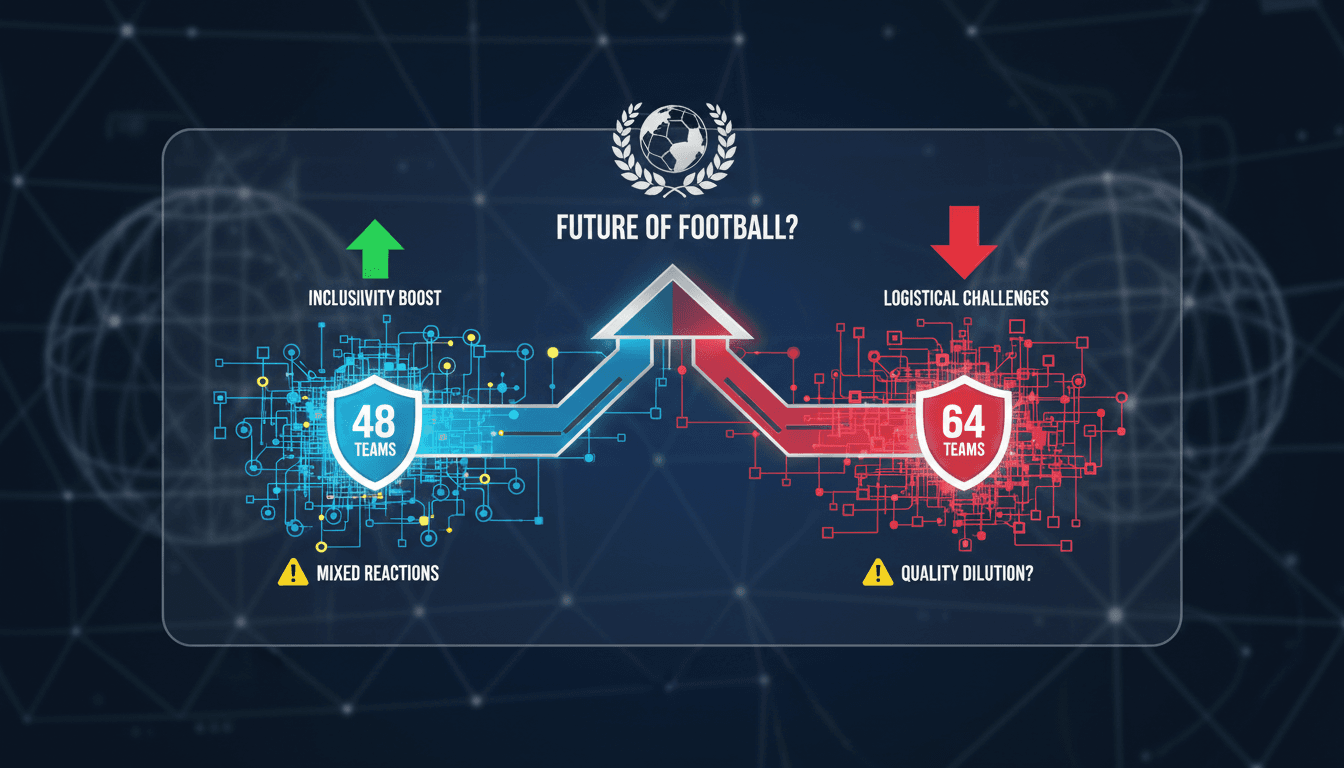
The potential expansion of the World Cup to 64 teams could reshape the landscape of international football. This move may enhance global representation, allowing more nations to compete on the world stage. However, it raises critical questions about the quality of play and the logistical challenges that come with a larger tournament. As FIFA navigates these discussions, the implications for player welfare and national federations' finances will be significant. Stakeholders will need to weigh the benefits of inclusivity against the risks of diluting the tournament's prestige.
What happened
FIFA President Gianni Infantino has proposed the possibility of a 64-team World Cup following the inaugural 48-team tournament. This suggestion comes in light of mixed reactions to the current format, which was first implemented during the 2026 World Cup held in North America. While some view this expansion as an opportunity for greater inclusivity, others express concerns regarding the potential dilution of competitive quality.
The inaugural 48-team edition featured 104 matches over five weeks, and a shift to 64 teams could increase that number to 128 matches. This change would not only extend the tournament duration but also complicate logistics and player welfare considerations. Key figures in football, including UEFA President Aleksander Ceferin, have voiced opposition to further expansion, highlighting the ongoing debate within the sport.
The Context
The decision to expand the World Cup to 48 teams was announced by FIFA in 2016, marking a significant shift in tournament structure. The 2026 edition was the first to implement this change, prompting discussions about the future of the tournament. Stakeholders are now evaluating the implications of a potential increase to 64 teams, which could fundamentally alter the tournament's economics and competitive integrity.
Concerns have been raised about the dilution of quality and the logistical challenges associated with a larger tournament. As FIFA considers these changes, the balance between inclusivity and maintaining the tournament's prestige will be crucial. The reactions from national federations and football associations will play a significant role in shaping the future of the World Cup.
Takeaway
The future of the World Cup may hinge on the reception of the 48-team format and the feasibility of expanding to 64 teams. As FIFA navigates this complex landscape, it will be essential to monitor decisions regarding tournament formats in upcoming congresses. The reactions from national federations and football associations will provide insight into the broader implications of such changes.
As discussions continue, the football community will be watching closely to see how FIFA balances the desire for inclusivity with the need to preserve the tournament's integrity. The outcome of these deliberations could have lasting effects on the World Cup's evolution and its role in the global sports arena.
Covers global sporting events, athlete news, and cultural perspectives on sports.
"The Guardian is known for progressive editorial analysis, often exploring social and cultural dimensions of sports."
— A47 Editor
New faces, gulfs in class and flawed drama: how 48 teams changed the World Cup | Billy Munday
The inaugural 48-team World Cup concluded with Spain defeating Argentina 1-0, highlighting both the excitement and challenges of the expanded format. FIFA's decision to increase the tournament size from 32 to 48 teams was met with mixed reactions, as...
Breaking news, scores, player stats, and analysis across all major sports.
"Yahoo Sports is a comprehensive digital sports destination known for stats, fantasy sports, and real-time updates."
— A47 Editor
Could Infantino really push through a 64-team World Cup?
FIFA President Gianni Infantino has announced plans to explore the possibility of expanding the men's World Cup to 64 teams after the 2026 tournament, emphasizing the importance of inclusivity in football. This proposal follows the recent transition ...
Pan-Arab news coverage spanning politics, business, sports, and regional affairs.
"Asharq Al-Awsat reflects a broad Arab editorial perspective with strong attention to regional geopolitics."
— A47 Editor
كأس العالم… هل تفقد بريقها مع كل توسع؟
The expansion of the FIFA World Cup to 48 teams marked a significant change in the tournament's history, and discussions about increasing the number to 64 teams are now gaining traction. This potential expansion reflects a shift in how the tournament...