
Debate Intensifies Over Potential Expansion of World Cup to 64 Teams
Here's what it means for you.
The recent discussions surrounding the potential expansion of the World Cup to 64 teams highlight a significant shift in the landscape of international football. As FIFA considers this change, the implications for tournament quality and logistics are at the forefront of the debate. Stakeholders, including football federations and fans, will need to weigh the benefits of inclusivity against the risks of diluting the tournament's prestige. The outcome of these discussions could reshape the future of global football, impacting everything from match scheduling to economic considerations. As the sport evolves, maintaining a balance between participation and quality will be crucial for FIFA's long-term strategy.
What happened
The inaugural 48-team World Cup concluded with Spain emerging as the champion, igniting conversations about a possible expansion to a 64-team format. This debate is fueled by the success of the recent tournament and the desire for broader participation among nations. FIFA's decision to expand the tournament from 32 to 48 teams under President Gianni Infantino has set the stage for these discussions.
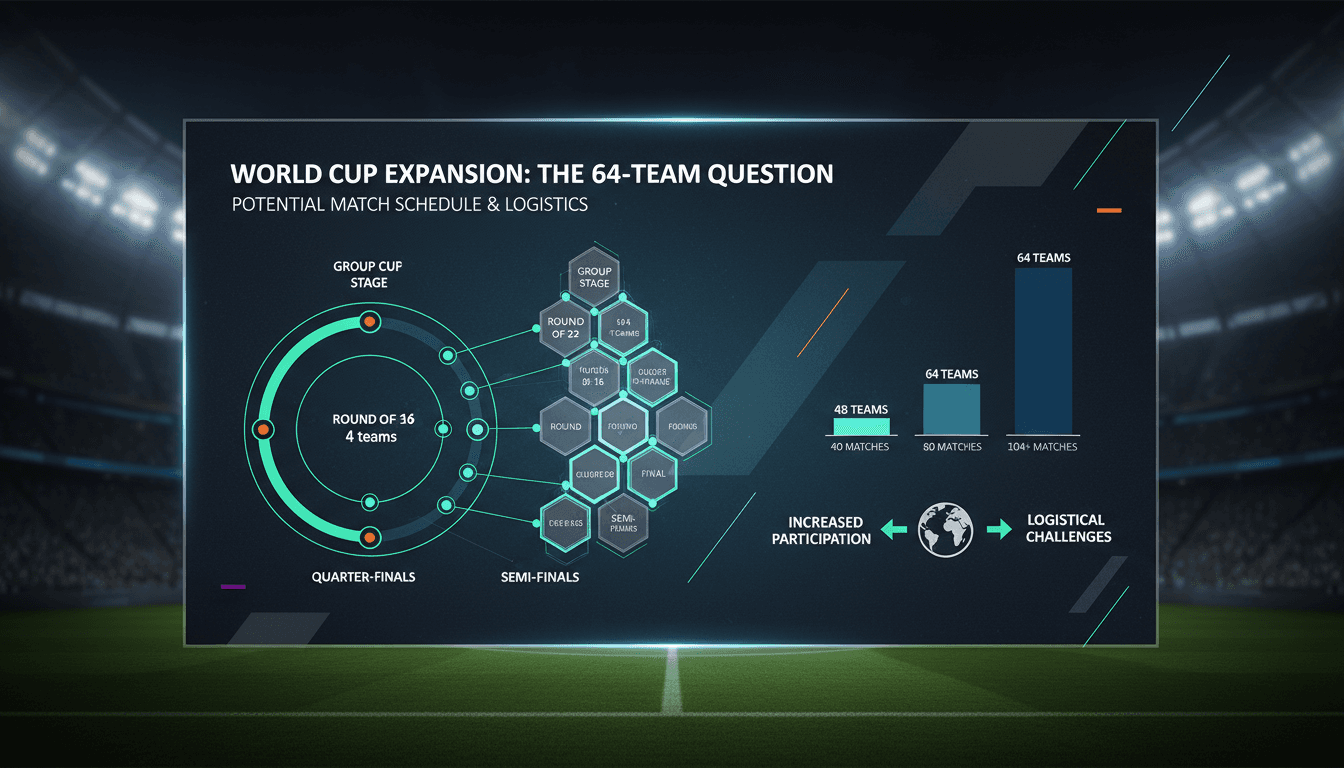
The 2026 tournament featured 104 matches over five and a half weeks, raising questions about the feasibility of further expansion. Concerns about the quality of play and logistical challenges are central to the ongoing debate. As FIFA evaluates the implications of a 64-team format, the future structure of the tournament remains uncertain.
The Context
FIFA's expansion to 48 teams was announced in 2016, marking a significant shift in World Cup history. The first 48-team tournament took place in 2026, and its success has prompted stakeholders to consider the next steps. UEFA President Aleksander Ceferin has publicly voiced opposition to further expansion, emphasizing the need to maintain the tournament's quality.
The potential shift to a 64-team format could lead to 128 matches, significantly increasing the tournament's duration and logistical demands. As FIFA navigates these discussions, the balance between inclusivity and maintaining the tournament's integrity will be critical. The outcome will likely influence how football federations and stakeholders respond to proposed changes.
Takeaway
Future discussions on World Cup formats will likely focus on balancing inclusivity with maintaining the tournament's prestige. As FIFA assesses the success of the 48-team format, the implications for the sport's economics and competitive balance will be under scrutiny. Monitoring FIFA's decisions regarding tournament formats post-2026 will be essential for understanding the direction of international football.
Reactions from football federations and stakeholders will also play a crucial role in shaping the future of the World Cup. The ongoing debate will continue to evolve as FIFA weighs the benefits of broader participation against the potential risks to the tournament's quality.
Covers global sporting events, athlete news, and cultural perspectives on sports.
"The Guardian is known for progressive editorial analysis, often exploring social and cultural dimensions of sports."
— A47 Editor
New faces, gulfs in class and flawed drama: how 48 teams changed the World Cup
The inaugural 48-team World Cup concluded with Spain claiming victory over Argentina, highlighting both the excitement and challenges of the expanded format. FIFA's decision to increase the tournament size from 32 to 48 teams, initiated by President ...
Breaking news, scores, player stats, and analysis across all major sports.
"Yahoo Sports is a comprehensive digital sports destination known for stats, fantasy sports, and real-time updates."
— A47 Editor
Could Infantino really push through a 64-team World Cup?
FIFA President Gianni Infantino has announced plans to explore the possibility of expanding the men's World Cup to 64 teams after the 2026 tournament, emphasizing the importance of inclusivity in football. This proposal follows the recent transition ...