
2026 FIFA World Cup sets record for own goals with 14 scored
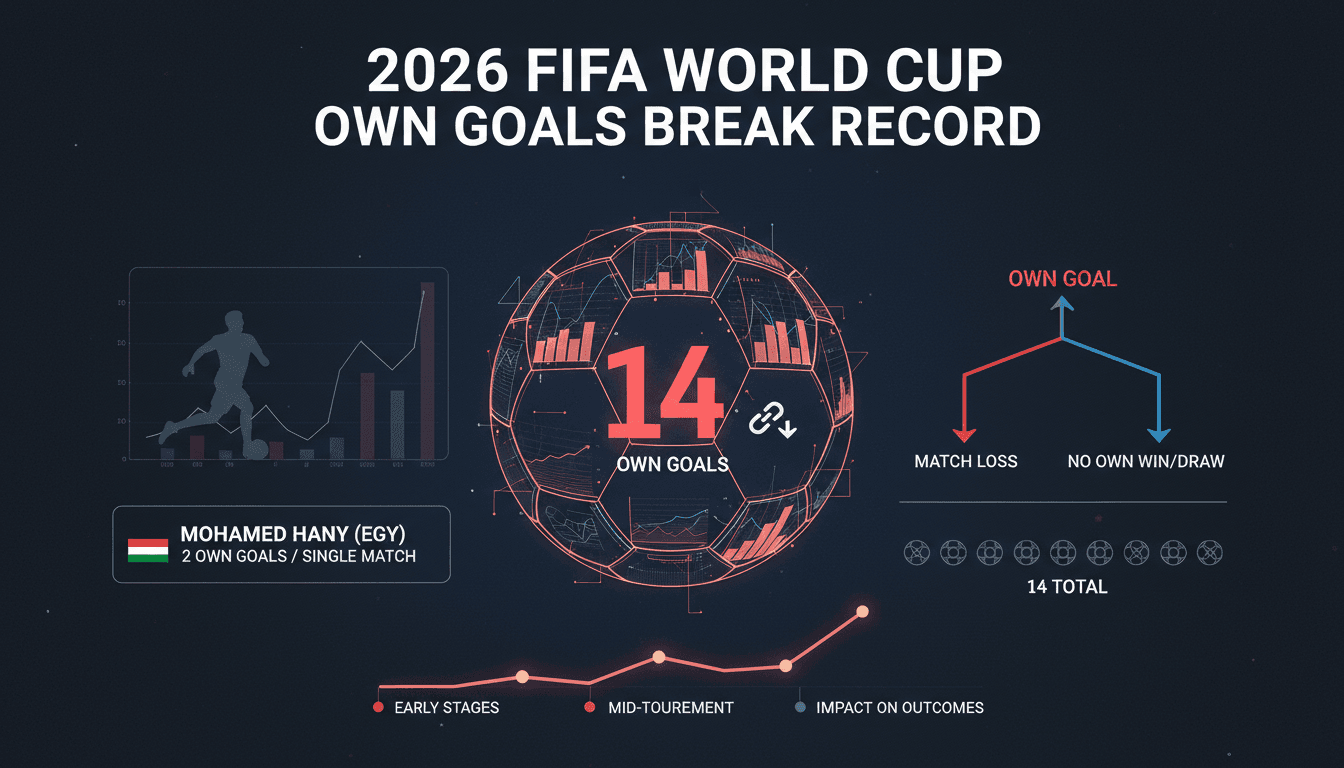
Here's what it means for you.
The 2026 FIFA World Cup has made headlines not only for its thrilling matches but also for the unprecedented number of own goals scored. With 14 own goals recorded, teams may need to reassess their defensive strategies to mitigate this trend. The impact on match outcomes could be significant, as teams adapt to the evolving dynamics of the tournament. As the competition progresses, the focus on player performance and defensive tactics will intensify. This record may influence how teams prepare for upcoming matches, emphasizing the need for vigilance to avoid contributing to the tally of own goals.
What happened
The 2026 FIFA World Cup has officially set a new record for the most own goals in a tournament, reaching a total of 14. This surpasses the previous record of 13 own goals established during the 2018 tournament. Among the notable incidents, Egypt's Mohamed Hany made history by scoring two own goals in a single match, a first for the World Cup.
Despite Hany's unfortunate record, Egypt advanced to the Round of 16 after a dramatic penalty shootout victory against Australia. The match ended in a 1-1 draw before Egypt triumphed 4-2 in penalties. This remarkable achievement highlights the unpredictable nature of the tournament.
The Context
The previous record for own goals in a World Cup was set in 2018, making this year's total particularly significant. Mohamed Hany's two own goals have positioned him as a unique figure in World Cup history, drawing attention to the challenges players face on the field. The contributions to the record have come from various teams, showcasing the collective impact of these incidents.
As the tournament unfolds, the implications of these own goals extend beyond individual players, influencing team strategies and match outcomes. The growing tally of own goals may prompt coaches to rethink their defensive formations and training regimens. This trend underscores the importance of adaptability in high-stakes environments like the World Cup.
Takeaway
Looking ahead, the trend of own goals may continue to shape the tournament's narrative. Teams will need to remain vigilant to avoid adding to the growing tally, as each own goal could prove crucial in determining match outcomes. Observers should monitor upcoming matches for potential record-breaking performances and how teams adjust their strategies in response to this phenomenon.
As the competition intensifies, the focus on defensive play will likely increase. Coaches and players alike will need to adapt to the evolving dynamics of the tournament, making the next matches critical in the context of this record-setting event.
English-language reporting on Saudi politics, policy, and society.
"Saudi Gazette reflects mainstream Saudi institutional perspectives."
— A47 Editor
Egypt's Mohamed Hany becomes first player with two own goals in one World Cup
Egypt's Mohamed Hany made history as the first player to score two own goals in a single FIFA World Cup tournament during the Round-of-32 match against Australia, which ended in a 4-2 victory for Egypt after a penalty shootout. Hany's first own goal ...
Pan-Arab news coverage spanning politics, business, sports, and regional affairs.
"Asharq Al-Awsat reflects a broad Arab editorial perspective with strong attention to regional geopolitics."
— A47 Editor
تحطيم الرقم القياسي للأهداف العكسية بالمونديال... و9 أهداف بأقدام عربية
The 2026 FIFA World Cup has set a new record for the highest number of own goals scored in a single tournament, highlighting a unique aspect of this year's competition.
General sports headlines, features, and player interviews.
"Yahoo Sports offers broad sports coverage including exclusive interviews and multimedia content."
— A47 Editor
2026 World Cup breaks own-goal record with 14, surpassing 2018 tournament
The 2026 FIFA World Cup has set a new record for own goals, with 14 incidents officially recorded, surpassing the previous record from the 2018 tournament. Notable own goals were scored by Egypt's Mohamed Hany and Cape Verde's Diney Borges during the...