
UN Warns of Escalating Hunger Crisis in 13 Global Hotspots
Here's what it means for you.
The United Nations' warning about acute hunger in 13 critical regions highlights a pressing humanitarian crisis that demands immediate global attention. Stakeholders, including governments and NGOs, must mobilize resources to address the escalating food insecurity. The situation underscores the interconnectedness of conflict, climate change, and funding shortages, which exacerbate vulnerabilities in these areas. As the crisis unfolds, the potential for increased suffering and loss of life looms large, making it imperative for the international community to act swiftly. Failure to intervene could lead to a humanitarian disaster, impacting not only those directly affected but also global stability and security.
What happened
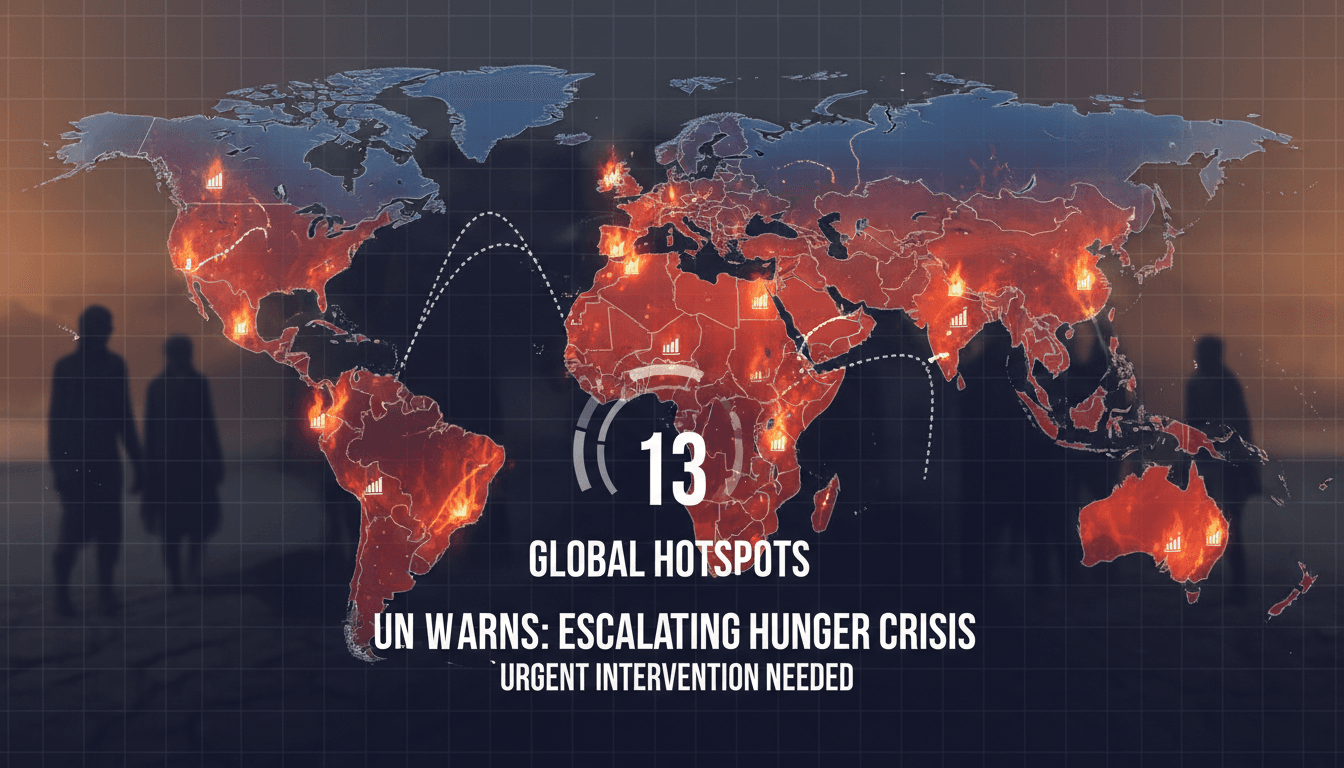
The United Nations has reported a significant increase in acute hunger across 13 global hotspots, with several regions facing immediate famine risks. The U.N. food agencies have identified these areas as critical, emphasizing the urgent need for humanitarian assistance. The report highlights that ongoing conflicts, funding shortages, and climate shocks are the primary drivers of this escalating crisis.
Specific regions such as Sudan, South Sudan, Yemen, Somalia, Northeast Nigeria, and Gaza have been pinpointed as particularly vulnerable. Without immediate intervention, the situation is expected to worsen significantly between June and November 2026. The alarming findings were released on June 17, 2026, by the Food and Agriculture Organization and the World Food Programme.
The Context
The backdrop of this crisis is marked by persistent conflict, which remains the main driver of food insecurity in the identified hotspots. The U.N. report underscores the urgent need for global action to address the root causes of hunger, particularly in conflict-affected regions. As millions face the threat of famine, the international community must prioritize these areas in their humanitarian efforts.
The timing of this warning is critical, as the situation is projected to deteriorate further without significant intervention. The implications of this crisis extend beyond immediate humanitarian needs, affecting regional stability and global security. Stakeholders must recognize the interconnected nature of these challenges and work collaboratively to mitigate the risks.
Takeaway
The international community must mobilize resources and support to prevent a humanitarian disaster in these vulnerable regions. Monitoring humanitarian response efforts in the identified hotspots will be crucial in assessing the effectiveness of interventions. Additionally, updates on funding and aid initiatives from global organizations will provide insight into the ongoing response to this escalating crisis.
As the situation develops, it will be essential to keep a close eye on the actions taken by governments and NGOs to address the urgent needs of those affected. The potential for increased suffering and loss of life underscores the importance of timely and effective humanitarian assistance.
Conservative-leaning political and national coverage.
"The Washington Times is a conservative-leaning newspaper known for its political coverage and advocacy of right-of-center viewpoints."
— A47 Editor
U.N. food agencies warn acute hunger will worsen in 13 hot spots as famine risks rise
The United Nations' food agencies have issued a warning that acute hunger is expected to escalate in 13 global hot spots due to ongoing conflicts, funding shortages, and climate-related shocks, which are pushing millions closer to famine. This alarmi...
Egyptian politics, economy, and society coverage.
"Al Masry Al Youm is a major Egyptian newspaper with broad national coverage."
— A47 Editor
الأمم المتحدة تحذر من تزايد خطر المجاعة فى 13 بؤرة جوع
A report from the United Nations warns that severe hunger is intensifying in 13 hotspots facing an immediate risk of famine, including Sudan and South Sudan. The report emphasizes the urgent need for intervention to prevent a worsening humanitarian c...
Regional coverage and analysis focused on politics, diplomacy, and business across the Middle East.
"Al-Monitor is known for analytical reporting on Middle East politics and policy developments."
— A47 Editor
Famine risk rises in 'hunger hotspots', UN warns
A joint United Nations report has highlighted a significant rise in extreme hunger across 13 identified 'hunger hotspots,' with Sudan, South Sudan, Yemen, Somalia, Northeast Nigeria, and Gaza facing immediate famine risks without urgent humanitarian ...