
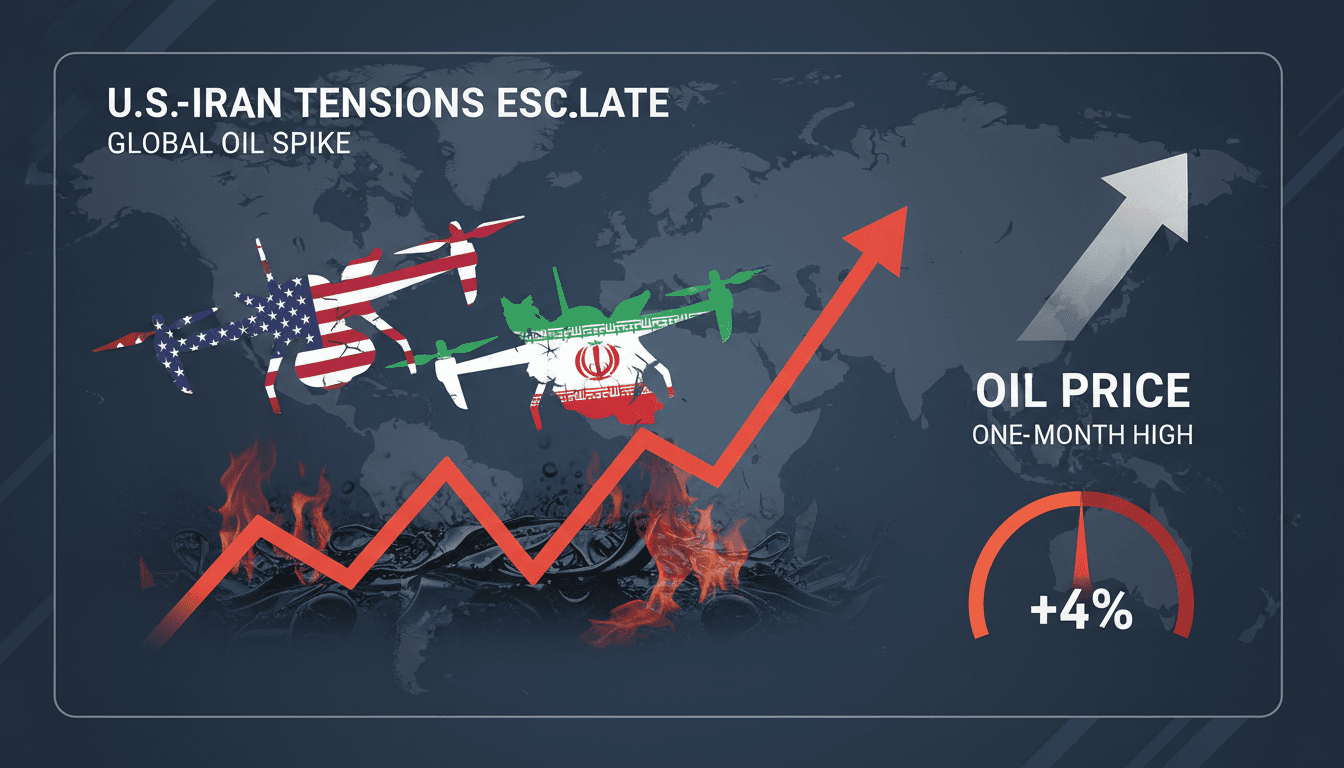
U.S.-Iran tensions escalate, driving oil prices to a one-month high
Here's what it means for you.
The recent escalation in U.S.-Iran tensions is poised to have significant implications for global oil markets and consumer fuel costs. As military actions intensify, oil prices have surged over four percent, reflecting the instability in a critical supply region. This situation could lead to higher prices at the pump, impacting both consumers and businesses reliant on fuel. With the average price of diesel in the U.S. surpassing $5 per gallon, the economic ramifications are becoming increasingly evident. Stakeholders in the energy sector should prepare for potential disruptions and fluctuations in supply chains as the geopolitical landscape evolves.
What happened
Oil prices have surged over four percent amid renewed hostilities between the U.S. and Iran. This spike is attributed to recent military actions, including U.S. strikes targeting Iranian capabilities and Iranian drone attacks on U.S. positions. As a result, Brent futures have reached a one-month high, now priced at $85.72 per barrel.
The U.S. has also reimposed a naval blockade on Iranian ports, further escalating tensions in the region. These developments have raised concerns about the stability of oil supplies, particularly through the strategically vital Strait of Hormuz, where a significant portion of the world's oil transits.
The Context
The ongoing conflict between the U.S. and Iran has deep historical roots, with both nations engaging in aggressive posturing that affects global oil markets. The Strait of Hormuz is critical for international oil transport, with approximately one-fifth of the world's oil passing through this narrow passage. Recent military actions have heightened fears of supply disruptions, which could lead to further price increases.
As the situation unfolds, the average price of regular gas in the U.S. is nearing $4, indicating the immediate impact of geopolitical tensions on consumer costs. The potential for continued military escalation raises questions about the future of diplomatic solutions and the stability of oil supply chains.
Takeaway
Looking ahead, continued military actions or sanctions could further disrupt oil supplies and drive prices higher. Stakeholders should monitor potential diplomatic efforts aimed at de-escalating tensions in the region, as these could influence market stability. The situation remains fluid, and any developments could have significant repercussions for global oil prices and consumer costs.
As the conflict evolves, the energy sector must remain vigilant to adapt to changing dynamics that could impact supply and pricing strategies. The uncertainty surrounding diplomatic resolutions adds another layer of complexity to an already volatile market.
Comprehensive coverage of global events, politics, and international issues.
"NBC News is a mainstream outlet known for comprehensive national and international coverage with a centrist to slightly left-leaning editorial tone."
— A47 Editor
Gas prices rise as U.S. and Iran escalate attacks
Gas prices in the U.S. have surged to nearly four dollars a gallon, coinciding with a more than four percent spike in oil prices, as tensions escalate between the U.S. and Iran, particularly around the strategic Strait of Hormuz. Recent military acti...
International coverage from The Guardian's global desks.
"The Guardian is known for its progressive editorial stance and in-depth analysis."
— A47 Editor
US gas prices edge up again as US-Iran tensions heighten over strait of Hormuz
US gas prices have risen again, with diesel exceeding $5 a gallon and regular gas nearing $4, marking a significant increase from last year. This surge is attributed to heightened tensions between the US and Iran, particularly concerning the Strait o...
Business, markets, economy, and corporate news with strong UAE and regional relevance.
"Emirates 24|7 business coverage tends to center UAE markets, property, regulation, and regional economic developments."
— A47 Editor
Oil prices rise as hostilities worsen in the Middle East
Oil prices have risen significantly as hostilities between the U.S. and Iran escalate, with Brent futures climbing to $85.72 per barrel following President Donald Trump's reinstatement of a naval blockade on Iranian ports and Iran's retaliatory strik...