
Oil Traffic Continues in Strait of Hormuz Despite Iranian Blockade Claims
Here's what it means for you.
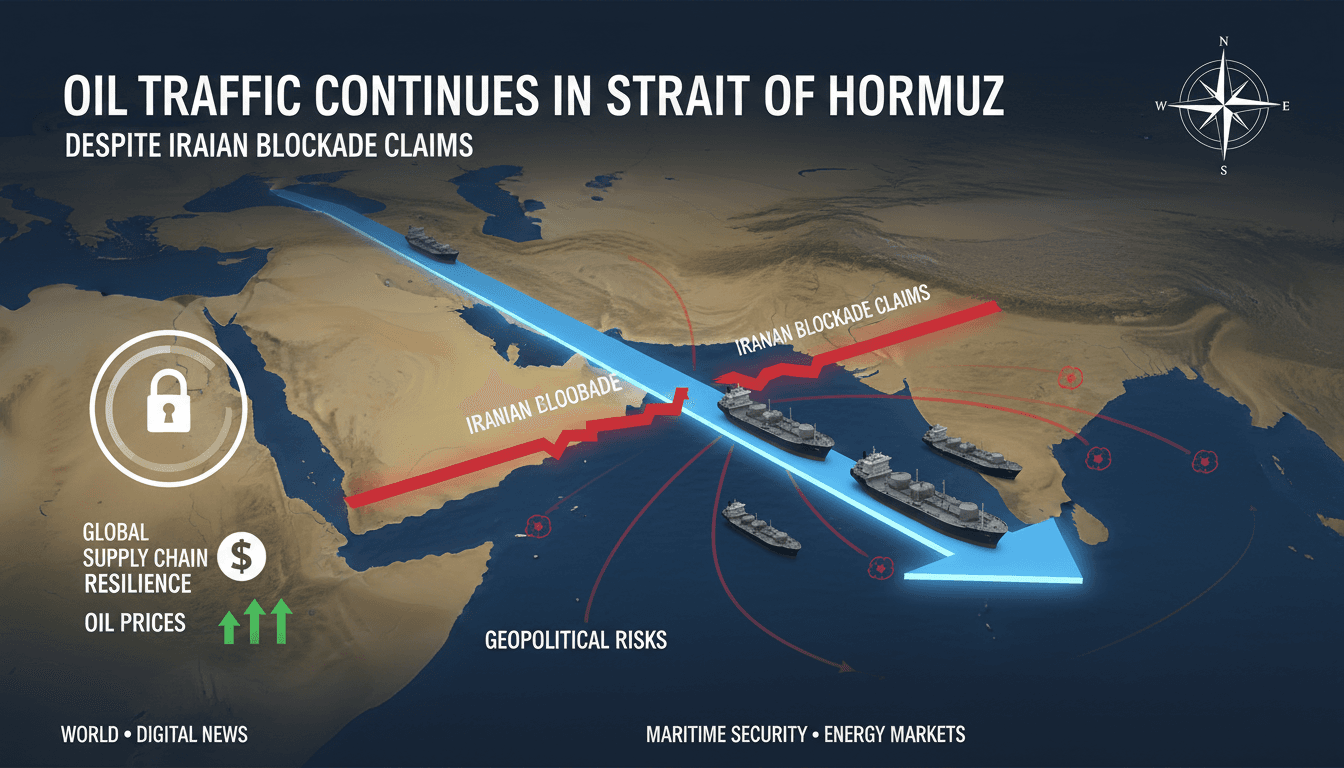
The ongoing oil traffic in the Strait of Hormuz, despite Iranian claims of a blockade, underscores the resilience of global supply chains amid geopolitical tensions. Shipowners are prioritizing safety, which may lead to fluctuating traffic levels and impact oil prices. Stakeholders in the energy sector should remain vigilant as developments unfold, particularly in relation to U.S.-Iran relations and their implications for maritime security.
What happened
Oil supertankers are still navigating the Strait of Hormuz, countering Iranian assertions that the vital waterway is closed. Recent reports indicate that three laden supertankers are currently operating in the channel, with one having briefly reversed direction before resuming its voyage. This activity highlights the ongoing flow of oil, even as traffic levels have thinned due to heightened safety concerns among shipowners.
The Strait of Hormuz is a critical chokepoint for global oil shipments, making its operational status vital for energy markets. The current situation reflects a delicate balance between geopolitical tensions and the necessity for safe maritime operations, as shipowners adapt their strategies in response to evolving risks.
The Context
The Strait of Hormuz is essential for transporting oil, with approximately six million barrels being the combined capacity of the supertankers currently in transit. Recent geopolitical tensions have raised alarms regarding the safety of maritime routes, prompting shipowners to exercise caution. This has resulted in a noticeable thinning of traffic through the Strait, as operators weigh the risks of navigating these waters against the need to maintain supply chains.
The implications of this situation extend beyond immediate shipping concerns, as fluctuations in oil traffic can influence global oil prices and market stability. Stakeholders, including governments and energy companies, are closely monitoring developments to assess potential impacts on maritime security and economic conditions.
Takeaway
As geopolitical tensions persist, the situation in the Strait of Hormuz is likely to remain fluid, with potential ramifications for global oil markets. Observers should keep an eye on further developments in U.S.-Iran relations, as these could significantly affect maritime security and shipping strategies. Additionally, fluctuations in oil prices may arise as market reactions to these geopolitical events unfold.
The ongoing flow of oil through the Strait suggests a degree of resilience in global supply chains, but the evolving landscape necessitates continuous monitoring. Stakeholders must remain agile in their responses to ensure operational safety and market stability.
Corporate leadership, finance, technology, and market trends.
"Fortune covers financial trends, leadership, and innovation with a pragmatic editorial approach."
— A47 Editor
Oil keeps flowing through Hormuz despite Iran saying it’s shut
Despite Iran's claims of shutting down the Strait of Hormuz, three oil supertankers successfully navigated the channel, transporting a combined total of 6 million barrels of oil along a route near Oman’s coast. This indicates that oil flows continue ...
Oil, metals, and agriculture: supply/demand headlines, OPEC chatter, inventories, and price action.
"Solid tape for energy and metals traders tracking macro and micro catalysts."
— A47 Editor
Brent set for 8% weekly fall as Israel, Hezbollah agree ceasefire
Brent crude oil prices are set to experience an 8% weekly decline as a ceasefire agreement has been reached between Israel and Hezbollah, signaling a potential reduction in regional hostilities. This development comes amid ongoing geopolitical tensio...
Global markets, investing, and macroeconomics from a premier financial newsroom.
"Bloomberg is respected for in-depth financial reporting and data-driven analysis."
— A47 Editor
Tanker in Persian Gulf Resumes Voyage to Hormuz After U-Turn
An oil supertanker has resumed its voyage from the Persian Gulf toward the Strait of Hormuz after a brief U-turn, indicating a shift in shipping routes amidst ongoing geopolitical tensions in the region.
Global markets, investing, and macroeconomics from a premier financial newsroom.
"Bloomberg is respected for in-depth financial reporting and data-driven analysis."
— A47 Editor
Hormuz Traffic Thins Friday as Shipowners Err on Side of Safety
Traffic through the Strait of Hormuz has decreased as shipowners prioritize safety following a surge in oil flows the previous day, coinciding with the US and Iran's commitment to lift a dual blockade.