
Iran Declares Strait of Hormuz a Red Line Amid Escalating US Military Actions
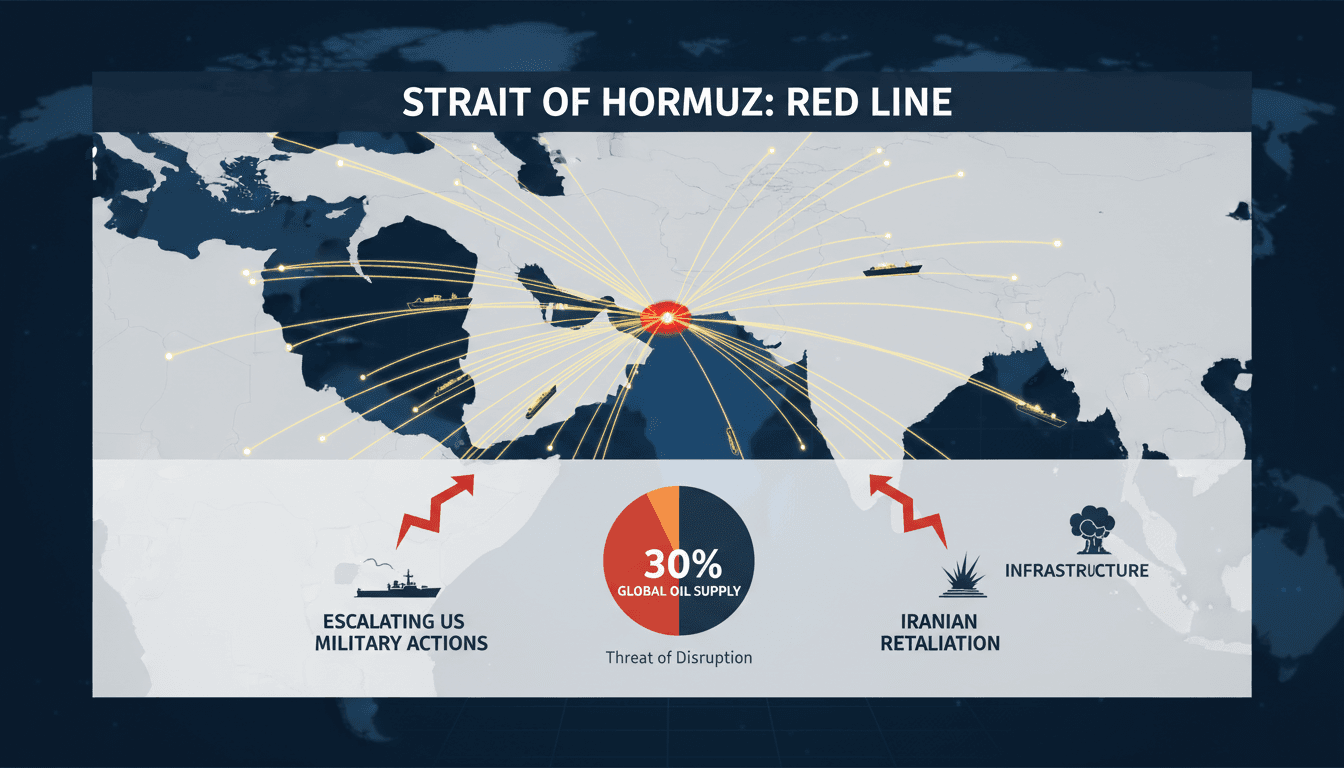
Here's what it means for you.
The declaration by Iran regarding the Strait of Hormuz as a 'red line' signals a significant escalation in regional tensions, particularly affecting global energy markets. With approximately 20% of the world's oil and gas shipments passing through this critical chokepoint, any disruption could have far-reaching implications for energy prices and supply chains. Stakeholders in the energy sector should closely monitor developments, as military actions could lead to increased volatility in oil markets. The ongoing conflict not only threatens regional stability but also poses risks to international trade routes. Policymakers must consider the potential for broader geopolitical ramifications as both the US and Iran engage in military posturing.
What happened
Iran has issued a stern warning, declaring the Strait of Hormuz an inviolable 'red line' and threatening severe retaliation against US military actions. This escalation follows renewed US military strikes and a naval blockade aimed at Iran, intensifying the already fraught situation in the region. Iran's military has indicated its capability to control the Strait from various strategic locations, not limited to its coastline.
In response to US attacks, Iran has launched missile strikes against US bases, further heightening tensions. The Iranian leadership has also communicated with regional proxies to prepare for potential escalations, indicating a coordinated response to perceived threats.
The Context
The Strait of Hormuz is a vital chokepoint for global oil and gas shipments, making it a focal point of geopolitical interest. Before the current conflict, around 20% of the world's oil and gas shipments traversed this narrow waterway, underscoring its importance to global energy security. The US has resumed military operations in the area, which has prompted Iran to assert its control and threaten retaliation.
The situation is further complicated by the involvement of regional proxies and the historical animosities between the US and Iran. As both nations engage in military actions, the potential for a wider conflict looms, raising concerns about the stability of the Middle East and the security of energy supplies.
Takeaway
As tensions escalate, the risk of broader regional instability increases, which could disrupt global energy supplies. Observers should watch for potential Iranian actions in the Bab el-Mandeb Strait as a possible response to US strikes, as well as further military engagements between US and Iranian forces in the Gulf region. The ongoing conflict may lead to significant shifts in energy markets and geopolitical alignments.
The situation remains fluid, and stakeholders must remain vigilant as developments unfold. The implications of this conflict extend beyond the immediate region, potentially affecting global energy prices and international relations.
English-language reporting on Saudi politics, policy, and society.
"Saudi Gazette reflects mainstream Saudi institutional perspectives."
— A47 Editor
Iran vows to 'crush' regional infrastructure if US hits Iranian sites
Iran has declared the Strait of Hormuz an inviolable red line and threatened to retaliate across the Gulf region if the United States attacks its infrastructure. This statement follows the resumption of U.S. naval blockades and airstrikes targeting I...
Breaking news, politics, business, and entertainment from the U.S. and around the world.
"The New York Post is a tabloid-format newspaper known for its sensationalist headlines and conservative-leaning editorial tone."
— A47 Editor
Iran warns Strait of Hormuz is a ‘red line’ and will resist until the end
Iran has declared the Strait of Hormuz an inviolable 'red line,' warning that any military action by the U.S., particularly under President Trump's threats to attack Iranian infrastructure, would provoke a response targeting all infrastructure across...
English-language digital publication covering business, politics, technology, and current affairs.
"The Arabian Post mixes original and syndicated-style coverage with a broad regional and global business-news orientation."
— A47 Editor
Iran widens energy threat as Hormuz battle escalates
Iran has intensified its military posture in the Strait of Hormuz, declaring it a 'red line' and threatening to close it in response to U.S. airstrikes and a renewed blockade on its ports. This escalation comes amid ongoing military exchanges between...