
Toronto Faces Severe Air Quality Crisis Due to Wildfire Smoke
Here's what it means for you.
The air quality crisis in Toronto underscores the urgent need for public health awareness and proactive measures in response to environmental disasters. With the city now ranked as having the worst air quality globally, residents must prioritize their health and safety by adhering to advisories. This situation also highlights the broader implications of climate change and its impact on urban environments, necessitating a reevaluation of policies related to air quality management and disaster preparedness. As the wildfire situation evolves, stakeholders, including local government and health officials, will need to remain vigilant. Continuous monitoring and timely communication will be essential to mitigate health risks associated with poor air quality.
What happened
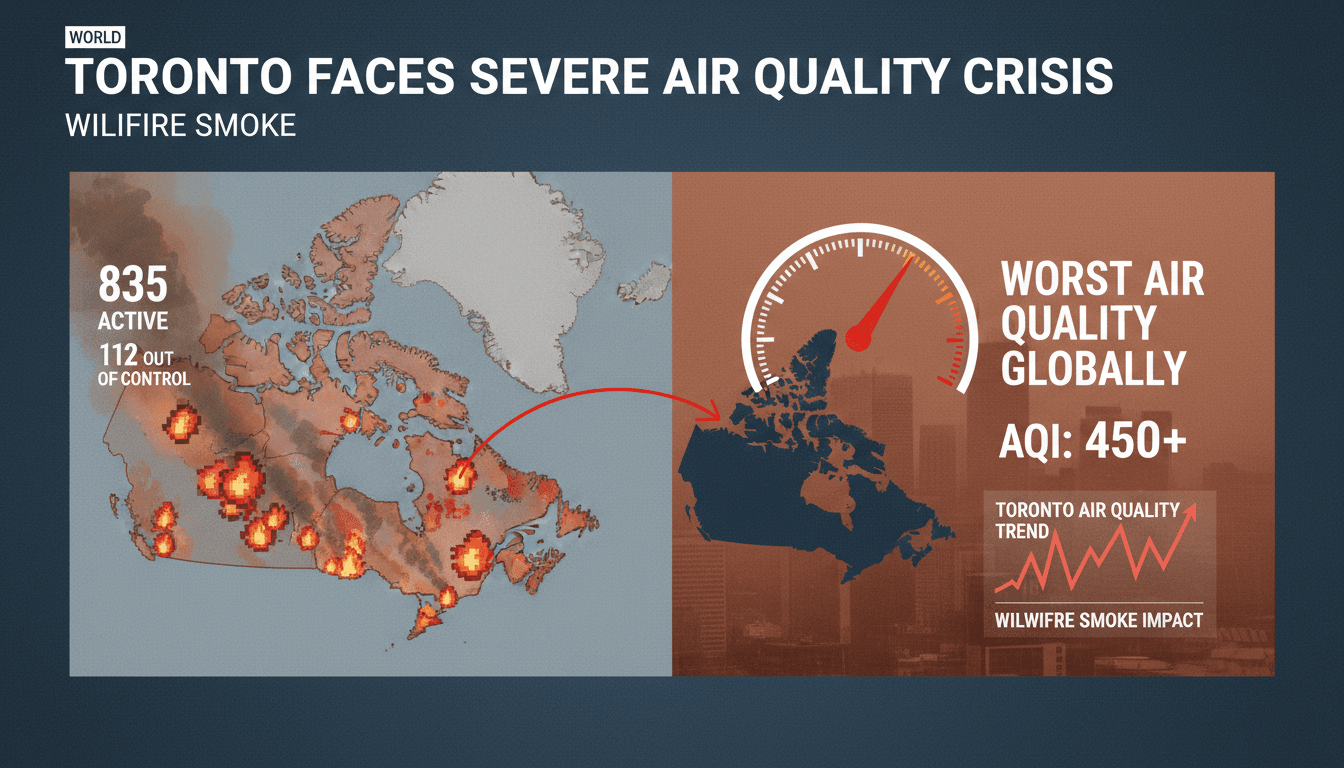
Toronto is currently grappling with hazardous air quality due to persistent wildfire smoke, prompting health warnings for residents to stay indoors. The city has been reported as having the worst air quality in the world, surpassing other major urban centers. This alarming situation is a direct result of 835 active wildfires across Canada, with 112 of those fires burning out of control.
While a temporary improvement in air quality is anticipated, the underlying issue of wildfires remains critical. The smoke has caused pollution levels to soar, turning the skies hazy yellow and significantly affecting daily life in the region.
The Context
The ongoing wildfire crisis in Canada has created a dire situation for Toronto, where air quality has plummeted to alarming levels. According to IQAir, the city's air quality ranking reflects a broader environmental challenge, as officials in the U.S. express concern about the smoke potentially impacting events in the northeastern United States.
With 835 active wildfires, the scale of the crisis is unprecedented, highlighting the urgent need for coordinated responses from local and national authorities. The situation is further complicated by the long-term implications of climate change, which continues to exacerbate wildfire occurrences and air quality issues.
Takeaway
As wildfires continue to burn across Canada, residents and officials in Toronto must remain vigilant about air quality and health advisories. Monitoring air quality updates will be crucial for the public, especially as temporary improvements may not signify a long-term resolution.
The potential impacts on major events in the northeastern U.S. due to smoke should also be closely watched, as this could affect travel and public gatherings. Ongoing communication from health officials will be essential to ensure public safety during this crisis.
National coverage of politics and current events across Canada.
"Global News is a mainstream Canadian outlet with a centrist editorial stance, focusing on factual reporting."
— A47 Editor
‘Temporary improvement’ possible but wildfire smoke persists in Toronto
Toronto is currently experiencing hazardous air quality due to persistent wildfire smoke from over 100 active wildfires in northern Ontario. Although a temporary improvement in air quality is anticipated Friday afternoon, the smoke continues to pose ...
24/7 international news from a French perspective in multiple languages.
"France 24 is viewed as a globally focused outlet with balanced coverage and a European perspective."
— A47 Editor
Canada's air ranks as worst in the world due to wildfire smoke
Canada is currently facing a severe environmental crisis, with 835 active wildfires, including 112 classified as out of control, leading to hazardous air quality conditions. Toronto has been reported as having the worst air quality in the world, with...
24/7 international news from a French perspective in multiple languages.
"France 24 is viewed as a globally focused outlet with balanced coverage and a European perspective."
— A47 Editor
Toronto: Air ranked among world's worst as wildfire smoke chokes city
Toronto is currently experiencing severe air quality issues as smoke from over 100 active wildfires in northern Ontario blankets the city, resulting in the worst air quality in the world, according to IQAir. The skies have turned a hazy orange, raisi...