
Iran threatens military action against oil tankers in Strait of Hormuz
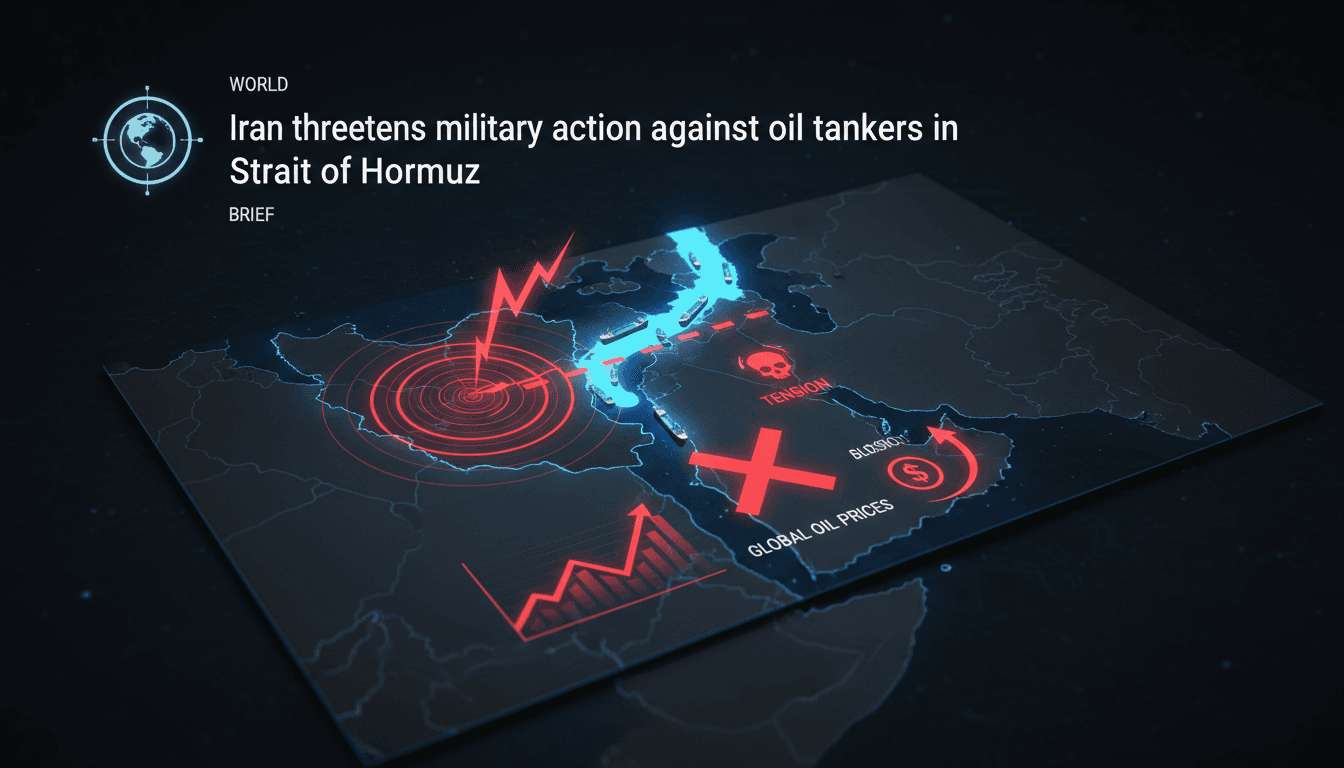
Here's what it means for you.
Iran's recent warning to oil tankers navigating the Strait of Hormuz signals a potential escalation in regional tensions that could impact global oil markets. With approximately 20% of the world's oil passing through this critical chokepoint, compliance with Iran's demands may become a priority for international shipping companies. The situation underscores the delicate balance of maritime security and the ongoing negotiations between the U.S. and Iran. As Iran asserts its control over this vital route, stakeholders in the energy sector should prepare for possible disruptions. The implications for oil supply and pricing could be significant, depending on how shipping companies respond to Iran's threats.
What happened
On July 2, 2026, Iran's military command issued a stark warning to oil tankers traversing the Strait of Hormuz, demanding adherence to approved routes. The threat of military action against vessels using unapproved paths marks a significant escalation in Iran's maritime posture. This warning follows reports of positive developments in ongoing indirect negotiations between the U.S. and Iran, highlighting the fragile state of regional security.
Iran's assertive stance on maritime security reflects its ongoing efforts to maintain control over this crucial passageway. The military command's ultimatum emphasizes the importance of compliance for international shipping operations in the area.
The Context
The Strait of Hormuz is a vital artery for global oil shipments, with around 20% of the world's oil flowing through it. Iran's warning comes at a time when diplomatic efforts between the U.S. and Iran have shown signs of progress, as reported by Qatari mediators. However, the threat underscores the persistent tensions in the region and Iran's willingness to enforce its maritime claims.
The international community is closely monitoring these developments, as any military action could have far-reaching implications for global energy supply and prices. The balance of power in the region remains delicate, and the actions taken by both Iran and international shipping companies will be crucial in shaping the future of maritime security.
Takeaway
As tensions rise in the Strait of Hormuz, stakeholders should keep a close eye on the evolving situation. The international community will be watching for responses from shipping companies regarding compliance with Iran's routes, which could significantly impact global oil supply and pricing. Additionally, developments in U.S.-Iran negotiations will be critical in determining the future of maritime security in the region.
The potential for military action against non-compliant vessels adds a layer of uncertainty that could affect market stability. Observers should remain vigilant as the situation unfolds, as the implications for regional stability and global energy markets are profound.
Global news coverage with extensive reporting on Middle Eastern conflicts and geopolitics.
"Al Jazeera is a Qatar-based broadcaster known for wide regional coverage and alternative perspectives."
— A47 Editor
Iran warns ships against using unapproved routes in Strait of Hormuz
Iran's military command has issued a warning to ships against using unapproved routes in the Strait of Hormuz, following a day after Qatari mediators reported 'positive progress' in indirect talks between the U.S. and Iran. This warning comes amid es...
Comprehensive coverage of Middle Eastern and global issues.
"Al Jazeera is a prominent voice from the Global South, especially the Middle East, with an emphasis on underreported stories."
— A47 Editor
Iran warns ships against using unapproved routes in Strait of Hormuz
Iran's military command has issued a warning to ships against using unapproved routes in the Strait of Hormuz, following a day after Qatari mediators reported 'positive progress' in indirect talks between the U.S. and Iran. This warning comes amid es...
Conservative-leaning political and national coverage.
"The Washington Times is a conservative-leaning newspaper known for its political coverage and advocacy of right-of-center viewpoints."
— A47 Editor
Iran warns oil tankers to use approved routes in Strait of Hormuz or face a 'forceful response'
Iran's military command has issued a warning to all oil tankers traversing the Strait of Hormuz, mandating the use of approved routes or facing a 'forceful response.' This escalation underscores the strategic significance of the Strait, a vital passa...
Pan-Arab news coverage spanning politics, business, sports, and regional affairs.
"Asharq Al-Awsat reflects a broad Arab editorial perspective with strong attention to regional geopolitics."
— A47 Editor
إيران تهدد ناقلات النفط المخالفة لمساراتها في «هرمز» بـ«رد قوي»
Iran has threatened to respond militarily to oil tankers that cross the Strait of Hormuz without adhering to the routes designated by Tehran. This warning was issued on Thursday, indicating a potential escalation in tensions in this strategically vit...
Regional and international reporting focused on Middle Eastern politics, diplomacy, and economics.
"Asharq Al-Awsat is a Saudi-owned international newspaper reflecting mainstream Gulf political perspectives."
— A47 Editor
Iran Warns Oil Tankers to Use Approved Routes in Strait of Hormuz or Face a 'Forceful Response'
Iran has issued a stern warning to oil tankers navigating the Strait of Hormuz, stating that they must adhere to approved routes or face a 'forceful response.' This warning comes amid escalating tensions in the region, particularly following delays i...