
Orcas observed ramming sunfish leading to explosive behavior
Here's what it means for you.
The recent observations of orcas ramming sunfish have significant implications for marine biology and our understanding of orca behavior. This unique behavior may not only reflect the social dynamics of orcas but also their cognitive abilities, prompting further research into their feeding strategies. As scientists delve deeper into these interactions, we may gain insights that could influence conservation efforts and marine ecosystem management.
What happened
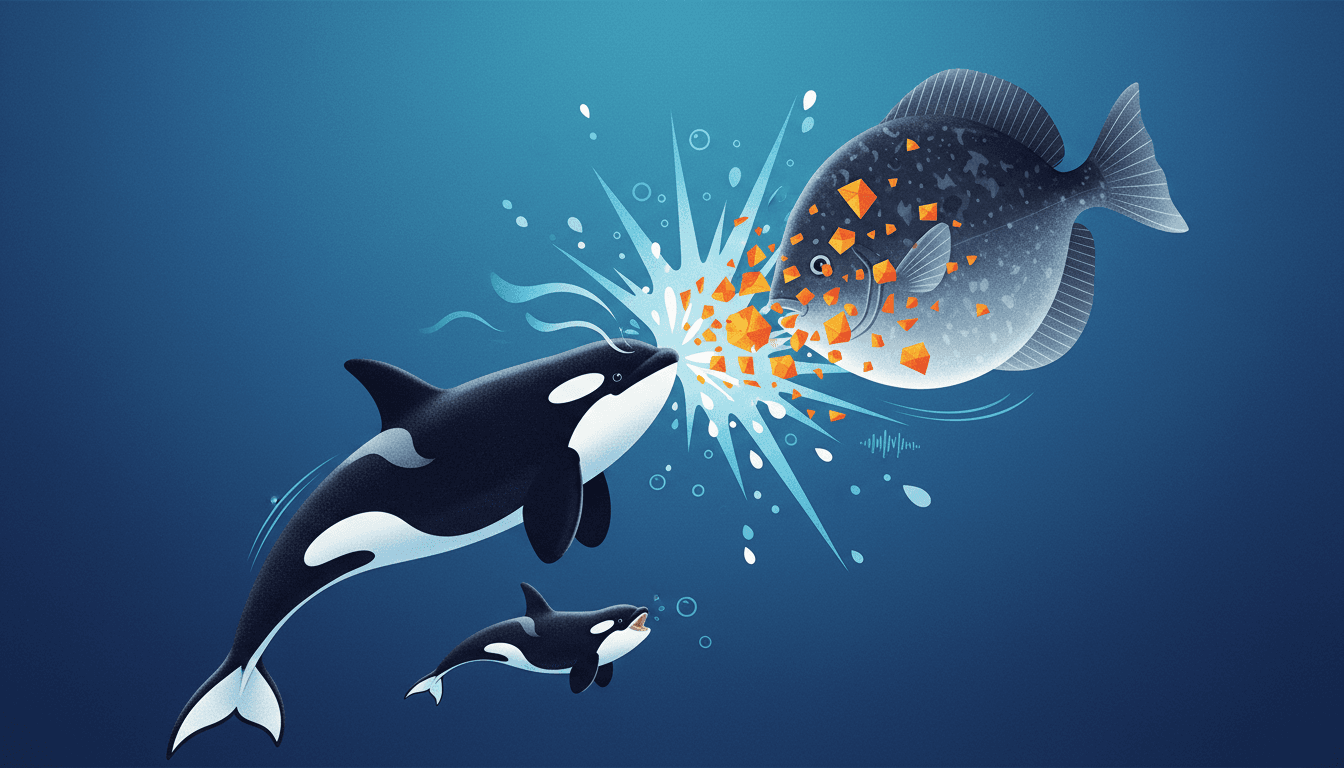
Orcas have been observed engaging in a remarkable behavior where they ram giant sunfish with such force that the fish explode. This phenomenon was noted on July 23, 2026, and has sparked interest among researchers who suggest it may serve as a form of entertainment or a teaching method for younger orcas. Typically, two orcas are involved in this ramming behavior, showcasing their cooperative hunting techniques.
The explosive outcome of this interaction results in the sunfish breaking into thousands of pieces, raising questions about the orcas' motivations. Scientists are intrigued by the implications of this behavior, which may provide insights into the social structures and learning processes of these marine mammals.
The Context
The behavior of orcas ramming sunfish may indicate a complex social structure among these animals, highlighting their potential for cooperative hunting and learning. This observation raises important questions about the cognitive abilities of orcas, as it suggests a level of intelligence that may not have been fully appreciated before. Understanding this behavior could enhance our knowledge of orca feeding strategies and their ecological impact.
As researchers continue to study these interactions, the timing of these observations is crucial. The insights gained could reshape our understanding of marine mammal behavior and inform conservation strategies aimed at protecting orca populations and their habitats.
Takeaway
Further research into this unique behavior could reveal more about the social and cognitive aspects of orca interactions. Scientists are likely to focus on studies related to orca social structures and their learning behaviors, which may provide a clearer picture of their intelligence. Investigations into the ecological impact of orca feeding strategies will also be essential in understanding the broader implications of these observations.
As the scientific community delves deeper into the motivations behind this behavior, we may uncover new dimensions of orca life that could influence future marine conservation efforts.
Pan-Arab news coverage spanning politics, business, sports, and regional affairs.
"Asharq Al-Awsat reflects a broad Arab editorial perspective with strong attention to regional geopolitics."
— A47 Editor
حيتان الأوركا تفجّر فرائسها... والعلماء: قد تكون مجرّد «لعبة»
Orcas have been observed striking large fish with tremendous force, resulting in the explosive disintegration of their prey. This behavior may represent a form of bloody entertainment for the orcas.
Science and technology stories including AI.
"Longstanding science magazine with thoughtful AI coverage."
— A47 Editor
Video reveals orcas smashing fish to smithereens, possibly for fun
Recent video footage has shown orcas engaging in a unique behavior of smashing fish to pieces, a practice that researchers suggest may serve as a feeding strategy for younger orcas or simply be a form of amusement.
Scientific research, technology, environment, and society.
"Scientific American is one of the oldest and most authoritative science magazines, known for deep dives into science, technology, and society."
— A47 Editor
Video reveals orcas smashing fish to smithereens, possibly for fun
Recent video footage has shown orcas engaging in a unique behavior of smashing fish to pieces, a practice that researchers suggest may serve as a feeding strategy for younger orcas or simply be a form of amusement.
Reports on science policy, discoveries, and public debate in the scientific realm.
"The Guardian’s science section is known for thoughtful and critical reporting on global research, ethics, and public understanding of science."
— A47 Editor
Orcas seen ramming prey so hard it explodes may be playing game
Scientists have observed orcas engaging in a behavior where they ram into sunfish with such force that the prey explodes into pieces. This behavior, which involves one orca holding the sunfish while another strikes it at high speed, suggests a potent...
Top international stories selected by The Guardian editors.
"The Guardian is known for its progressive editorial stance and in-depth analysis."
— A47 Editor
Orcas seen ramming prey so hard it explodes may be playing game
Scientists have observed orcas engaging in a behavior where they ram into sunfish with such force that the prey explodes into pieces. This behavior, which involves one orca holding the sunfish while another strikes it at high speed, suggests a potent...