
Gaza Beekeeper Struggles to Maintain Business Amid Ongoing Conflict
Here's what it means for you.
The plight of Ibrahim al-Dabba highlights the broader implications of conflict on local economies, particularly in agricultural sectors. As beekeeping faces severe challenges due to environmental destruction, the sustainability of food sources and livelihoods in Gaza is at risk. This situation calls for urgent attention from policymakers and humanitarian organizations to support recovery efforts and ensure food security.
What happened
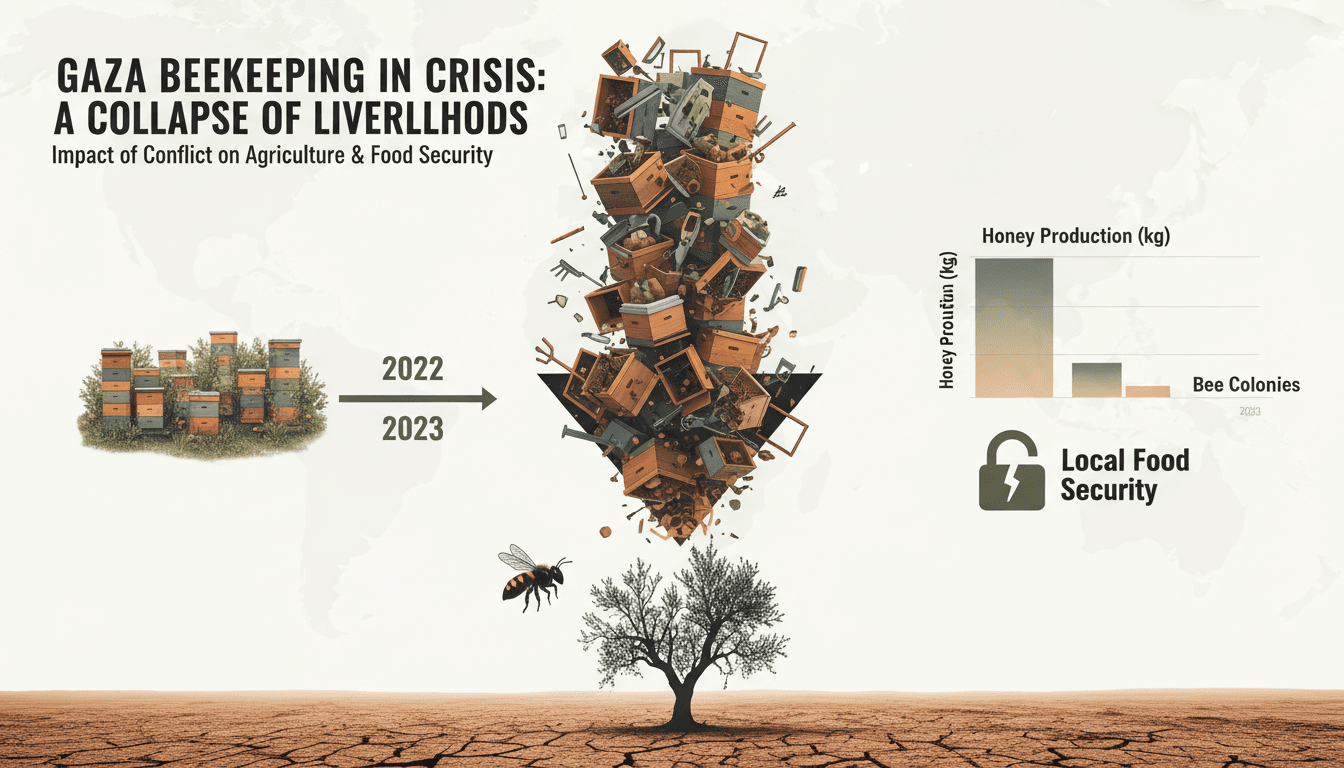
Ibrahim al-Dabba, a beekeeper in Gaza, has faced significant losses due to the ongoing conflict, which has devastated his business. Once the owner of over 400 beehives, he now manages only 35 hives on a rooftop in a war-damaged area of Gaza City. The destruction of his equipment and hives has made it increasingly difficult for him to sustain his beekeeping operations.
Despite these challenges, al-Dabba continues to tend to his remaining hives, demonstrating resilience in the face of adversity. The ongoing war has not only impacted his livelihood but has also severely affected the environment, complicating the conditions necessary for beekeeping to thrive.
The Context
Ibrahim al-Dabba, 49, has been a beekeeper for decades, supporting his family of seven children through his business. He was displaced from the Shuja’iyya area to Tel al-Hawa in Gaza City, where he now struggles to maintain his beekeeping amidst the rubble. The war has led to a significant reduction in suitable environments for beekeeping, as the lack of trees and natural resources hampers the industry.
The situation in Gaza reflects a broader crisis affecting agricultural livelihoods, with recovery efforts facing substantial obstacles. The environmental destruction caused by the conflict poses long-term challenges for beekeepers and farmers alike, threatening food security and economic stability in the region.
Takeaway
The future of beekeeping in Gaza remains uncertain as environmental conditions worsen and the impact of war continues to challenge local livelihoods. Observers should monitor recovery efforts for Gaza's agricultural sector, as these will be crucial for the region's economic revival. Additionally, developments in the humanitarian situation will play a significant role in determining the viability of agricultural practices moving forward.
Al-Dabba's determination to continue beekeeping serves as a poignant reminder of the resilience of individuals affected by conflict. However, without substantial support and intervention, the outlook for beekeeping and agriculture in Gaza appears bleak.
Regional coverage and analysis focused on politics, diplomacy, and business across the Middle East.
"Al-Monitor is known for analytical reporting on Middle East politics and policy developments."
— A47 Editor
US military says it hit dozens of Iran's IRGC targets
The United States military has confirmed that it conducted a series of airstrikes targeting numerous positions of Iran's Islamic Revolutionary Guard Corps (IRGC) in response to escalating tensions and missile attacks on U.S. bases in the region. This...
Regional coverage and analysis focused on politics, diplomacy, and business across the Middle East.
"Al-Monitor is known for analytical reporting on Middle East politics and policy developments."
— A47 Editor
With fields destroyed and hives lost, Gaza's beekeepers struggle to start over
In Gaza, beekeepers like Ibrahim al-Dabba are facing significant challenges as their fields have been destroyed and hives lost due to ongoing conflict. Standing amidst the rubble of Gaza City, al-Dabba highlights the difficulty of raising bees in suc...
Top international stories selected by The Guardian editors.
"The Guardian is known for its progressive editorial stance and in-depth analysis."
— A47 Editor
From 400 hives to 35: the Gaza beekeeper refusing to let war end his life’s work
Ibrahim al-Dabba, a 49-year-old beekeeper from Gaza City, continues to tend to his remaining 35 beehives on the roof of a damaged residential tower in the Tel al-Hawa neighborhood, despite losing his home and most of his equipment due to ongoing conf...