
UN Warns of Critical Child Malnutrition Crisis in Afghanistan
Here's what it means for you.
The alarming rise in child malnutrition in Afghanistan signals a deepening humanitarian crisis that could have far-reaching implications for regional stability and international relations. As funding for food assistance plummets, the potential for increased child mortality rates poses a moral and ethical challenge for global leaders. Stakeholders must prioritize immediate action to address this crisis, as the consequences of inaction could reverberate beyond Afghanistan's borders.
What happened
The United Nations has issued a grave warning regarding the critical levels of child malnutrition in Afghanistan, exacerbated by severe cuts in humanitarian aid. Nearly 3.7 million children are projected to suffer from acute malnutrition this year, with the situation expected to worsen as funding shortages continue. The crisis is particularly acute in 12 provinces, where children are facing dire nutritional deficits.
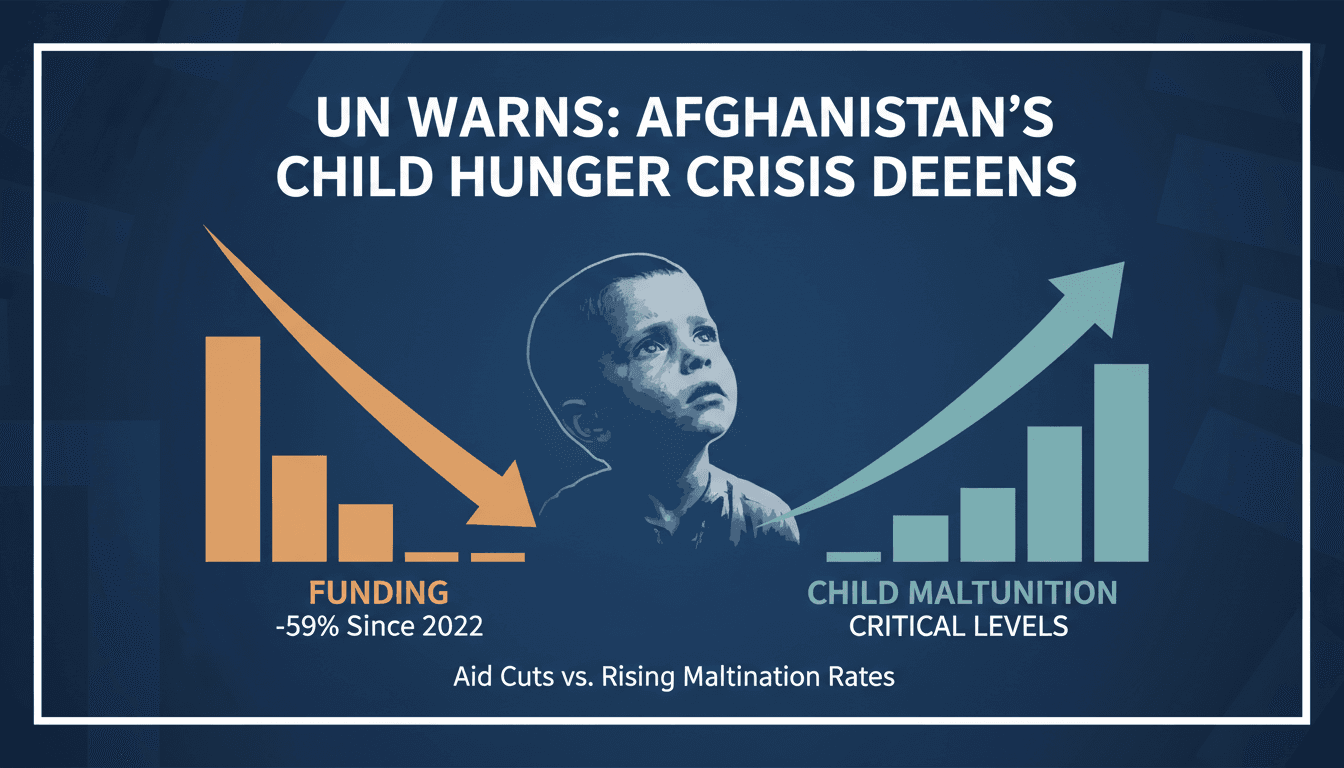
Funding for food assistance has dropped by about 59% since 2022, leading to the closure of 142 health centers in 2025. This reduction in aid has resulted in over 13,000 children losing access to essential nutrition treatment. The annual peak season for malnutrition, which runs from July to October, is compounding the urgency of the situation.
The Context
The humanitarian crisis in Afghanistan is deepening, particularly concerning child malnutrition, as funding cuts have led to the closure of health facilities and a significant increase in the number of malnourished children. The UN World Food Program urgently needs $540 million over the next six months to address the escalating needs. Without increased funding and support, the malnutrition crisis is likely to worsen, leading to more severe humanitarian consequences for children and vulnerable populations.
The international community faces a critical juncture in responding to this crisis. As the situation deteriorates, the potential for broader implications on regional stability and security becomes increasingly evident. Stakeholders must consider the long-term effects of malnutrition on Afghanistan's future and the well-being of its children.
Takeaway
Immediate action is required to address the rising malnutrition rates and prevent further child deaths in Afghanistan. The UN's warning serves as a call to action for governments and organizations to reassess their commitments to humanitarian aid in the region. Potential international responses to the crisis will be crucial in determining the effectiveness of aid distribution and the overall impact on the affected populations.
As the situation evolves, updates on funding pledges and their implications for aid distribution will be essential to monitor. The international community must remain vigilant and responsive to the needs of Afghan children facing this critical malnutrition crisis.
English-language reporting on Saudi politics, policy, and society.
"Saudi Gazette reflects mainstream Saudi institutional perspectives."
— A47 Editor
Afghanistan child malnutrition hits critical levels amid aid cuts, WFP says
Child malnutrition in Afghanistan has reached critical levels in a third of the provinces, with nearly 3.7 million children and 1.2 million pregnant and breastfeeding women projected to suffer from acute malnutrition this year, according to the UN Wo...
Pan-Arab political news and analysis.
"Al-Quds Al-Arabi is a London-based Arabic newspaper known for political coverage."
— A47 Editor
مسؤولة أممية: من غزة إلى أفغانستان.. سوء تغذية وتدهور في الوضع الإنساني ونقص في التمويل
The United Nations has warned that the humanitarian crisis in Afghanistan is worsening daily due to poverty, hunger, recurring climate shocks, and declining humanitarian funding, with millions of Afghans facing increasingly difficult living condition...
Pan-Arab news coverage spanning politics, business, sports, and regional affairs.
"Asharq Al-Awsat reflects a broad Arab editorial perspective with strong attention to regional geopolitics."
— A47 Editor
«الأغذية العالمي»: سوء تغذية الأطفال يبلغ مستويات حرجة في أفغانستان
The United Nations warned on Tuesday that child malnutrition has reached critical levels in Afghanistan, driven by severe cuts in aid. This alarming situation highlights the dire humanitarian crisis affecting the country's youngest and most vulnerabl...