
Iran's nuclear program remains operational despite military strikes
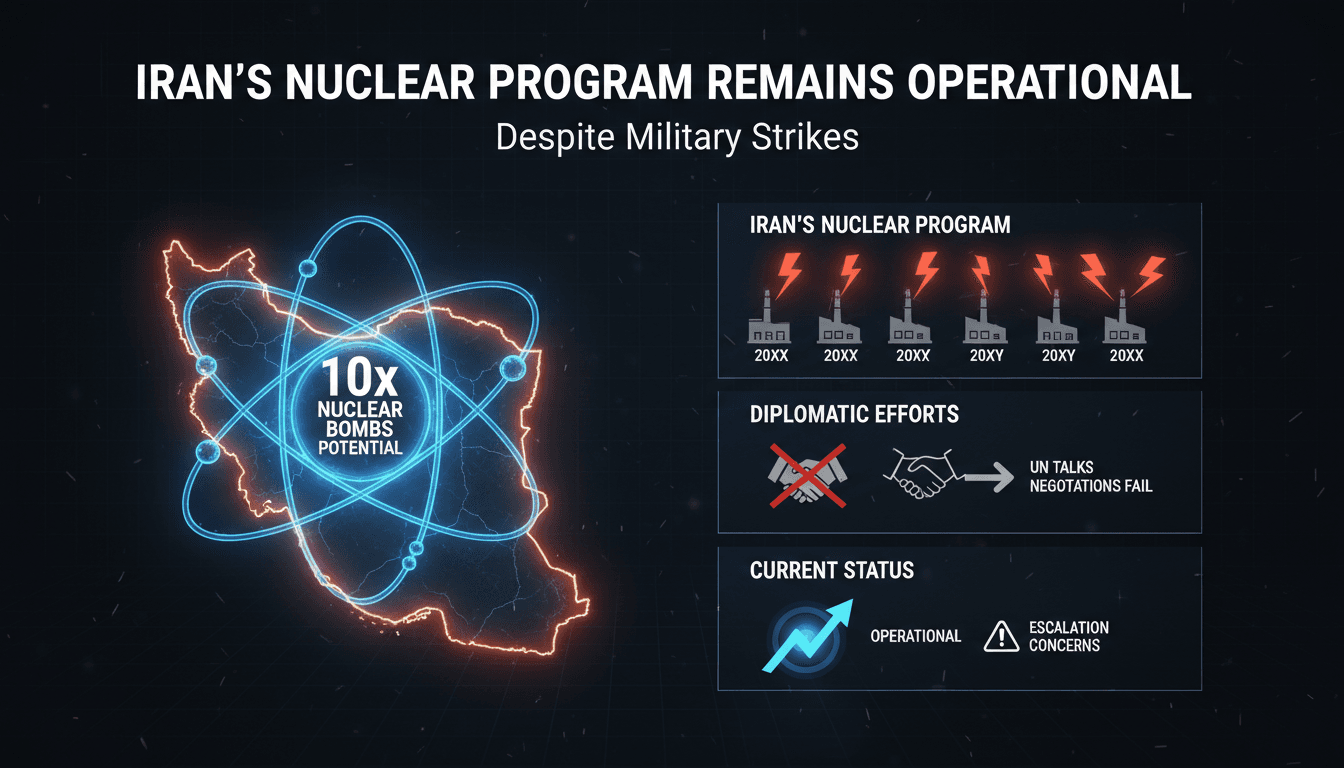
Here's what it means for you.
The persistence of Iran's nuclear program amid military strikes raises significant concerns for international security and diplomatic relations. Stakeholders, including policymakers and defense analysts, must reassess strategies to address the ongoing threat posed by Iran's capabilities. The situation underscores the urgency for renewed diplomatic efforts to mitigate escalating geopolitical tensions in the region.
What happened
Recent military strikes targeting Iran's nuclear facilities have not succeeded in halting the country's nuclear program. Despite these interventions, reports indicate that Tehran retains sufficient materials to potentially produce up to 10 nuclear bombs. Analysts suggest that a significant portion of Iran's nuclear capabilities remains intact, allowing for potential bomb production within a year.
The strikes occurred between 2025 and 2026, yet they did not significantly impair Iran's nuclear capabilities. As of August 2026, it has become clear that Iran's nuclear program remains operational, raising alarms among international observers.
The Context
Iran's nuclear ambitions have long been a focal point of international concern, particularly given the country's reported stockpile of nuclear fuel. The military strikes aimed to curb these ambitions but have proven ineffective, highlighting the complexities of nuclear non-proliferation efforts in the Middle East. The ability of Iran to produce a nuclear bomb in less than a year poses a significant challenge to regional and global security.
The ongoing situation involves various stakeholders, including the Iranian government, international observers, and nations concerned about nuclear proliferation. The timeline of military actions and subsequent reports illustrates the urgency of addressing this issue before it escalates further.
Takeaway
The resilience of Iran's nuclear program suggests that geopolitical tensions in the region may continue to rise without effective diplomatic engagement. Observers should monitor potential international responses to Iran's advancements and any future military engagements in the area. The situation calls for a reassessment of strategies to ensure that diplomatic avenues are explored to prevent further escalation.
Jordanian news and regional updates.
"Roya News is a Jordanian outlet focused on breaking news and local affairs."
— A47 Editor
إعلام عبري: الضربات العسكرية لم توقف برنامج إيران النووي وطهران قادرة على إنتاج قنبلة في أقل من عام
Recent reports indicate that military strikes have not halted Iran's nuclear program, with Tehran reportedly capable of producing a nuclear bomb within a year. This development raises concerns about the effectiveness of military interventions in curb...
Arabic-language coverage of international news and geopolitics.
"RT Arabic is a Russian state-funded outlet often criticized for promoting Kremlin-aligned narratives."
— A47 Editor
"مواد تكفي لصنع 10 قنابل".. إعلام عبري: خمسة أشهر من الحرب لم توقف البرنامج النووي الإيراني
A report by the Hebrew newspaper Yedioth Ahronoth indicates that despite intense attacks on Iran's nuclear sites over the past five months, experts believe a significant portion of Tehran's nuclear capabilities remains intact.
Pan-Arab news coverage spanning politics, business, sports, and regional affairs.
"Asharq Al-Awsat reflects a broad Arab editorial perspective with strong attention to regional geopolitics."
— A47 Editor
حرب إيران... هل أوقفت البرنامج النووي أم أبطأته فقط؟
Despite strikes targeting three major nuclear sites in 2025 and 2026, Tehran appears to have retained a sufficient stockpile of fuel close to weapons-grade levels. This raises concerns about the effectiveness of military actions aimed at curbing Iran...