
Iran Sets Six Conditions for Reopening the Strait of Hormuz Amid U.S. Pressure
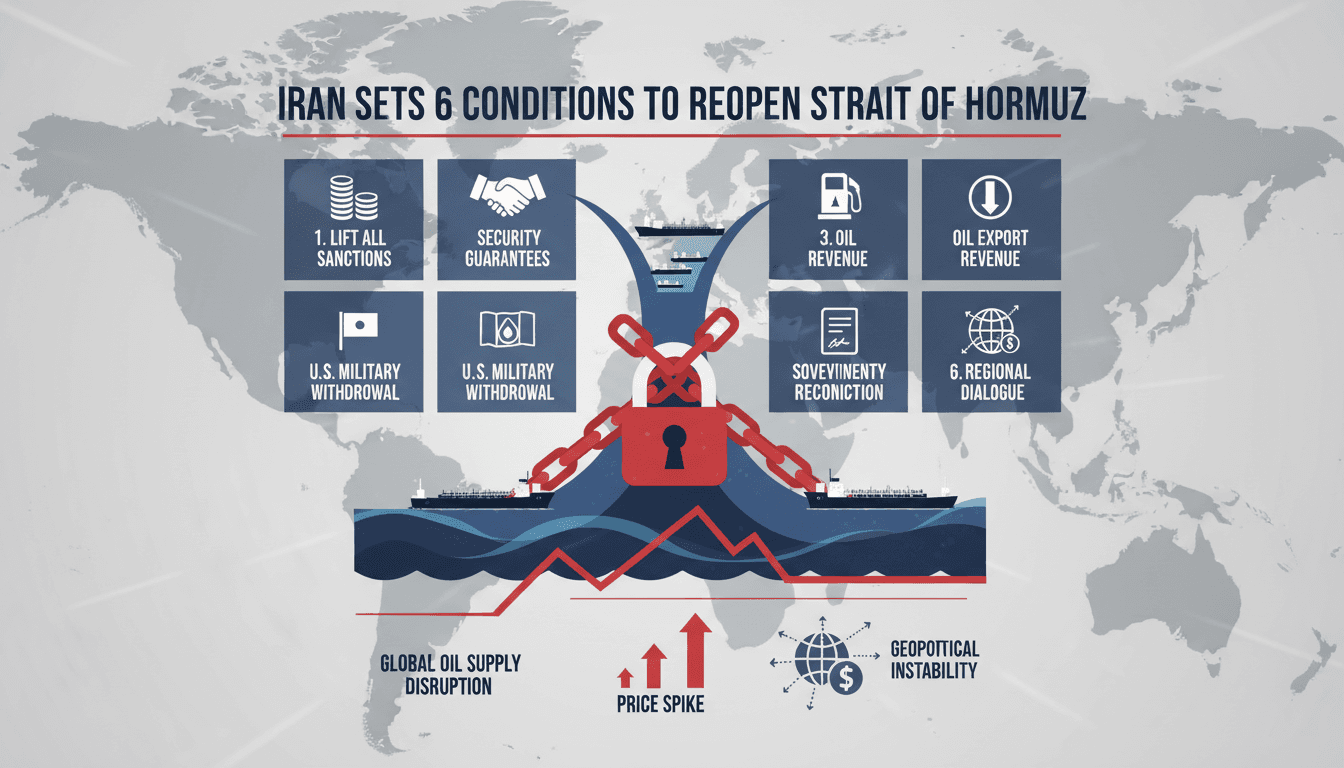
Here's what it means for you.
The ongoing tensions between Iran and the U.S. over the Strait of Hormuz could have significant implications for global oil markets and regional stability. Iran's insistence on six conditions for reopening this vital shipping route underscores the complexities of international negotiations in the face of military and economic pressures. Stakeholders in the energy sector should remain vigilant as developments unfold, given the strait's critical role in oil exports. The situation may also influence U.S. foreign policy and its approach to sanctions, as the potential for negotiations with Oman could reshape the dynamics in the region.
What happened
Iran has announced that the Strait of Hormuz will remain closed until the U.S. meets six specific conditions. This declaration comes amid increasing military and economic pressure from the U.S. and stalled negotiations with Oman regarding the management of the strait. Iran's Foreign Minister has made it clear that negotiations with Washington are currently not taking place, further complicating the situation.
The conditions set by Iran include demands for the U.S. to end military operations against its allies and to lift sanctions. The U.S. has indicated a willingness to lift the blockade on Iranian ports if an agreement can be reached, but Iran's Supreme National Security Council insists on correcting U.S. actions first. This standoff highlights the deepening conflict over this critical maritime route.
The Context
The Strait of Hormuz is a vital global shipping route, making the ongoing conflict between Iran and the U.S. particularly significant. Iran's six conditions reflect its strategic interests and the broader geopolitical landscape, where military operations and sanctions have created a tense environment. The U.S. is applying pressure to achieve favorable outcomes, while negotiations with Oman may provide a potential pathway to resolution.
The timeline of events shows a clear escalation, with Iran's Supreme National Security Council announcing its conditions on August 8, 2026, followed by U.S. officials expressing hope for an agreement the next day. This rapid succession of statements indicates the urgency and complexity of the situation, as both sides remain entrenched in their positions.
Takeaway
The future of the Strait of Hormuz remains uncertain, with both Iran and the U.S. maintaining firm stances. The potential for further negotiations exists, but the risk of escalation looms large. Observers should watch for developments in U.S.-Iran negotiations and the impact of military and economic pressures on Iran's decision-making.
As the situation evolves, the implications for global oil exports and regional stability will be critical to monitor. The entrenched positions of both parties suggest that a prolonged standoff may be on the horizon.
Pan-Arab news coverage spanning politics, business, sports, and regional affairs.
"Asharq Al-Awsat reflects a broad Arab editorial perspective with strong attention to regional geopolitics."
— A47 Editor
إيران تساوم بـ«هرمز» على نهاية الحرب
Iranian Foreign Minister stated that Tehran is not negotiating with Washington, while the Revolutionary Guard announced that the Strait of Hormuz will remain closed until the United States accepts all conditions.
Arabic-language coverage of political affairs and current events.
"Okaz political coverage typically follows mainstream Saudi framing on national and regional affairs."
— A47 Editor
واشنطن تراهن على الضغوط.. وطهران تُصعّد وتحدّد 6 شروط لفتح هرمز
Ongoing negotiations between Tehran and Muscat regarding the Strait of Hormuz have seen Iran set six conditions that the United States must meet before reopening this vital maritime passage. Iranian National Security Council Secretary Mohammad Baqer ...
Pan-Arab political news and analysis.
"Al-Quds Al-Arabi is a London-based Arabic newspaper known for political coverage."
— A47 Editor
إيران تعلن أن مضيق هرمز لن يفتح حتى تصحح الولايات المتحدة سلوكها
Iranian National Security Council Secretary Mohammad Baqer Qalibaf announced that the Strait of Hormuz will not be reopened until the United States corrects its behavior, indicating a significant shift in negotiations regarding maritime management an...