
Record Global Ocean Temperatures and Extreme Heat in Western Europe Highlight Climate Crisis
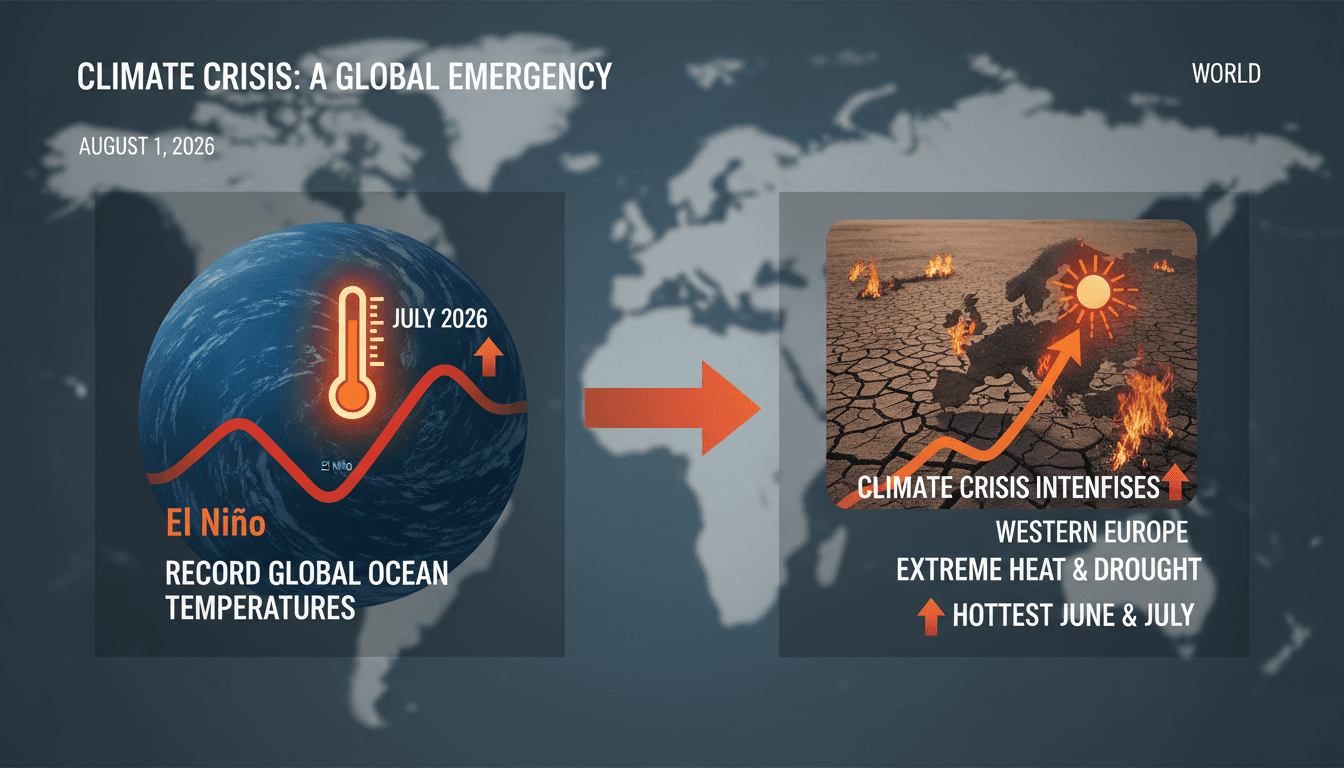
Here's what it means for you.
The unprecedented rise in global ocean temperatures and extreme heat in Western Europe signals a critical juncture in the climate crisis. This alarming trend underscores the urgent need for comprehensive climate strategies to mitigate the increasing frequency of extreme weather events. Stakeholders across sectors must prioritize climate resilience and adaptation measures to safeguard ecosystems and economies. The implications for public health and safety are profound, as rising temperatures contribute to severe wildfires and drought conditions. Policymakers must act swiftly to address these challenges and implement effective climate action plans.
What happened
In July 2026, global ocean temperatures reached record highs, coinciding with extreme heat in Western Europe. The region experienced its hottest June and July on record, with an average temperature of 21.62°C, surpassing the previous record set in 2022. This unprecedented heat has led to severe wildfires and drought conditions across several countries in Western Europe.
The average sea surface temperature outside polar regions was the highest recorded for July, indicating a concerning trend in global climate patterns. These developments highlight the interconnectedness of ocean temperatures and regional weather phenomena, emphasizing the urgency of addressing climate change.
The Context
The summer of 2026 has been marked by significant environmental challenges, particularly in Western Europe, where historically low rainfall has exacerbated drought conditions. The developing El Niño conditions are contributing to these extreme weather patterns, raising concerns among scientists and policymakers alike.
As global temperatures continue to rise, the implications for ecosystems, economies, and human health are becoming increasingly severe. The need for immediate and sustained global efforts to mitigate climate change has never been more pressing, as the frequency of extreme weather events continues to escalate.
Takeaway
Looking ahead, it is crucial to monitor the development of El Niño conditions and their potential impact on global weather patterns. Observing the responses of governments and organizations to the increasing frequency of extreme weather events will provide insight into the effectiveness of current climate strategies.
The ongoing climate crisis continues to manifest through extreme weather events, highlighting the urgent need for climate action. Stakeholders must remain vigilant and proactive in addressing these challenges to protect vulnerable communities and ecosystems.
Scientific research, technology, environment, and society.
"Scientific American is one of the oldest and most authoritative science magazines, known for deep dives into science, technology, and society."
— A47 Editor
World ocean temperatures hit extreme new record for July
World ocean temperatures have reached an unprecedented high for July, marking a significant environmental concern as global sea surface temperatures average nearly 70 degrees Fahrenheit. This alarming trend reflects the ongoing impacts of climate cha...
Science and technology stories including AI.
"Longstanding science magazine with thoughtful AI coverage."
— A47 Editor
World ocean temperatures hit extreme new record for July
World ocean temperatures have reached an unprecedented high for July, marking a significant environmental concern as global sea surface temperatures average nearly 70 degrees Fahrenheit. This alarming trend reflects the ongoing impacts of climate cha...
English-language news from Qatar covering domestic and regional affairs.
"Gulf Times reflects Qatari perspectives on regional developments."
— A47 Editor
Western Europe saw warmest June-July on record, EU scientists say
Western Europe has recorded its warmest June-July period on record, according to the European Union's Copernicus Climate Change Service, with extreme heat and drought conditions leading to significant wildfires across the region.
Reports on climate change, environmental science, sustainability, and nature.
"BBC News is widely regarded as a reputable international news organization, known for its impartial tone and public service mandate."
— A47 Editor
World's oceans hit record-high July temperatures
Global oceans have recorded their hottest July on record, driven in part by developing El Niño conditions, while western Europe faces severe wildfires exacerbated by unprecedented heat.
International coverage of politics, culture, and current affairs.
"BBC News is widely regarded as a reputable international news organization, known for its impartial tone and public service mandate."
— A47 Editor
World's oceans hit record-high July temperatures
The world's oceans have recorded their hottest July on record, driven in part by developing El Niño conditions, which are expected to significantly elevate global temperatures. This alarming trend coincides with ongoing wildfires affecting western Eu...
Comprehensive coverage of Middle Eastern and global issues.
"Al Jazeera is a prominent voice from the Global South, especially the Middle East, with an emphasis on underreported stories."
— A47 Editor
June and July hottest on record in Western Europe, monitor says
June and July have been recorded as the hottest months in Western Europe, according to the Copernicus Climate Change Service, which highlights the alarming impact of historically low rainfall across several countries in the region.
Global news coverage with extensive reporting on Middle Eastern conflicts and geopolitics.
"Al Jazeera is a Qatar-based broadcaster known for wide regional coverage and alternative perspectives."
— A47 Editor
June and July hottest on record in Western Europe, monitor says
June and July have been recorded as the hottest months in Western Europe, according to the Copernicus Climate Change Service, which highlights the alarming impact of historically low rainfall across several countries in the region.
European current affairs, EU politics, and regional developments.
"France 24 is viewed as a globally focused outlet with balanced coverage and a European perspective."
— A47 Editor
Western Europe lived through hottest June and July ever recorded
Western Europe has recorded its hottest June and July ever, with an average temperature of 21.62°C, surpassing the previous record set in 2022, according to the EU's global warming monitor. This extreme heat has led to severe droughts and wildfires a...
Top international stories selected by The Guardian editors.
"The Guardian is known for its progressive editorial stance and in-depth analysis."
— A47 Editor
World’s seas have hit hottest temperature on record for July, say scientists
<p>Average sea surface temperature outside polar regions was highest on record for July, beating previous high in 2023</p><p>The world’s seas were hotter last month than in any July on record, scientists have said, as devastating heat struck western ...