
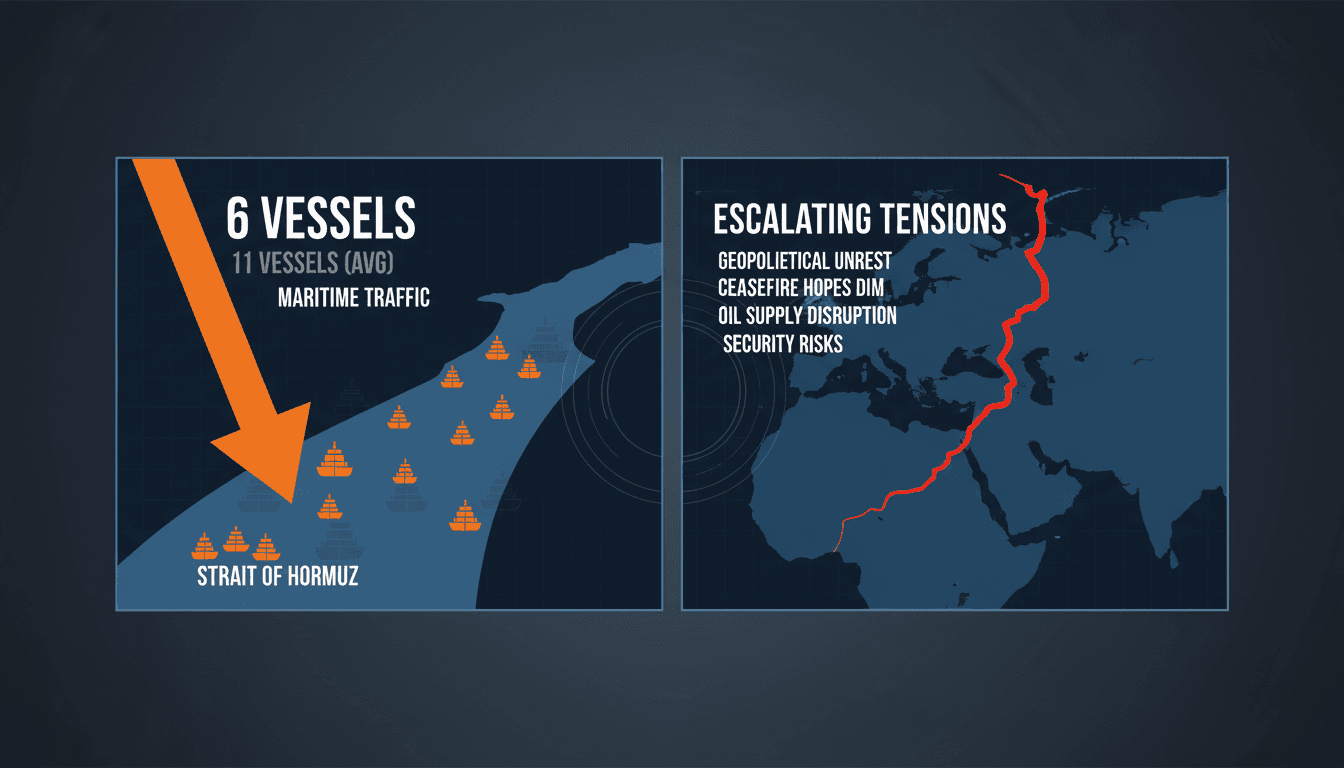
Maritime traffic through the Strait of Hormuz drops to six vessels amid escalating tensions
Here's what it means for you.
The significant drop in maritime traffic through the Strait of Hormuz signals heightened geopolitical risks that could impact global oil supply chains. With only six vessels reported, this decline raises concerns about the stability of one of the world's most critical maritime routes. Stakeholders in the oil market should prepare for potential disruptions and increased shipping costs as tensions persist. As the situation evolves, policymakers and maritime security agencies will need to closely monitor developments in the region. The ongoing harassment of vessels by Iranian forces complicates the security landscape, necessitating a reassessment of naval presence and operational protocols.
What happened
On August 11, 2026, maritime traffic through the Strait of Hormuz fell to just six vessels, a notable decrease from an average of eleven over the preceding ten days. This decline is attributed to escalating geopolitical tensions and diminishing hopes for a ceasefire agreement in the region. The situation reflects broader uncertainties that are affecting shipping operations and security in this vital maritime corridor.
The Strait of Hormuz is a critical chokepoint for global oil shipments, making any disruption particularly concerning for international markets. Reports indicate that Iranian Revolutionary Guard forces have been actively harassing shipping traffic, further exacerbating the situation. This environment of instability is likely to have lasting implications for maritime operations in the area.
The Context
The Strait of Hormuz is essential for the transportation of oil, with a significant portion of the world's oil supply passing through this narrow waterway. Recent tensions have led to increased naval activities, particularly from Iranian forces, which have been reported to engage in harassment of vessels. This has created a precarious security environment that affects not only shipping companies but also global oil markets.
The decline in maritime traffic is indicative of broader geopolitical uncertainties in the region, which have been escalating in recent months. Stakeholders, including oil producers and shipping companies, are closely monitoring the situation as they navigate the risks associated with operating in such a volatile area. The implications of these tensions extend beyond immediate shipping concerns, potentially affecting global oil prices and supply chains.
Takeaway
As geopolitical tensions continue to rise, the situation in the Strait of Hormuz remains precarious. The ongoing harassment of vessels by Iranian forces suggests that maritime traffic may not recover in the near term, leading to potential disruptions in global oil supply. Stakeholders should keep a close eye on developments regarding ceasefire negotiations and changes in naval presence in the region.
The implications of this decline in shipping traffic could reverberate through global markets, affecting oil prices and maritime security protocols. Monitoring these developments will be crucial for understanding the future landscape of maritime operations in the Strait of Hormuz.
Pan-Arab news coverage spanning politics, business, sports, and regional affairs.
"Asharq Al-Awsat reflects a broad Arab editorial perspective with strong attention to regional geopolitics."
— A47 Editor
انخفاض حركة الملاحة عبر مضيق هرمز إلى 6 سفن
Maritime traffic through the Strait of Hormuz has decreased to six vessels on Monday, a significant drop from an average of approximately 11 ships over the past ten days, amid fading hopes for a ceasefire agreement.
Jordanian news and regional updates.
"Roya News is a Jordanian outlet focused on breaking news and local affairs."
— A47 Editor
رويترز: تراجع حركة الشحن عبر مضيق هرمز إلى ست سفن فقط
According to a report by Reuters published on Tuesday, shipping traffic through the Strait of Hormuz has declined to only six vessels. This significant drop highlights ongoing challenges in maritime trade in this critical waterway, which is a vital r...
Jordanian news and regional updates.
"Roya News is a Jordanian outlet focused on breaking news and local affairs."
— A47 Editor
البحرية البريطانية: حركة الملاحة منخفضة بمضيق هرمز واستمرار مضايقات الحرس الثوري
British naval sources indicate a decline in maritime traffic through the Strait of Hormuz, coupled with ongoing harassment activities by the Iranian Revolutionary Guard. This situation raises concerns about the safety and security of shipping routes ...