
Iran Claims Control Over Strait of Hormuz Amid Rising US Tensions
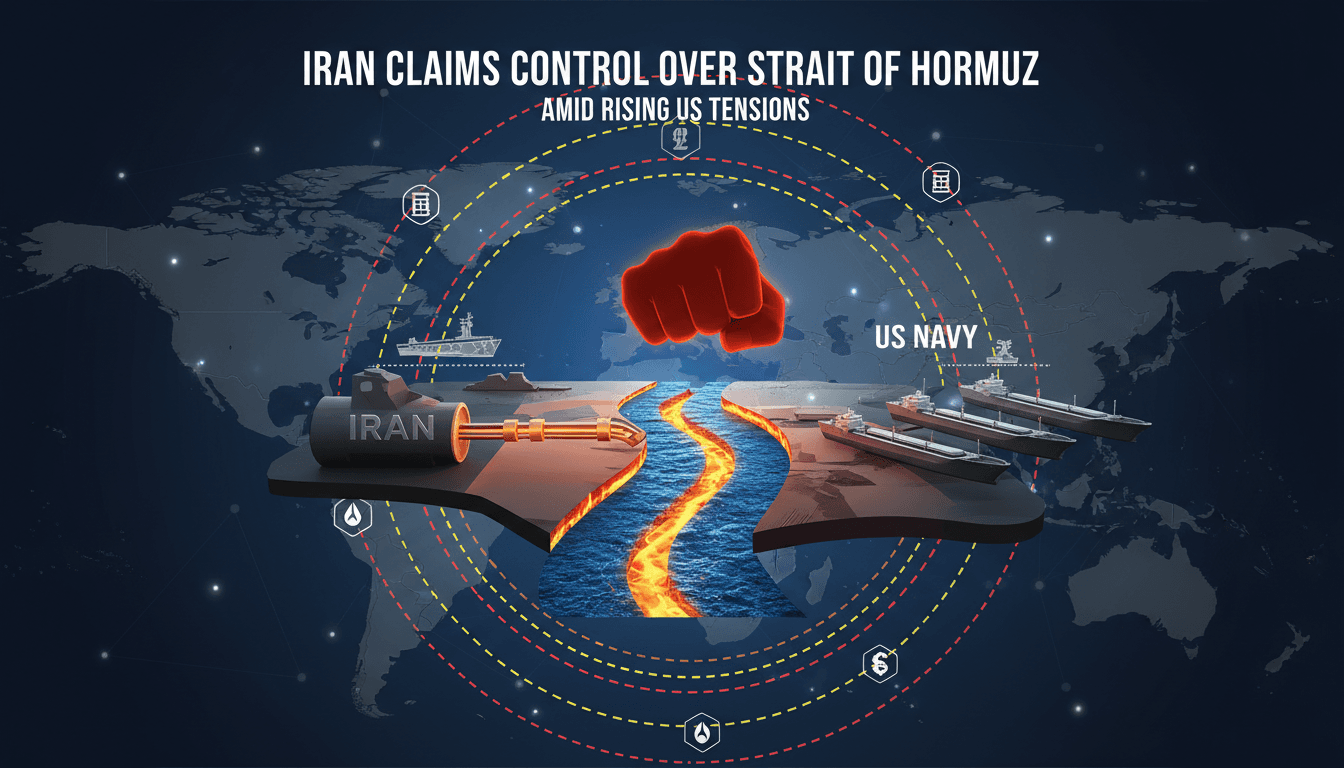
Here's what it means for you.
Iran's assertion of control over the Strait of Hormuz signals a significant escalation in geopolitical tensions, particularly affecting global oil markets. With approximately 20% of the world's oil trade passing through this vital route, any disruption could lead to increased prices and instability in international shipping. Stakeholders, including governments and businesses reliant on oil, should prepare for potential market fluctuations and heightened diplomatic scrutiny.
What happened
Iran has publicly declared its control over the Strait of Hormuz, a critical maritime passage for global oil shipments. This announcement was made by Hussein Taeb, the chief of the Basij paramilitary force, who emphasized that the strait is under Iranian management. Concurrently, Iranian Foreign Minister Abbas Araqchi issued a warning to the United States, cautioning against any miscalculations regarding the region.
The timing of this declaration coincides with rising tensions between Iran and the U.S., particularly concerning military presence and sanctions. Iran's control over the strait could have far-reaching implications for international shipping routes and global oil supply chains.
The Context
The Strait of Hormuz is a vital artery for oil transportation, with a significant percentage of the world's oil passing through it. The ongoing tensions between Iran and the United States have escalated in recent years, driven by military posturing and economic sanctions. Iran has previously threatened to close the strait in response to U.S. actions, underscoring the strategic significance of this maritime route.
As the geopolitical landscape shifts, the implications of Iran's control over the strait extend beyond regional dynamics, potentially affecting global oil markets and international relations. The situation is being closely monitored by various stakeholders, including governments and businesses that depend on stable oil supplies.
Takeaway
The situation in the Strait of Hormuz is poised to escalate, with potential implications for oil prices and international relations. Observers should monitor U.S. military responses in the region, as well as any diplomatic negotiations between Iran and Western nations. The ongoing developments could lead to increased geopolitical tensions and disruptions in global oil supply.
As the situation unfolds, stakeholders must remain vigilant and prepared for the potential impact on oil markets and international trade routes.
Pan-Arab news coverage spanning politics, business, sports, and regional affairs.
"Asharq Al-Awsat reflects a broad Arab editorial perspective with strong attention to regional geopolitics."
— A47 Editor
طهران وواشنطن تتنازعان السيطرة على مضيق هرمز
Iranian commander Hossein Taeb stated that the Strait of Hormuz is under Iran's control, while Foreign Minister Abbas Araghchi warned Washington against making a significant miscalculation regarding the strategic waterway.
Pan-Arab news coverage spanning politics, business, sports, and regional affairs.
"Asharq Al-Awsat reflects a broad Arab editorial perspective with strong attention to regional geopolitics."
— A47 Editor
قائد «الباسيج»: مضيق هرمز تحت سيطرة إيران
Hussein Taeb, the commander of the Basij forces, stated that the Strait of Hormuz is under the control and management of Iran. This assertion highlights Iran's strategic position in a crucial maritime passage that is vital for global oil transportati...
Macro commentary, policy analysis, growth/inflation themes, and global outlooks.
"Contextual macro coverage that complements day-to-day market headlines."
— A47 Editor
Strait of Hormuz under Iranian control, Basij paramilitary chief says
The Basij paramilitary chief has declared that the Strait of Hormuz is under Iranian control, emphasizing Tehran's strategic position over this vital maritime route. This assertion comes amid ongoing geopolitical tensions and negotiations regarding m...