
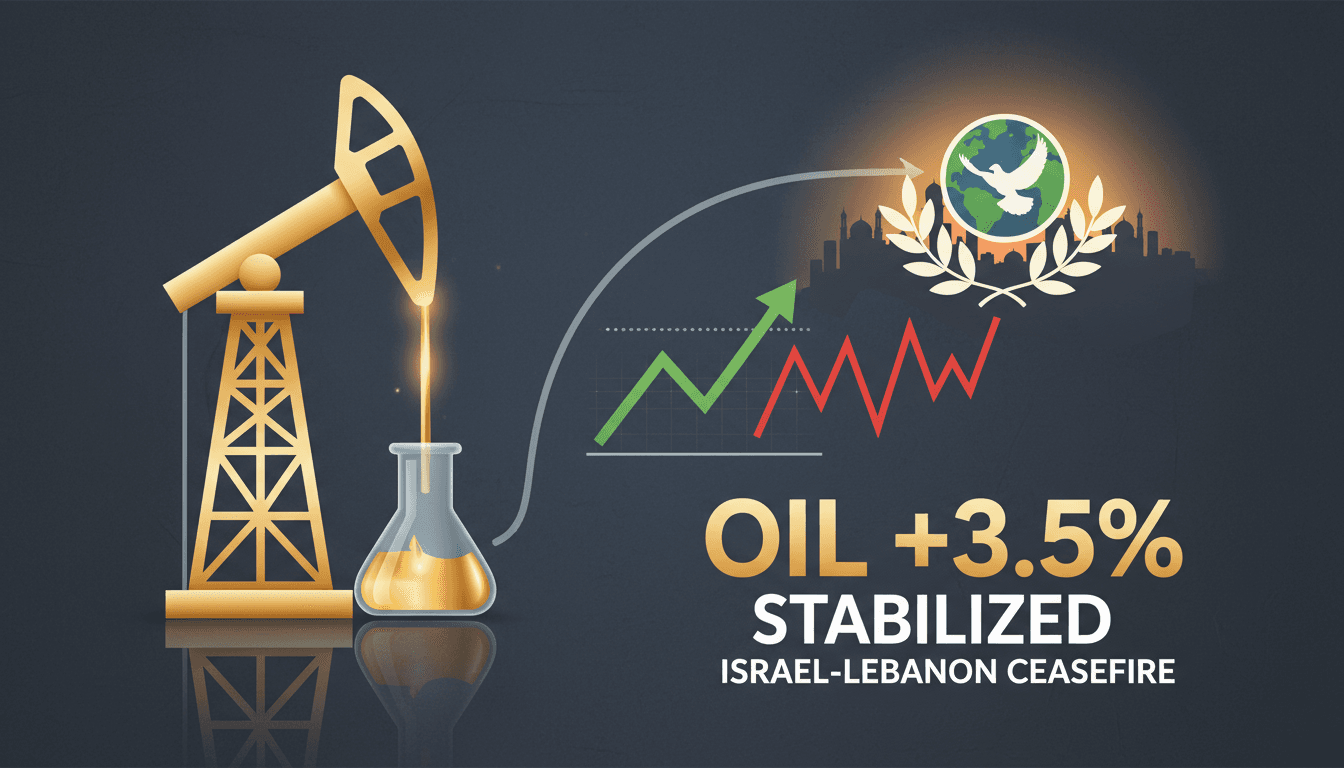
Oil prices stabilize following Israel-Lebanon ceasefire agreement
Here's what it means for you.
The recent ceasefire agreement between Israel and Lebanon has provided a temporary stabilization in oil prices, halting a two-week decline. This development is significant as it reflects the intricate relationship between geopolitical events and market dynamics. Investors and policymakers should remain vigilant, as ongoing tensions in the Middle East could still lead to fluctuations in oil prices. The situation may also influence U.S.-Iran negotiations, which are critical for regional stability and energy markets. As the geopolitical landscape evolves, stakeholders must prepare for potential impacts on oil supply and pricing.
What happened
Oil prices halted a two-week decline following a ceasefire agreement between Israel and Lebanon. This agreement has allowed oil to post a weekly gain, despite having slipped more than 2% during the previous weeks. The market's response indicates a complex interplay between conflict and potential diplomatic resolutions in the region.
The ceasefire suggests a possible support mechanism for ongoing U.S.-Iran talks, which could further influence oil market dynamics. Oil futures had previously experienced three consecutive days of gains before the recent fluctuations.
The Context
The oil market is currently navigating through a turbulent phase influenced by geopolitical tensions in the Middle East. The recent ceasefire between Israel and Lebanon has provided a temporary reprieve, allowing oil prices to stabilize after a period of decline. However, renewed fighting in the region continues to exert pressure on market volatility.
The implications of this ceasefire extend beyond immediate price stabilization, potentially affecting broader U.S.-Iran relations and ongoing conflicts in the area. Stakeholders in the oil market must consider these factors as they assess future pricing and supply scenarios.
Takeaway
As the situation in the Middle East evolves, oil prices are likely to remain volatile, influenced by both conflict dynamics and diplomatic efforts aimed at resolution. Monitoring developments in U.S.-Iran negotiations will be crucial for understanding future market movements. Additionally, the impact of the ceasefire on regional stability will be essential for assessing long-term oil price trends.
Investors and policymakers should stay informed about ongoing geopolitical developments, as they will continue to shape the oil market landscape in the coming weeks.
Oil, metals, and agriculture: supply/demand headlines, OPEC chatter, inventories, and price action.
"Solid tape for energy and metals traders tracking macro and micro catalysts."
— A47 Editor
Oil halts two-week losing run on fading hopes for end to Middle East conflict
Oil prices have halted a two-week losing streak as hopes for an end to the ongoing conflict in the Middle East fade. This development comes amid rising geopolitical tensions, particularly involving Iran and Israel, which have significantly impacted m...
UAE-based English-language newspaper covering regional politics, economics, and global affairs.
"The National reflects Emirati policy perspectives while maintaining international editorial standards."
— A47 Editor
Oil slips more than 2% but still posts weekly gain amid renewed fighting in Middle East
Oil prices have slipped more than 2% amid renewed fighting in the Middle East, yet they still managed to post a weekly gain, reflecting the ongoing volatility in the market. This fluctuation is attributed to geopolitical tensions, particularly in the...
Markets desk coverage, trading insights, and investor updates.
"WSJ’s markets reporting provides in-depth analysis and context for investors."
— A47 Editor
Oil Futures Retreat After 3-Session Winning Streak
Oil futures have retreated after a three-session winning streak, influenced by a tentative ceasefire agreement between Israel and Lebanon, which may pave the way for renewed U.S.-Iran discussions. This pullback indicates a shift in market sentiment f...
Regional and international reporting focused on Middle Eastern politics, diplomacy, and economics.
"Asharq Al-Awsat is a Saudi-owned international newspaper reflecting mainstream Gulf political perspectives."
— A47 Editor
Oil Falls as Lebanon and Israel Agree on a Ceasefire
Lebanon and Israel have reached a ceasefire agreement following U.S.-mediated talks, which has led to a decline in oil prices. This agreement is contingent upon Hezbollah's complete cessation of hostilities and the establishment of security zones in ...