
Hillary Dawa Sherpa Rescued After Six Days Alone on Mount Everest
Here's what it means for you.
If you’re involved in adventure tourism or high-altitude expeditions, this incident could reshape safety protocols and risk management strategies.
Why it matters
The survival of Hillary Dawa Sherpa highlights critical safety concerns in high-altitude climbing, impacting regulations and practices in the adventure tourism industry.
What happened (in 30 seconds)
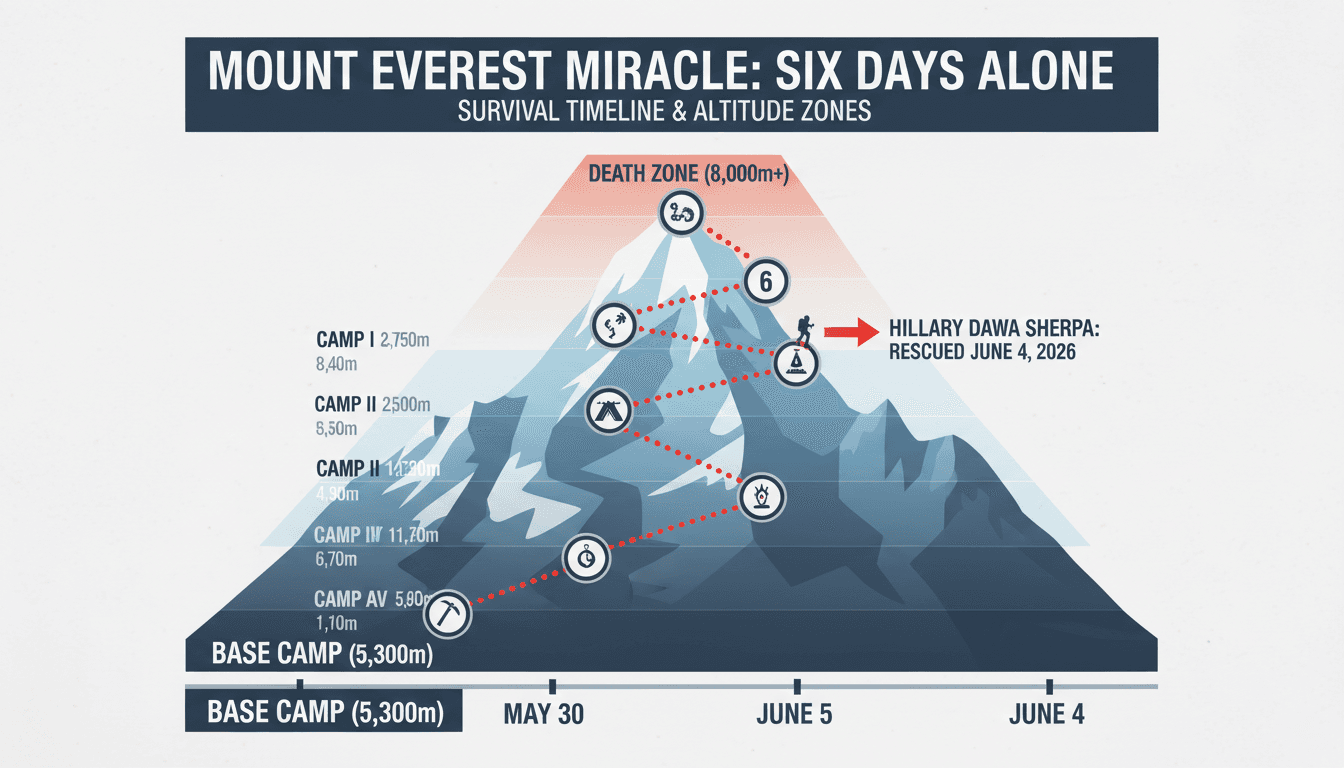
- Hillary Dawa Sherpa was found alive on June 4, 2026, after surviving six days alone on Mount Everest without supplemental oxygen.
- He survived by consuming a chocolate bar and melting snow while navigating treacherous terrain after being separated from his climbing team.
- Sherpa's rescue was facilitated by a cleaning crew who spotted him crawling through the Khumbu Icefall, leading to his airlift to HAMS Hospital in Kathmandu.
The context you actually need
- Mount Everest is notorious for its extreme conditions, particularly above 8,000 meters, known as the "death zone" due to critically low oxygen levels.
- The climbing season in 2026 saw over 1,000 climbers attempting to summit, raising concerns about overcrowding and safety.
- Sherpa guides play a vital role in high-altitude expeditions, but the risks remain significant, prompting discussions about their responsibilities and safety measures.
What's really happening
Hillary Dawa Sherpa's survival story is not just a tale of individual resilience; it reflects broader systemic issues within the high-altitude climbing industry. The incident occurred during a particularly busy climbing season on Mount Everest, where over 1,000 climbers attempted to reach the summit. This surge in climbers has raised alarms about overcrowding, which can lead to dangerous situations, including delays in rescue operations and increased risks of altitude sickness.
Sherpa's ordeal began when he became separated from his climbing team while descending from Camp 4. Initially presumed dead, his survival for six days without supplemental oxygen is a testament to both his physical endurance and the harsh realities of high-altitude survival. The conditions at such altitudes are unforgiving; climbers face not only the risk of frostbite and dehydration but also the psychological toll of isolation and fear.
The mountaineering community has reacted with a mix of awe and concern. Sherpa's miraculous survival has sparked discussions about the responsibilities of guiding companies and the safety protocols in place for climbers. As the adventure tourism sector continues to grow, the need for stringent safety measures becomes increasingly apparent. Companies may need to reassess their training programs for guides, ensuring they are equipped to handle emergencies effectively.
Moreover, Sherpa's story could influence regulatory bodies to implement stricter guidelines for high-altitude expeditions. This could include mandatory safety equipment, improved communication systems, and enhanced training for guides. The implications extend beyond Nepal; as adventure tourism gains traction globally, particularly in regions like the UAE, the lessons learned from Sherpa's experience may shape safety standards and risk management practices in climbing and other extreme sports.
Who feels it first (and how)
- Climbers and Adventure Tourists: Increased awareness of risks may lead to more cautious behavior and demand for better safety measures.
- Tourism Companies: Pressure to enhance safety protocols could lead to increased operational costs and changes in service offerings.
- Regulatory Bodies: Potential for new regulations affecting high-altitude climbing and adventure tourism sectors globally.
What to watch next
- Safety Protocol Reviews: Watch for announcements from climbing companies regarding new safety measures and training programs.
- Regulatory Changes: Monitor for potential new regulations from Nepalese authorities or international climbing organizations aimed at improving safety standards.
- Tourism Trends: Observe shifts in adventure tourism, particularly in regions like the UAE, as safety concerns may influence consumer choices.
Hillary Dawa Sherpa survived six days alone on Everest, prompting discussions about climbing safety.
Increased scrutiny and potential changes to safety protocols in high-altitude climbing.
The long-term impact on adventure tourism in regions like the UAE and how it may reshape consumer behavior.
Frequently Asked Questions
- Why it matters?
- The survival of Hillary Dawa Sherpa highlights critical safety concerns in high-altitude climbing, impacting regulations and practices in the adventure tourism industry.
- What happened (in 30 seconds)?
- Hillary Dawa Sherpa was found alive on June 4, 2026, after surviving six days alone on Mount Everest without supplemental oxygen. He survived by consuming a chocolate bar and melting snow while navigating treacherous terrain after being separated from his climbing team. Sherpa's rescue was facilitated by a cleaning crew who spotted him crawling through the Khumbu Icefall, leading to his airlift to HAMS Hospital in Kathmandu.
- What's really happening?
- Hillary Dawa Sherpa's survival story is not just a tale of individual resilience; it reflects broader systemic issues within the high-altitude climbing industry. The incident occurred during a particularly busy climbing season on Mount Everest, where over 1,000 climbers attempted to reach the summit. This surge in climbers has raised alarms about overcrowding, which can lead to dangerous situations, including delays in rescue operations and increased risks of altitude sickness. Sherpa's ordeal
- Who feels it first (and how)?
- Climbers and Adventure Tourists: Increased awareness of risks may lead to more cautious behavior and demand for better safety measures. Tourism Companies: Pressure to enhance safety protocols could lead to increased operational costs and changes in service offerings. Regulatory Bodies: Potential for new regulations affecting high-altitude climbing and adventure tourism sectors globally.
- What to watch next?
- Safety Protocol Reviews: Watch for announcements from climbing companies regarding new safety measures and training programs. Regulatory Changes: Monitor for potential new regulations from Nepalese authorities or international climbing organizations aimed at improving safety standards. Tourism Trends: Observe shifts in adventure tourism, particularly in regions like the UAE, as safety concerns may influence consumer choices.
International coverage of politics, culture, and current affairs.
"BBC News is widely regarded as a reputable international news organization, known for its impartial tone and public service mandate."
— A47 Editor
Everest guide survived six-day ordeal by eating chocolate and 'chewing ice'
Dawa Sherpa, a Nepali guide on Mount Everest, was found alive after a six-day ordeal, during which he survived by eating chocolate and chewing ice. He was last seen descending the mountain on May 29, and was located by a cleaning crew as he made his ...
Comprehensive coverage of global events, politics, and international issues.
"NBC News is a mainstream outlet known for comprehensive national and international coverage with a centrist to slightly left-leaning editorial tone."
— A47 Editor
Miracle on Mount Everest
A Sherpa guide named Dawa Sherpa was found alive on Mount Everest after being missing for nearly a week, having crawled back to base camp just as his family was preparing for his funeral. He was last seen descending the mountain on May 29, while his ...
Comprehensive coverage of Middle Eastern and global issues.
"Al Jazeera is a prominent voice from the Global South, especially the Middle East, with an emphasis on underreported stories."
— A47 Editor
Sherpa found alive on Mount Everest after six days missing
A Nepali Sherpa, Dawa Sherpa, has been found alive on Mount Everest after being missing for six days without food or oxygen. He was last seen descending the mountain on May 29, while his client successfully reached the base camp. His remarkable survi...
Global news coverage with extensive reporting on Middle Eastern conflicts and geopolitics.
"Al Jazeera is a Qatar-based broadcaster known for wide regional coverage and alternative perspectives."
— A47 Editor
Sherpa found alive on Mount Everest after six days missing
A Nepali Sherpa, Dawa Sherpa, has been found alive on Mount Everest after being missing for six days without food or oxygen. He was last seen descending the mountain on May 29, while his client successfully reached the base camp. His remarkable survi...
International coverage of politics, security, and social issues.
"Global News is a mainstream Canadian outlet with a centrist editorial stance, focusing on factual reporting."
— A47 Editor
Sherpa guide lost on Mount Everest found alive crawling back to base camp
A Sherpa guide, Dawa Sherpa, was found alive on Mount Everest after being missing for six days, having crawled back to base camp just as his family was preparing for his funeral. He was last seen descending the mountain on May 29 while his client suc...
International coverage from The Guardian's global desks.
"The Guardian is known for its progressive editorial stance and in-depth analysis."
— A47 Editor
Missing Sherpa guide found alive on Everest after funeral rites had begun
Dawa Sherpa, a Nepali guide on Mount Everest, was found alive after being missing for six days, having crawled back to base camp just as his family was preparing for his funeral. He was last seen on May 29 while descending the mountain, and his clien...
International news, politics, and culture.
"Sky News is a UK-based 24-hour channel known for fast-breaking news and political coverage."
— A47 Editor
Missing Sherpa crawls back to Mount Everest base camp
Dawa Sherpa, a Nepali guide on Mount Everest, has been found alive after going missing for six days. He crawled back to base camp on June 4, just as his family was preparing for his funeral. Sherpa was last seen descending the mountain on May 29, whi...
Global news coverage with extensive reporting on Middle Eastern conflicts and geopolitics.
"Al Jazeera is a Qatar-based broadcaster known for wide regional coverage and alternative perspectives."
— A47 Editor
Nepali Mount Everest guide found alive after being missing for six days
Dawa Sherpa, a Nepali guide on Mount Everest, has been found alive after being missing for six days. He was last seen descending the mountain around May 29, while his client successfully reached the base camp. This incident highlights the inherent da...
Comprehensive coverage of Middle Eastern and global issues.
"Al Jazeera is a prominent voice from the Global South, especially the Middle East, with an emphasis on underreported stories."
— A47 Editor
Nepali Mount Everest guide found alive after being missing for six days
Dawa Sherpa, a Nepali guide on Mount Everest, has been found alive after being missing for six days. He was last seen descending the mountain around May 29, while his client successfully reached the base camp. This incident highlights the inherent da...