
UN OCHA Reports 94 Percent of Gaza's Population Requires Urgent Shelter and Basic Aid as Conflict Persists
Here's what it means for you.
The ongoing humanitarian crisis in Gaza could indirectly affect global markets and expatriate communities, including those in Dubai.
Why it matters
The humanitarian situation in Gaza is a critical indicator of regional stability, which can influence international trade and economic conditions.
What happened (in 30 seconds)
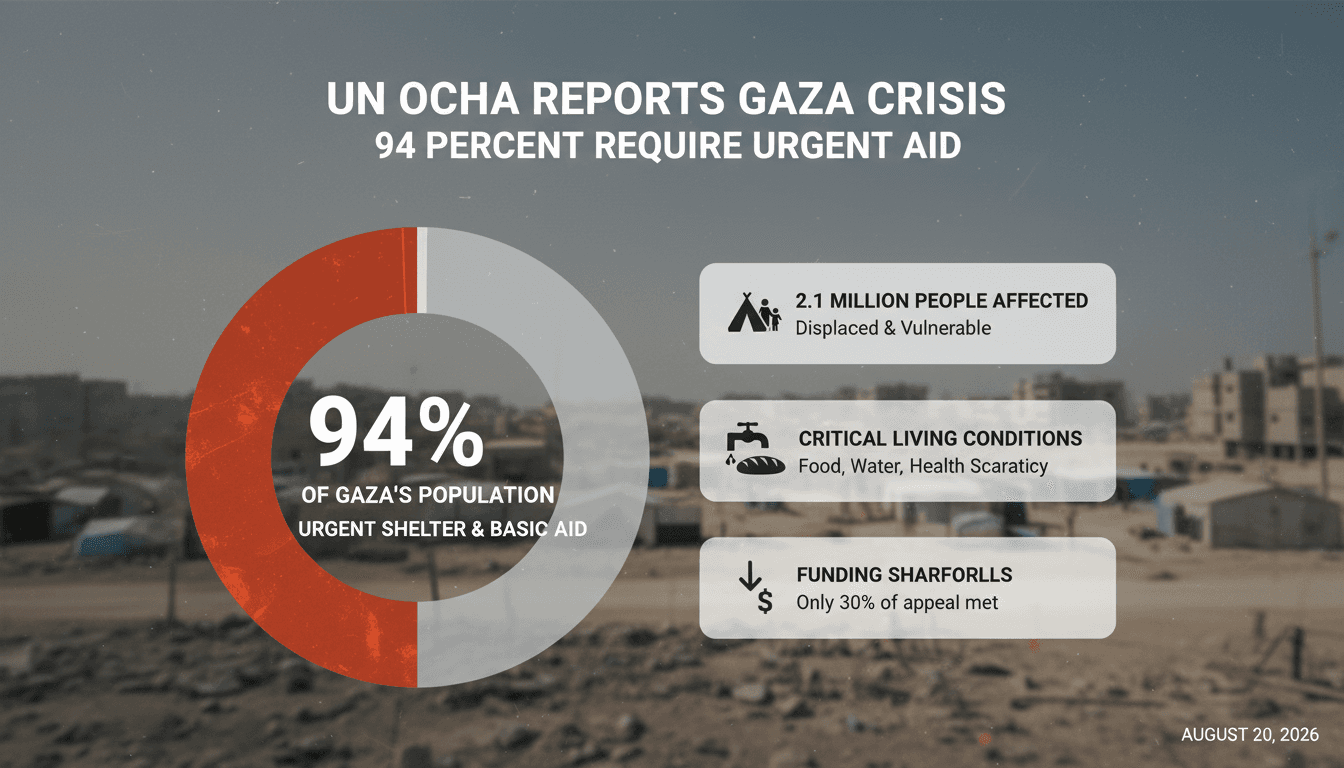
- UN OCHA reported that 94% of Gaza's 2.1 million residents urgently need shelter and basic aid amid ongoing conflict.
- Two-thirds of families are living in makeshift shelters, facing critical living conditions without essential supplies.
- Israeli restrictions on aid and recovery efforts continue to exacerbate the crisis, limiting access to necessary materials for rebuilding.
The context you actually need
- The Israel-Hamas conflict escalated significantly after the October 7, 2023 attacks, leading to extensive destruction in Gaza.
- Aid access limitations imposed by Israeli authorities have resulted in repeated cycles of humanitarian crises, affecting shelter and recovery efforts.
- Funding shortfalls for humanitarian assistance are estimated at $562 million, complicating efforts to improve living conditions ahead of the rainy season.
What's really happening
The humanitarian crisis in Gaza is a complex interplay of ongoing conflict, restricted access to aid, and severe infrastructure damage. Following the escalation of violence in October 2023, the situation has deteriorated rapidly. The UN OCHA's alarming report highlights that 94% of Gaza's population—approximately 1.98 million people—are in dire need of shelter and basic household assistance. This statistic underscores the scale of the crisis, as nearly two-thirds of families are forced to live in substandard conditions, often in tents or makeshift shelters that are ill-equipped to withstand the elements.
The Israeli Defense Forces' operations have resulted in significant civilian casualties and ongoing destruction, further complicating recovery efforts. The recovery of remains from previous conflicts, including the recent burial of 50 individuals, illustrates the human toll of the violence. The restrictions imposed by Israeli authorities on the entry of heavy machinery, spare parts, and building materials have severely hampered both the recovery of bodies and the provision of adequate shelter. This blockade not only affects immediate humanitarian needs but also stymies long-term recovery and rebuilding efforts.
As the rainy season approaches, the urgency for improved living conditions becomes even more critical. The estimated funding shortfall of $562 million for humanitarian assistance highlights the financial challenges faced by organizations attempting to provide relief. Without adequate resources, the situation is likely to worsen, leading to increased suffering among the civilian population.
The implications of this crisis extend beyond Gaza. Regional instability can influence global markets, particularly in sectors reliant on trade routes that may be affected by the ongoing conflict. Expatriate communities, including those in Dubai, may also feel the ripple effects of this humanitarian crisis, as economic conditions fluctuate in response to geopolitical tensions.
Who feels it first (and how)
- Humanitarian organizations: Struggling to secure funding and resources for aid distribution.
- Local families in Gaza: Living in critical conditions, facing health risks and lack of basic necessities.
- Expatriate communities: Potentially impacted by shifts in regional stability and economic conditions.
- Global markets: Trade routes may be affected, influencing supply chains and economic forecasts.
What to watch next
- Aid access developments: Monitor any changes in Israeli restrictions on humanitarian aid, as this will directly impact the living conditions in Gaza.
- Funding initiatives: Watch for international fundraising efforts aimed at addressing the $562 million shortfall, which could influence the scale of humanitarian assistance.
- Regional stability indicators: Keep an eye on geopolitical developments in the Middle East that may affect trade routes and economic conditions globally.
The humanitarian crisis in Gaza is severe, with 94% of the population in urgent need of assistance.
Continued restrictions on aid and infrastructure recovery will exacerbate living conditions in Gaza.
The long-term economic impacts on global markets and expatriate communities remain uncertain.
Frequently Asked Questions
- Why it matters?
- The humanitarian situation in Gaza is a critical indicator of regional stability, which can influence international trade and economic conditions.
- What happened (in 30 seconds)?
- UN OCHA reported that 94% of Gaza's 2.1 million residents urgently need shelter and basic aid amid ongoing conflict. Two-thirds of families are living in makeshift shelters, facing critical living conditions without essential supplies. Israeli restrictions on aid and recovery efforts continue to exacerbate the crisis, limiting access to necessary materials for rebuilding.
- What's really happening?
- The humanitarian crisis in Gaza is a complex interplay of ongoing conflict, restricted access to aid, and severe infrastructure damage. Following the escalation of violence in October 2023, the situation has deteriorated rapidly. The UN OCHA's alarming report highlights that 94% of Gaza's population—approximately 1.98 million people—are in dire need of shelter and basic household assistance. This statistic underscores the scale of the crisis, as nearly two-thirds of families are forced to live i
- Who feels it first (and how)?
- Humanitarian organizations: Struggling to secure funding and resources for aid distribution. Local families in Gaza: Living in critical conditions, facing health risks and lack of basic necessities. Expatriate communities: Potentially impacted by shifts in regional stability and economic conditions. Global markets: Trade routes may be affected, influencing supply chains and economic forecasts.
- What to watch next?
- Aid access developments: Monitor any changes in Israeli restrictions on humanitarian aid, as this will directly impact the living conditions in Gaza. Funding initiatives: Watch for international fundraising efforts aimed at addressing the $562 million shortfall, which could influence the scale of humanitarian assistance. Regional stability indicators: Keep an eye on geopolitical developments in the Middle East that may affect trade routes and economic conditions globally.
Regional and international reporting focused on Middle Eastern politics, diplomacy, and economics.
"Asharq Al-Awsat is a Saudi-owned international newspaper reflecting mainstream Gulf political perspectives."
— A47 Editor
UN Warns 94% of Gaza's Population Urgently Needs Shelter and Basic Aid
The United Nations has issued a stark warning that 94% of Gaza's population urgently requires shelter and basic aid, highlighting the dire humanitarian crisis exacerbated by ongoing conflict and instability in the region.
Arabic-language coverage of international news and geopolitics.
"RT Arabic is a Russian state-funded outlet often criticized for promoting Kremlin-aligned narratives."
— A47 Editor
تقرير أممي: 94% من سكان غزة بحاجة إلى مأوى
The United Nations reported that 94% of Palestinians in the Gaza Strip are in need of shelter and essential household supplies due to extensive destruction of homes and infrastructure, coupled with ongoing displacement of residents.
Jordanian news and regional updates.
"Roya News is a Jordanian outlet focused on breaking news and local affairs."
— A47 Editor
الأمم المتحدة: 94% من سكان غزة بحاجة للمأوى وفجوة التمويل تهدد خدمات الإيواء
The United Nations has reported that 94% of the population in Gaza is in need of shelter, highlighting a critical humanitarian crisis exacerbated by technical obstacles that hinder the entry of essential supplies and equipment. This situation has lef...