
Iran Analyzes Response Options to US Sanctions Amid Ongoing Gulf Conflict
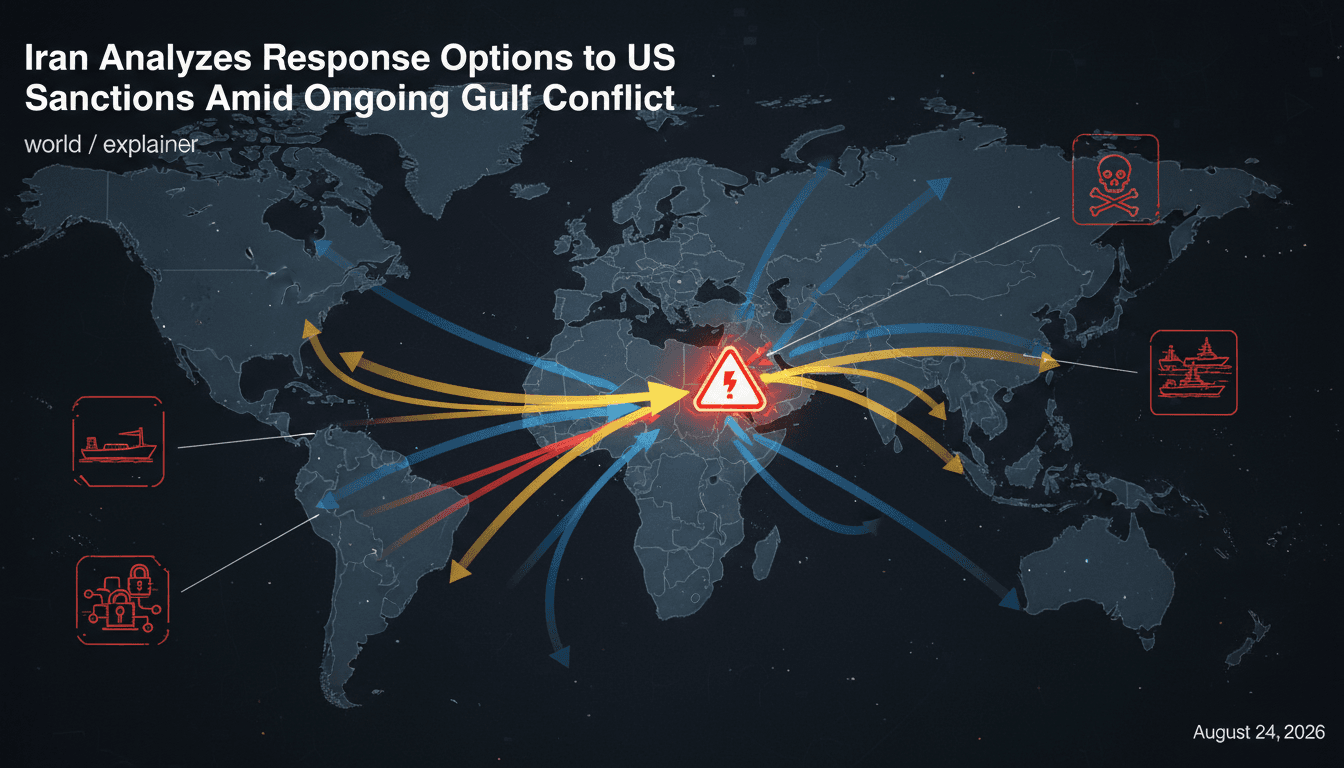
Here's what it means for you.
If you rely on global energy markets, the ongoing conflict and sanctions could lead to price volatility and supply chain disruptions.
Why it matters
The escalation of sanctions against Iran threatens to disrupt global energy flows, impacting oil prices and economic stability worldwide.
What happened (in 30 seconds)
- US Treasury announced Operation Economic Outcast on August 24, 2026, targeting Iran's key economic sectors.
- Iran threatened to retaliate by shutting down oil exports through the Persian Gulf if sanctions continue.
- Ongoing conflict has already limited traffic through the Strait of Hormuz, affecting global energy supply.
The context you actually need
- The conflict began on February 28, 2026, involving the US, Israel, and Iran, with proxy forces complicating the situation.
- Previous sanctions have led Iran to develop asymmetric responses, including cyber operations and proxy attacks.
- The Strait of Hormuz is critical, with one-fifth of global energy previously transported through this route before disruptions began.
What's really happening
On August 24, 2026, the US Treasury's Operation Economic Outcast marked a significant escalation in the ongoing conflict with Iran. This initiative imposed stringent sanctions on Iran's oil, gold, digital assets, aviation, and shipping sectors, aiming to isolate the country economically. The sanctions are a response to a six-month war that has seen military stalemates and rising tensions in the Gulf region.
Iran's economy, already strained by previous sanctions, faces further isolation. The US aims to cripple Iran's ability to fund its military operations and proxy groups, which have been active in the region. In retaliation, Iranian officials, including Mohsen Rezaei, have threatened to completely shut down oil exports through the Persian Gulf, a move that could have dire consequences for global energy markets. The Strait of Hormuz is a vital chokepoint, with approximately 20% of the world's oil passing through it. Any disruption here could lead to significant price spikes and supply shortages.
The Iranian regime has also indicated that it may resort to asymmetric warfare tactics, including cyber attacks and proxy engagements in the region. This could involve targeting Gulf states that support US sanctions or disrupting shipping routes in the Red Sea and beyond. The Houthis in Yemen, allied with Iran, have already demonstrated their capability to affect maritime traffic, raising concerns about the security of shipping lanes.
As the US intensifies its economic pressure, the risk of military escalation remains. While no immediate major kinetic actions have been reported, the ongoing threats and low-volume traffic through the Strait of Hormuz indicate a precarious situation. The potential for miscalculation or unintended escalation is high, particularly as both sides navigate this complex geopolitical landscape.
Who feels it first (and how)
- Energy sector professionals: Oil and gas companies may face increased costs and operational risks.
- Consumers: Rising oil prices could lead to higher fuel and energy costs for households.
- Businesses in Dubai: Local companies reliant on stable energy supplies may experience disruptions in operations and increased costs.
What to watch next
- Iran's military responses: Monitor for any escalation in military actions or proxy attacks in the region, which could further disrupt energy supplies.
- Global oil prices: Watch for fluctuations in oil prices as tensions rise, impacting economies worldwide.
- International diplomatic efforts: Observe any attempts by Gulf states or global powers to mediate the conflict, which could influence sanctions and military actions.
The US has imposed new sanctions targeting Iran's economy.
Iran will continue to threaten and potentially execute asymmetric responses to US actions.
The long-term impact on global energy markets and regional stability remains uncertain.
Frequently Asked Questions
- Why it matters?
- The escalation of sanctions against Iran threatens to disrupt global energy flows, impacting oil prices and economic stability worldwide.
- What happened (in 30 seconds)?
- US Treasury announced Operation Economic Outcast on August 24, 2026, targeting Iran's key economic sectors. Iran threatened to retaliate by shutting down oil exports through the Persian Gulf if sanctions continue. Ongoing conflict has already limited traffic through the Strait of Hormuz, affecting global energy supply.
- What's really happening?
- On August 24, 2026, the US Treasury's Operation Economic Outcast marked a significant escalation in the ongoing conflict with Iran. This initiative imposed stringent sanctions on Iran's oil, gold, digital assets, aviation, and shipping sectors, aiming to isolate the country economically. The sanctions are a response to a six-month war that has seen military stalemates and rising tensions in the Gulf region. Iran's economy, already strained by previous sanctions, faces further isolation. The US
- Who feels it first (and how)?
- Energy sector professionals: Oil and gas companies may face increased costs and operational risks. Consumers: Rising oil prices could lead to higher fuel and energy costs for households. Businesses in Dubai: Local companies reliant on stable energy supplies may experience disruptions in operations and increased costs.
- What to watch next?
- Iran's military responses: Monitor for any escalation in military actions or proxy attacks in the region, which could further disrupt energy supplies. Global oil prices: Watch for fluctuations in oil prices as tensions rise, impacting economies worldwide. International diplomatic efforts: Observe any attempts by Gulf states or global powers to mediate the conflict, which could influence sanctions and military actions.
Regional coverage and analysis focused on politics, diplomacy, and business across the Middle East.
"Al-Monitor is known for analytical reporting on Middle East politics and policy developments."
— A47 Editor
Explainer-What are Iran's options to escalate further in face of US economic threats?
The United States has threatened to impose what it calls the 'toughest sanctions in history' on Iran, escalating tensions following nearly six months of conflict. In response, Iran's former Revolutionary Guards chief, Mohsen Rezaei, has warned of a p...
English-language reporting on Saudi politics, policy, and society.
"Saudi Gazette reflects mainstream Saudi institutional perspectives."
— A47 Editor
Tehran threatens to halt all Gulf oil exports over US ‘economic war’
Iran has threatened to halt all oil exports from the Gulf in response to the United States' impending economic sanctions, which Iranian officials describe as the most severe financial offensive ever launched against the country. Mohsen Rezaei, Secret...
Arabic-language coverage of international news and geopolitics.
"RT Arabic is a Russian state-funded outlet often criticized for promoting Kremlin-aligned narratives."
— A47 Editor
رضائي يهدد بوقف صادرات النفط ووضع داعمي واشنطن بخانة "الأعداء"
Mohsen Rezai, the Secretary of Iran's Supreme National Security Council, has threatened to halt oil exports from the Gulf region if the United States continues what he describes as an economic war against Iran. This statement reflects the escalating ...
Capitol Hill news, legislation, and policy insight.
"The Hill specializes in U.S. politics and policy, with a focus on Capitol Hill developments and a reputation for insider reporting."
— A47 Editor
Iran warns Middle East neighbors against joining US 'economic war'
Iran has issued a warning to its Middle Eastern neighbors against joining the United States in what it describes as an 'economic war,' as tensions between Washington and Tehran continue to escalate. Mohsen Rezaei, the leader of Iran's Supreme Nationa...
Comprehensive coverage of Middle Eastern and global issues.
"Al Jazeera is a prominent voice from the Global South, especially the Middle East, with an emphasis on underreported stories."
— A47 Editor
Can Iran retaliate against countries that join US ‘economic war’?
Iran's security chief has issued a warning of potential retaliation against countries that align with the United States in its economic campaign against Tehran, which is perceived as an 'economic war.' This statement underscores Iran's determination ...
Global news coverage with extensive reporting on Middle Eastern conflicts and geopolitics.
"Al Jazeera is a Qatar-based broadcaster known for wide regional coverage and alternative perspectives."
— A47 Editor
Can Iran retaliate against countries that join US ‘economic war’?
Iran's security chief has issued a warning of potential retaliation against countries that align with the United States in its economic campaign against Tehran, which is perceived as an 'economic war.' This statement underscores Iran's determination ...
Global business headlines with AI angles.
"General business outlet that frequently covers AI."
— A47 Editor
Iran's Top Security Chief Escalates Rhetoric. Warning Aimed At US Allies.
Mohsen Rezai, the head of Iran's Supreme National Security Council, has issued a stern warning directed at U.S. allies, marking his most extensive public statement since assuming office. His remarks suggest a hardening stance from Tehran amidst ongoi...