
AVROTROS Boycotts Eurovision Again Over Neutrality Issues Linked to Israel's Participation
Here's what it means for you.
The ongoing boycott of Eurovision by AVROTROS reflects broader geopolitical tensions that could influence international cultural events and broadcasting policies.
Why it matters
This decision underscores the increasing intersection of media, culture, and international relations, impacting how countries engage in global events.
What happened (in 30 seconds)
- AVROTROS announced its withdrawal from the 2027 Eurovision Song Contest due to concerns over the event's neutrality amid Israel's participation.
- This marks the second consecutive year the Dutch broadcaster has boycotted the contest, returning responsibility for representation to the NPO.
- The EBU's recent reforms were deemed insufficient to address neutrality concerns, leading to this decision.
The context you actually need
- Eurovision has faced controversies since 2023 regarding Israel's participation, particularly in light of the Israel-Hamas conflict.
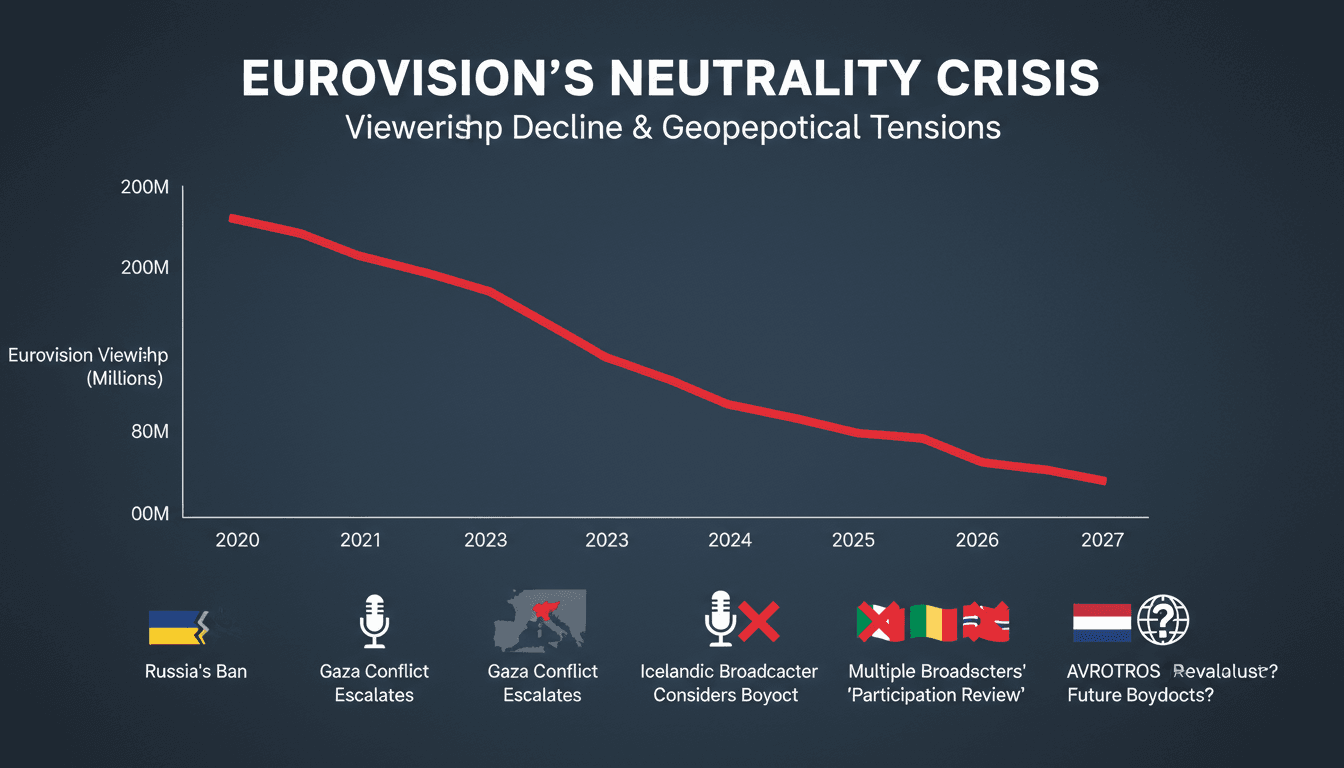
- In 2026, five countries boycotted the contest in Vienna, resulting in a significant viewership drop to 131 million, down 35 million from the previous year.
- The EBU introduced new rules barring countries in armed conflict from hosting but did not address participation eligibility, leaving many dissatisfied.
What's really happening
On August 24, 2026, AVROTROS, the Dutch public broadcaster, officially announced its decision to withdraw from the Eurovision Song Contest scheduled for 2027 in Burgas, Bulgaria. This marks a significant moment in the contest's history, as it reflects a growing sentiment among broadcasters regarding the perceived neutrality of the event. The decision stems from ongoing geopolitical tensions, particularly surrounding Israel's participation amid the Gaza conflict. AVROTROS cited the contest's loss of neutrality, stating that the presence of a country involved in large-scale military conflict compromises the integrity of the event.
The European Broadcasting Union (EBU), which organizes Eurovision, had previously introduced reforms aimed at addressing concerns about neutrality. However, these changes were criticized for failing to adequately restore the contest's independent character. AVROTROS had previously called for more transparent rules regarding participation in the context of armed conflict, and the recent reforms did not meet these expectations. As a result, AVROTROS has returned the responsibility for Dutch participation to the NPO, which will now determine how the Netherlands will engage with the contest moving forward.
This boycott is not an isolated incident; it follows a trend of increasing scrutiny over cultural events that intersect with political issues. The Eurovision Song Contest, traditionally a platform for celebrating diversity and unity through music, is now caught in the crossfire of international politics. The implications of this decision extend beyond the immediate context of Eurovision, as it raises questions about how cultural institutions will navigate political sensitivities in the future.
The EBU expressed regret over AVROTROS's decision but indicated respect for the broadcaster's stance. They also mentioned exploring participation by other Dutch public broadcasters, highlighting the potential for a fragmented representation of the Netherlands in future contests. The lack of immediate governmental response from Dutch authorities suggests a cautious approach to the evolving situation, as they may be weighing the implications of this boycott on national identity and international relations.
As Eurovision continues to grapple with these challenges, the future of the contest may hinge on its ability to adapt to the changing political landscape while maintaining its core values of inclusivity and neutrality.
Who feels it first (and how)
- Broadcasters: AVROTROS and NPO will need to navigate the implications of this boycott on their programming and international relations.
- Artists: Dutch artists may lose opportunities to showcase their talents on a global stage, impacting their careers.
- Viewers: Eurovision fans in the Netherlands may feel disconnected from the event, affecting viewership and engagement.
What to watch next
- NPO's decision on alternative representation: How the NPO chooses to engage with Eurovision could set a precedent for future participation.
- Reactions from other countries: Observing whether other nations follow suit in boycotting or supporting the contest will indicate broader trends in international broadcasting.
- Changes in EBU policies: Any further reforms by the EBU in response to these boycotts will be crucial in determining the future of Eurovision's neutrality.
AVROTROS has officially withdrawn from the 2027 Eurovision Song Contest.
Other countries may reconsider their participation based on the evolving geopolitical landscape.
The long-term impact on Eurovision's viewership and reputation remains uncertain.
Frequently Asked Questions
- Why it matters?
- This decision underscores the increasing intersection of media, culture, and international relations, impacting how countries engage in global events.
- What happened (in 30 seconds)?
- AVROTROS announced its withdrawal from the 2027 Eurovision Song Contest due to concerns over the event's neutrality amid Israel's participation. This marks the second consecutive year the Dutch broadcaster has boycotted the contest, returning responsibility for representation to the NPO. The EBU's recent reforms were deemed insufficient to address neutrality concerns, leading to this decision.
- What's really happening?
- On August 24, 2026, AVROTROS, the Dutch public broadcaster, officially announced its decision to withdraw from the Eurovision Song Contest scheduled for 2027 in Burgas, Bulgaria. This marks a significant moment in the contest's history, as it reflects a growing sentiment among broadcasters regarding the perceived neutrality of the event. The decision stems from ongoing geopolitical tensions, particularly surrounding Israel's participation amid the Gaza conflict. AVROTROS cited the contest's loss
- Who feels it first (and how)?
- Broadcasters: AVROTROS and NPO will need to navigate the implications of this boycott on their programming and international relations. Artists: Dutch artists may lose opportunities to showcase their talents on a global stage, impacting their careers. Viewers: Eurovision fans in the Netherlands may feel disconnected from the event, affecting viewership and engagement.
- What to watch next?
- NPO's decision on alternative representation: How the NPO chooses to engage with Eurovision could set a precedent for future participation. Reactions from other countries: Observing whether other nations follow suit in boycotting or supporting the contest will indicate broader trends in international broadcasting. Changes in EBU policies: Any further reforms by the EBU in response to these boycotts will be crucial in determining the future of Eurovision's neutrality.
Global news coverage with extensive reporting on Middle Eastern conflicts and geopolitics.
"Al Jazeera is a Qatar-based broadcaster known for wide regional coverage and alternative perspectives."
— A47 Editor
Dutch public broadcaster to boycott ‘no longer’ neutral Eurovision
The Dutch public broadcaster AVROTROS has announced its decision to boycott the Eurovision Song Contest, citing that escalating international conflicts are compromising the event's neutrality and exacerbating divisions among nations. This move reflec...
Comprehensive coverage of Middle Eastern and global issues.
"Al Jazeera is a prominent voice from the Global South, especially the Middle East, with an emphasis on underreported stories."
— A47 Editor
Dutch public broadcaster to boycott ‘no longer’ neutral Eurovision
The Dutch public broadcaster AVROTROS has announced its decision to boycott the Eurovision Song Contest, citing that escalating international conflicts are compromising the event's neutrality and exacerbating divisions among nations. This move reflec...
UK and global entertainment, showbiz, and culture stories.
"Sky News is a UK broadcaster known for rolling news and breaking entertainment stories."
— A47 Editor
Dutch broadcaster to boycott Eurovision 2027
Dutch broadcaster AvroTros has announced its decision to boycott the Eurovision Song Contest in 2027, citing Israel's participation amid the ongoing conflict in Gaza as the primary reason for this protest.
International news, politics, and culture.
"Sky News is a UK-based 24-hour channel known for fast-breaking news and political coverage."
— A47 Editor
Dutch broadcaster to boycott Eurovision 2027
Dutch broadcaster AvroTros has announced its decision to boycott the Eurovision Song Contest in 2027, citing Israel's participation amid the ongoing conflict in Gaza as the primary reason for this protest.
Regional and international reporting focused on Middle Eastern politics, diplomacy, and economics.
"Asharq Al-Awsat is a Saudi-owned international newspaper reflecting mainstream Gulf political perspectives."
— A47 Editor
Dutch Say Won’t Participate in ‘No Longer’ Neutral Eurovision
The Dutch public broadcaster AVROTROS has announced its decision to boycott the Eurovision Song Contest, citing concerns that escalating international conflicts are undermining the event's neutrality. This decision reflects a growing sentiment among ...