
Increase in Commodity Ship Transits through Strait of Hormuz Amid Ongoing US-Iran Tensions
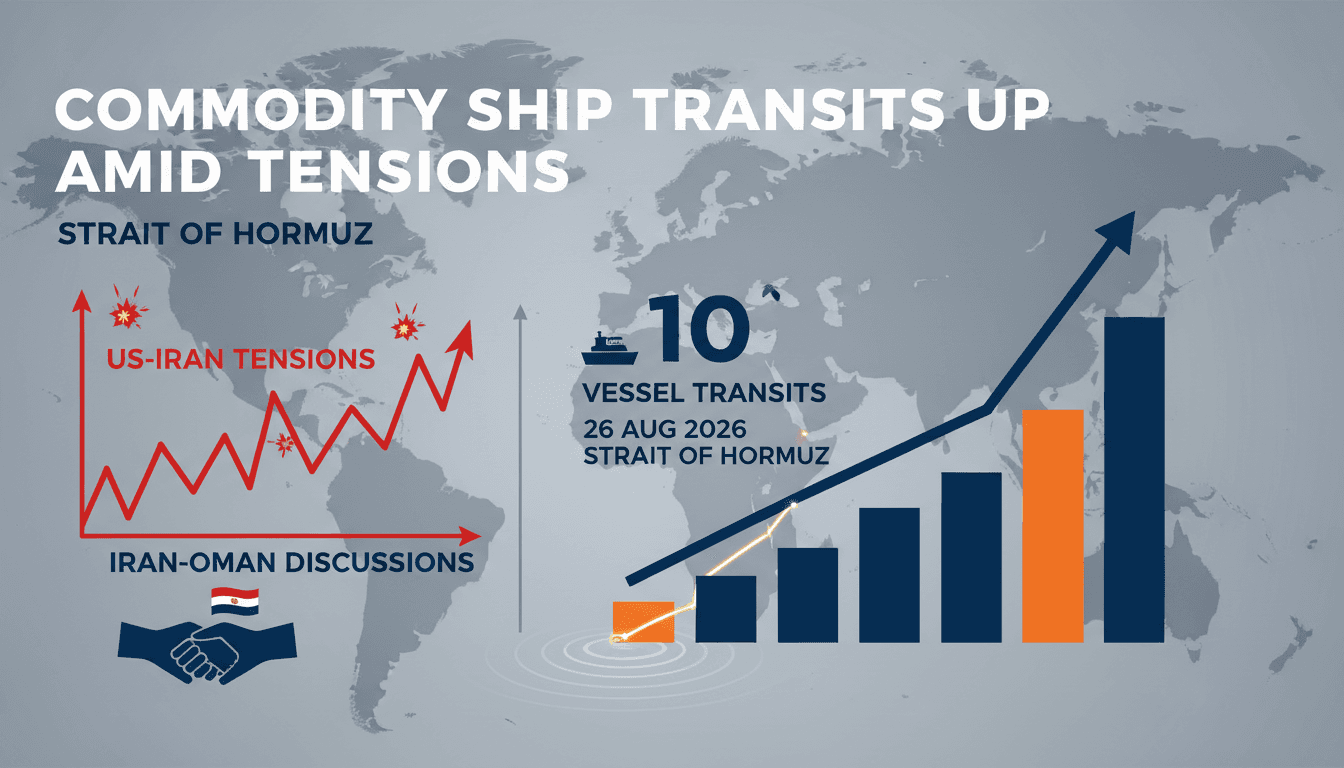
Here's what it means for you.
Increased shipping activity in the Strait of Hormuz could signal shifts in global energy markets that may impact your business operations.
What happened
On August 27, 2026, commodity vessel transits through the Strait of Hormuz rose to 10 ships, up from 8 the previous day.
The Context
- Geopolitical tensions: Ongoing US-Iran confrontations continue to affect shipping volumes, which have dropped significantly from pre-conflict averages of 125-140 vessels.
- Negotiations underway: Iran and Oman are engaged in discussions about joint management of the waterway, which could influence future shipping routes and costs.
- Market monitoring: Shipping markets are cautiously observing these developments, with no immediate spikes in rates despite the slight increase in transits.
The Number
— This is the number of observable commodity vessel transits recorded on August 26, 2026, indicating a slight recovery but still below the 10-day moving average of approximately 15 vessels.
Takeaway
As diplomatic negotiations continue, keep an eye on shipping trends in the region, as they may affect energy prices and logistics.
Pan-Arab news coverage spanning politics, business, sports, and regional affairs.
"Asharq Al-Awsat reflects a broad Arab editorial perspective with strong attention to regional geopolitics."
— A47 Editor
حركة الملاحة عبر مضيق هرمز ترتفع قليلاً رغم استمرار التوترات
Maritime traffic through the Strait of Hormuz has seen a slight increase, despite ongoing geopolitical tensions between the United States and Iran. This development highlights the resilience of shipping routes in a region that is critical for global ...
Regional coverage and analysis focused on politics, diplomacy, and business across the Middle East.
"Al-Monitor is known for analytical reporting on Middle East politics and policy developments."
— A47 Editor
Shipping traffic through Strait of Hormuz rises slightly, data shows
Shipping traffic through the Strait of Hormuz has seen a slight increase, with visible commodity vessel transits rising to 10 on Wednesday from eight on Tuesday, according to data from Kpler. This uptick occurs amid ongoing geopolitical tensions betw...
Capitol Hill news, legislation, and policy insight.
"The Hill specializes in U.S. politics and policy, with a focus on Capitol Hill developments and a reputation for insider reporting."
— A47 Editor
Global oil traffic shifts toward the US amid Iran war disruptions
Global oil traffic is increasingly shifting toward the United States due to disruptions in the Strait of Hormuz, which have been exacerbated by the ongoing conflict involving Iran. This rerouting reflects significant changes in global oil supply chai...
Global business headlines with AI angles.
"General business outlet that frequently covers AI."
— A47 Editor
Iran Accused The U.S. Of Blocking a Deal To Set Up a Safe Route Through Hormuz. Oil Is Dropping Anyway.
Iran has accused the United States of obstructing negotiations aimed at establishing a safe maritime route through the Strait of Hormuz, a critical passage for global oil shipments. This accusation comes amid ongoing tensions and military clashes in ...
English-language news from Qatar covering domestic and regional affairs.
"Gulf Times reflects Qatari perspectives on regional developments."
— A47 Editor
Six months into Iran war, almost half of global oil flows from war zones
Six months into the ongoing conflict in Iran, nearly half of the world's oil supply is sourced from countries embroiled in warfare, highlighting the unprecedented scale of current energy disruptions. This situation has arisen as Iran's blockade of th...