
Iran and Oman Propose Military Vessel Exclusion in Strait of Hormuz Framework
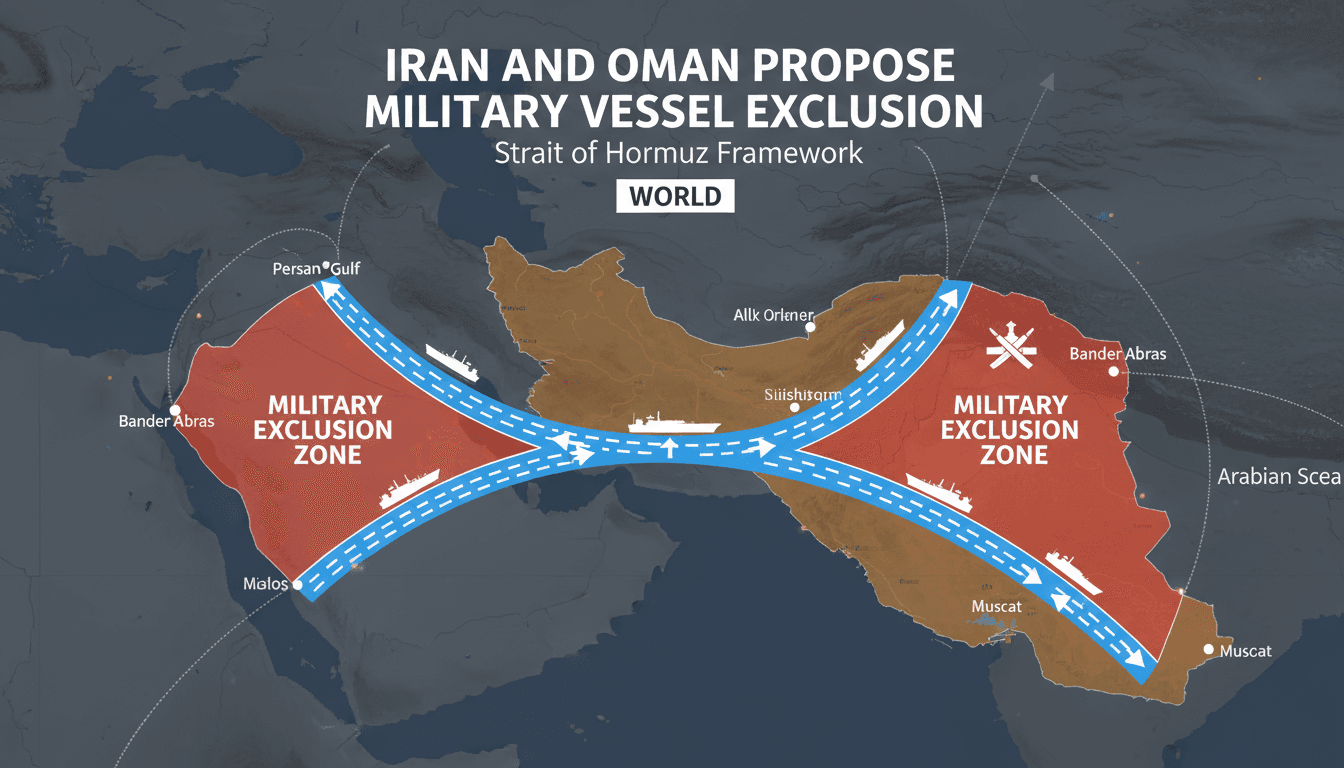
Here's what it means for you.
If you rely on global energy markets, the evolving dynamics in the Strait of Hormuz could impact oil prices and supply chains.
Why it matters
The Strait of Hormuz is a critical chokepoint for global oil shipments, with approximately 5 million barrels per day currently flowing through it.
What happened (in 30 seconds)
- On August 27, 2026, Iran and Oman proposed a framework for a temporary navigational corridor in the Strait of Hormuz, excluding military vessels.
- The White House has not commented on whether it will accept restrictions on US naval operations under this plan.
- Oil prices dipped slightly following the announcement, reflecting market uncertainty over future shipping routes.
The context you actually need
- The Strait of Hormuz is vital for global energy, with over 20 million barrels per day flowing through it before recent conflicts.
- Iran's push for control follows a June 2026 memorandum of understanding with the US aimed at restoring commercial shipping, which has stalled due to disputes.
- Ongoing US-Iran tensions have led to military actions and reduced shipping volumes, complicating the security landscape in the region.
What's really happening
The proposed Iran-Oman framework for the Strait of Hormuz represents a significant shift in regional maritime governance, driven by Iran's desire for greater control over its territorial waters and the security of shipping lanes. The framework outlines a temporary navigational corridor approximately seven nautical miles wide, designed to facilitate commercial traffic while excluding military vessels, particularly those of the United States. This exclusion is a strategic move by Iran, aiming to assert its influence in a region where US military presence has historically been dominant.
The backdrop to this proposal is a complex web of geopolitical tensions. Following a June 2026 memorandum of understanding (MOU) between the US and Iran, which sought to halt hostilities and reopen the Strait for commercial traffic, implementation has faltered. Disputes over administration, demining operations, and control have stalled progress, prompting Iran to engage in bilateral talks with Oman. This dialogue is consistent with the MOU's provisions, which allow Iran to negotiate with Oman and other Gulf states regarding future management and revenue sharing.
Iran's Deputy Foreign Minister, Kazem Gharibabadi, has emphasized that the proposed corridor would route commercial traffic through Iranian waters, with outbound traffic navigating through combined Iranian-Omani waters. This arrangement not only seeks to enhance Iran's control over maritime operations but also reflects its broader strategy to redefine regional security dynamics in its favor. The Iranian Revolutionary Guard Corps (IRGC) has hinted at agreements concerning territorial shares and revenue, indicating a push for economic benefits alongside security assurances.
The US response has been notably muted, with the White House declining to comment on the implications for American naval operations. Meanwhile, US Central Command (CENTCOM) has reiterated that the Strait remains an international waterway, emphasizing ongoing military support for commercial vessels. This tension between Iran's aspirations and US military commitments creates a precarious balance in the region, with potential implications for global oil markets and shipping routes.
As technical negotiations continue toward a permanent corridor, the stakes are high. The outcome will not only affect regional security but also have ripple effects on global energy prices and supply chains, particularly for countries reliant on oil imports from the Gulf.
Who feels it first (and how)
- Energy companies: Fluctuations in oil prices due to changes in shipping routes will directly impact profitability.
- Logistics firms: Altered maritime traffic patterns could disrupt supply chains and increase shipping costs.
- Consumers: Rising global energy prices may lead to higher costs for goods and services.
- Governments: Nations dependent on oil imports will need to navigate potential supply disruptions.
What to watch next
- US response: Monitor for any official statements from the White House regarding military access in the Strait of Hormuz, as this will shape future naval operations.
- Negotiation outcomes: Keep an eye on the progress of technical talks between Iran and Oman, which will determine the framework's permanence and operational details.
- Oil price fluctuations: Watch for changes in global oil prices as market reactions to the proposed corridor unfold, particularly in response to any disruptions.
The Strait of Hormuz is crucial for global oil transit, with current flows significantly lower than pre-war levels.
Iran will continue to seek greater control over maritime operations in the region, potentially leading to increased tensions with the US.
The long-term viability of the proposed navigational corridor and its impact on international shipping remains uncertain.
Frequently Asked Questions
- Why it matters?
- The Strait of Hormuz is a critical chokepoint for global oil shipments, with approximately 5 million barrels per day currently flowing through it.
- What happened (in 30 seconds)?
- On August 27, 2026, Iran and Oman proposed a framework for a temporary navigational corridor in the Strait of Hormuz, excluding military vessels. The White House has not commented on whether it will accept restrictions on US naval operations under this plan. Oil prices dipped slightly following the announcement, reflecting market uncertainty over future shipping routes.
- What's really happening?
- The proposed Iran-Oman framework for the Strait of Hormuz represents a significant shift in regional maritime governance, driven by Iran's desire for greater control over its territorial waters and the security of shipping lanes. The framework outlines a temporary navigational corridor approximately seven nautical miles wide, designed to facilitate commercial traffic while excluding military vessels, particularly those of the United States. This exclusion is a strategic move by Iran, aiming to a
- Who feels it first (and how)?
- Energy companies: Fluctuations in oil prices due to changes in shipping routes will directly impact profitability. Logistics firms: Altered maritime traffic patterns could disrupt supply chains and increase shipping costs. Consumers: Rising global energy prices may lead to higher costs for goods and services. Governments: Nations dependent on oil imports will need to navigate potential supply disruptions.
- What to watch next?
- US response: Monitor for any official statements from the White House regarding military access in the Strait of Hormuz, as this will shape future naval operations. Negotiation outcomes: Keep an eye on the progress of technical talks between Iran and Oman, which will determine the framework's permanence and operational details. Oil price fluctuations: Watch for changes in global oil prices as market reactions to the proposed corridor unfold, particularly in response to any disruptions.
Conservative-leaning coverage of current events.
"Fox News is a highly influential conservative news outlet known for right-leaning political commentary and coverage."
— A47 Editor
White House silent on Iran-Oman Hormuz plan Tehran says would ban US warships
Iran has announced a proposed framework for the Strait of Hormuz in collaboration with Oman, which would exclude military vessels, a move that has not elicited a response from the White House regarding President Trump's stance on the matter.
Business and economy coverage focused on Dubai, the UAE, Saudi Arabia, and the wider Middle East.
"Arabian Business is a well-known regional business outlet with strong focus on Gulf markets, leadership, and investment stories."
— A47 Editor
Strait of Hormuz talks: Iran and Oman work on shipping corridor deal as Tehran sets US conditions
Iran and Oman are engaged in ongoing negotiations to establish a temporary shipping corridor through the Strait of Hormuz, with Iran asserting that the waterway will remain closed unless the United States meets its ceasefire conditions. This developm...
English-language reporting on Saudi politics, policy, and society.
"Saudi Gazette reflects mainstream Saudi institutional perspectives."
— A47 Editor
Iran and Oman agree on temporary shipping route in Strait of Hormuz
Iran and Oman have established a temporary maritime route for ships in the Strait of Hormuz, as announced by Iran's Deputy Foreign Minister Kazem Gharibabadi. This agreement comes amid ongoing tensions and a warning that the waterway will not fully r...
English-language digital publication covering business, politics, technology, and current affairs.
"The Arabian Post mixes original and syndicated-style coverage with a broad regional and global business-news orientation."
— A47 Editor
Iran and Oman advance Hormuz shipping corridor plan
Iran and Oman have advanced their plan to establish a temporary shipping corridor through the Strait of Hormuz, a vital maritime route for global oil and gas shipments. This initiative was confirmed by Iranian officials and aims to facilitate maritim...
Business and economy coverage focused on Dubai, the UAE, Saudi Arabia, and the wider Middle East.
"Arabian Business is a well-known regional business outlet with strong focus on Gulf markets, leadership, and investment stories."
— A47 Editor
Iran and Oman restart Strait of Hormuz talks as plan for shipping corridor and mine clearance emerges
Iran and Oman have resumed discussions regarding the Strait of Hormuz, focusing on establishing a temporary shipping corridor and mine clearance to enhance maritime safety in this critical waterway. These talks come amid ongoing economic pressures fr...
Regional coverage and analysis focused on politics, diplomacy, and business across the Middle East.
"Al-Monitor is known for analytical reporting on Middle East politics and policy developments."
— A47 Editor
Iran and Oman discuss temporary Hormuz corridor as impasse with US drags on
Iran has resumed discussions with Oman regarding the management of the Strait of Hormuz, a critical maritime corridor for global oil and gas shipments, amid ongoing economic pressures from the United States. These talks aim to establish a temporary s...
Global news coverage with extensive reporting on Middle Eastern conflicts and geopolitics.
"Al Jazeera is a Qatar-based broadcaster known for wide regional coverage and alternative perspectives."
— A47 Editor
Iran, Oman discuss temporary shipping lane through Strait of Hormuz
Iran and Oman are in discussions to establish a temporary shipping lane through the Strait of Hormuz, with Oman's Foreign Minister expressing optimism that an announcement will be made soon. This initiative aims to facilitate maritime transit in a re...
Comprehensive coverage of Middle Eastern and global issues.
"Al Jazeera is a prominent voice from the Global South, especially the Middle East, with an emphasis on underreported stories."
— A47 Editor
Iran, Oman discuss temporary shipping lane through Strait of Hormuz
Iran and Oman are in discussions to establish a temporary shipping lane through the Strait of Hormuz, with Oman's Foreign Minister expressing optimism that an announcement will be made soon. This initiative aims to facilitate maritime transit in a re...
Regional coverage and analysis focused on politics, diplomacy, and business across the Middle East.
"Al-Monitor is known for analytical reporting on Middle East politics and policy developments."
— A47 Editor
Trump says Hormuz mine-free as Iran, Oman agree to clear them
U.S. President Donald Trump announced that the Strait of Hormuz has been cleared of mines, coinciding with an agreement between Iran and Oman to ensure the strait remains free of such hazards. This declaration aims to enhance maritime security in a r...