
Global Ocean Surface Temperatures Hit Record High Amid Intensifying El Niño
Here's what it means for you.
Rising ocean temperatures could disrupt global supply chains and impact food security, affecting your daily life.
Why it matters
This record temperature exacerbates climate change effects, threatening marine ecosystems and coastal economies worldwide.
What happened (in 30 seconds)
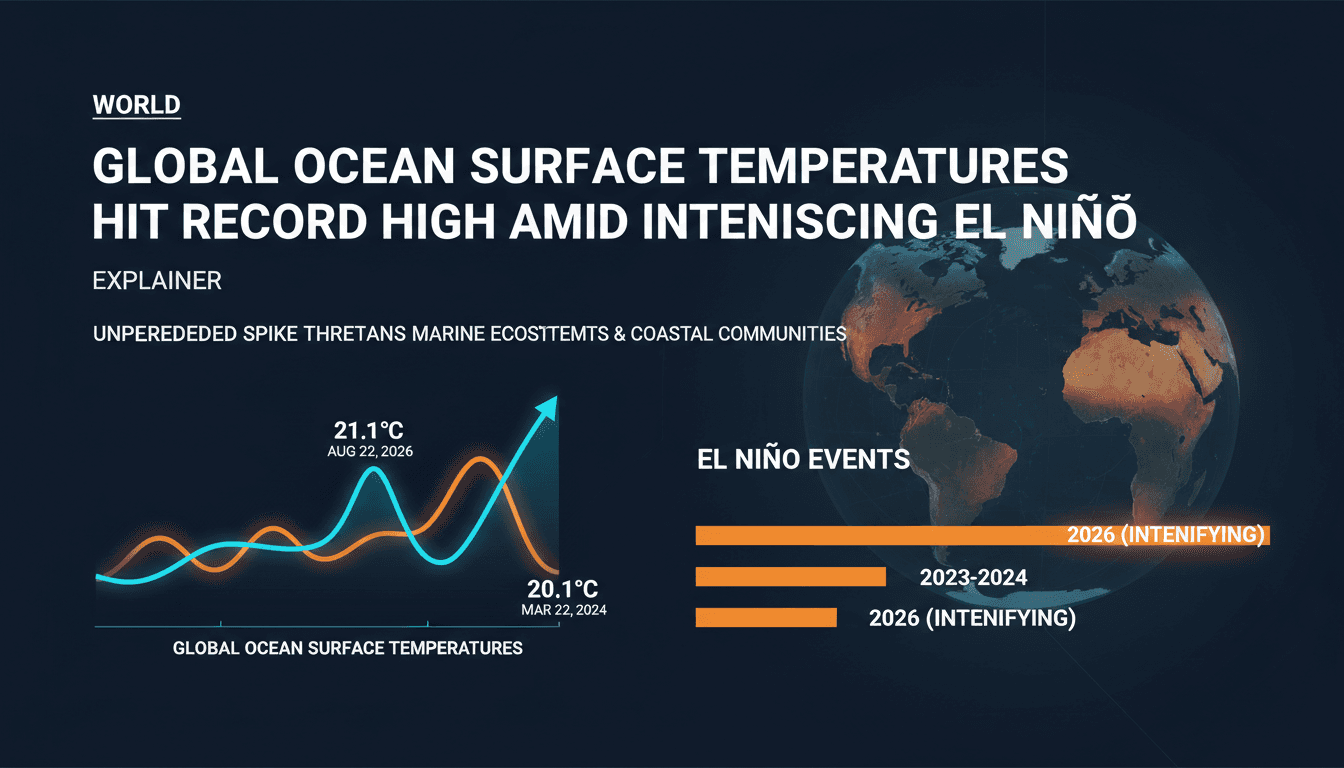
- Global ocean surface temperatures reached a record high of 21.1°C on August 22, 2026, surpassing the previous record set in March 2024.
- El Niño's intensification is driving this spike, adding heat to already elevated ocean temperatures due to climate change.
- Scientists warn of potential extreme weather events and marine ecosystem disruptions as El Niño is expected to strengthen through late 2026.
The context you actually need
- Long-term warming from fossil fuel emissions has already raised ocean temperatures by approximately 0.8°C, setting a concerning baseline.
- El Niño is a natural climate phenomenon that periodically raises global temperatures, but its current intensity is projected to be unprecedented in recent decades.
- The timing of this record is unusual, as peaks typically occur in March or April, indicating a shift in climate patterns.
What's really happening
On August 22, 2026, the Copernicus Climate Change Service reported a new daily average sea surface temperature of 21.1°C across global extra-polar oceans, marking a significant milestone in climate records. This temperature exceeds the previous high of 21.09°C recorded in March 2024, a period typically associated with peak ocean temperatures. The current spike is attributed to a rapidly intensifying El Niño, which is layering additional heat onto the already elevated temperatures caused by long-term climate change.
El Niño, characterized by warmer Pacific waters, has a history of amplifying global temperatures and influencing weather patterns. The World Meteorological Organization (WMO) has indicated that this El Niño could strengthen further through the end of 2026, raising concerns about extreme weather events, marine heatwaves, and disruptions to marine ecosystems. The implications of these changes are profound, as they can lead to significant alterations in weather patterns, affecting agriculture, fisheries, and coastal communities.
The record temperature is not just a number; it represents a critical threshold that could trigger a series of cascading effects on marine life and human activities. For instance, warmer waters can lead to coral bleaching, fish migration, and shifts in species distribution, which in turn impact food security and livelihoods for communities dependent on fishing. Additionally, the heightened ocean temperatures can exacerbate the frequency and intensity of storms, leading to increased risks for coastal infrastructure and economies.
As scientists like Samantha Burgess and Jane Lubchenco have pointed out, the stress on oceans is unprecedented, and immediate attention is required to mitigate the impacts on marine life and food security. While no immediate governmental policy responses have been reported, the potential market implications are significant, particularly for sectors such as fishing, aquaculture, and insurance, which may face increased risks due to climate change.
Who feels it first (and how)
- Fishermen and aquaculture operators: Increased marine heatwaves can disrupt fish populations and breeding cycles.
- Coastal communities: Rising sea levels and extreme weather can threaten homes and infrastructure.
- Agricultural sectors: Changes in weather patterns can affect crop yields and food supply chains.
- Insurance companies: Heightened climate risks may lead to increased claims and higher premiums.
What to watch next
- El Niño forecasts: Monitoring the strength and duration of El Niño will be crucial for predicting weather patterns and potential impacts on agriculture and fisheries.
- Marine ecosystem studies: Research on how rising temperatures affect marine biodiversity will provide insights into future food security challenges.
- Policy developments: Watch for any governmental responses aimed at mitigating climate impacts, particularly in vulnerable coastal regions.
Global ocean temperatures have reached a record high of 21.1°C.
El Niño will continue to strengthen, leading to further extreme weather events.
The full extent of the long-term impacts on marine ecosystems and coastal economies remains uncertain.
Frequently Asked Questions
- Why it matters?
- This record temperature exacerbates climate change effects, threatening marine ecosystems and coastal economies worldwide.
- What happened (in 30 seconds)?
- Global ocean surface temperatures reached a record high of 21.1°C on August 22, 2026, surpassing the previous record set in March 2024. El Niño's intensification is driving this spike, adding heat to already elevated ocean temperatures due to climate change. Scientists warn of potential extreme weather events and marine ecosystem disruptions as El Niño is expected to strengthen through late 2026.
- What's really happening?
- On August 22, 2026, the Copernicus Climate Change Service reported a new daily average sea surface temperature of 21.1°C across global extra-polar oceans, marking a significant milestone in climate records. This temperature exceeds the previous high of 21.09°C recorded in March 2024, a period typically associated with peak ocean temperatures. The current spike is attributed to a rapidly intensifying El Niño, which is layering additional heat onto the already elevated temperatures caused by long-
- Who feels it first (and how)?
- Fishermen and aquaculture operators: Increased marine heatwaves can disrupt fish populations and breeding cycles. Coastal communities: Rising sea levels and extreme weather can threaten homes and infrastructure. Agricultural sectors: Changes in weather patterns can affect crop yields and food supply chains. Insurance companies: Heightened climate risks may lead to increased claims and higher premiums.
- What to watch next?
- El Niño forecasts: Monitoring the strength and duration of El Niño will be crucial for predicting weather patterns and potential impacts on agriculture and fisheries. Marine ecosystem studies: Research on how rising temperatures affect marine biodiversity will provide insights into future food security challenges. Policy developments: Watch for any governmental responses aimed at mitigating climate impacts, particularly in vulnerable coastal regions.
Comprehensive coverage of Middle Eastern and global issues.
"Al Jazeera is a prominent voice from the Global South, especially the Middle East, with an emphasis on underreported stories."
— A47 Editor
Global ocean temperatures hit record high as El Nino intensifies
Global ocean temperatures have reached a record high, driven by the intensification of the El Niño phenomenon and ongoing climate change, according to the Copernicus Climate Change Service. This unprecedented rise in sea temperatures poses significan...
Scientific discoveries, health, technology, and natural phenomena.
"Live Science reports on scientific discoveries, health, technology, and natural phenomena with a popular science tone."
— A47 Editor
Ocean 'under unprecedented strain' as El Niño helps supercharge warming to record levels
The Copernicus Climate Change Service has reported that the daily global sea surface temperature has reached its highest level since records began, indicating that the ocean is under unprecedented strain, exacerbated by the El Niño phenomenon.
Arabic-language coverage of international news and geopolitics.
"RT Arabic is a Russian state-funded outlet often criticized for promoting Kremlin-aligned narratives."
— A47 Editor
حرارة سطح المحيطات تُسجل رقما قياسيا غير مسبوق
The European Copernicus Observatory announced that the global average sea surface temperature reached a record high of 21.1 degrees Celsius on Saturday, attributed to climate change and the El Niño phenomenon. This unprecedented daily record highligh...