
2026 El Niño Event Expected to Cause Severe Global Food Insecurity
Here's what it means for you.
The 2026 El Niño is set to disrupt global weather patterns, affecting food security and economic stability worldwide.
Why it matters
This event is projected to push an additional 49 million people into hunger, highlighting the urgent need for preparedness in food supply chains.
What happened (in 30 seconds)
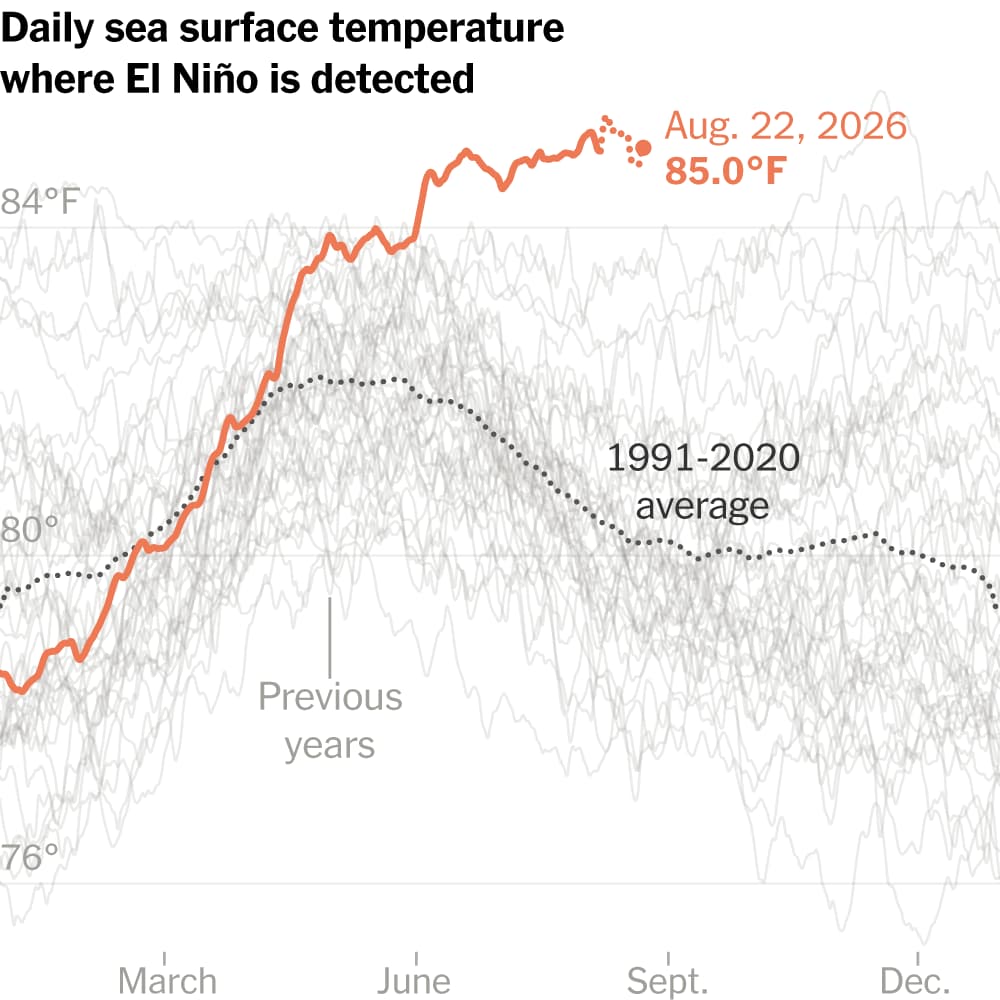
- Record temperatures: The 2026 El Niño is developing as the strongest episode in 80 years, with sea surface temperatures already exceeding previous records.
- Global impact: The phenomenon is expected to exacerbate climate change effects, influencing weather patterns and pushing millions into food insecurity.
- International response: Organizations like the World Food Programme are ramping up preparedness plans to mitigate the anticipated impacts.
The context you actually need
- El Niño cycle: This natural climate phenomenon occurs irregularly every 2–7 years, driven by weakened trade winds that shift warm water eastward in the Pacific.
- Historical precedents: Previous strong El Niños in 1997, 2015, and 2023 have led to significant global weather disruptions, raising concerns about increasing frequency and intensity due to climate change.
- Current status: As of August 2026, sea surface temperature anomalies in the Niño 3.4 region are already breaking records, indicating a strong likelihood of a Super El Niño by December.
What's really happening
The 2026 El Niño is characterized by an unprecedented rise in sea surface temperatures in the tropical Pacific, driven by weakened trade winds. This shift allows warm water to migrate eastward, disrupting the Walker circulation and altering global weather patterns. As of August 2026, anomalies in the Niño 3.4 region have already surpassed those recorded during previous strong El Niño events, indicating that this episode could exceed the 2°C threshold for Super El Niño status.
The implications of this event are profound. As global surface air temperatures reach new highs, the interaction between El Niño and long-term climate change trends is expected to exacerbate temperature extremes, alter precipitation patterns, and disrupt ecosystems worldwide. The United Nations estimates that an additional 49 million people could face hunger due to weather disruptions and crop failures linked to this El Niño. This is particularly concerning for regions already vulnerable to food insecurity.
International organizations, including the World Food Programme, are ramping up their preparedness and response plans, recognizing the potential for significant agricultural impacts and food price volatility. Governments in affected regions are closely monitoring these developments, as altered weather patterns could lead to shifts in energy and commodity markets. The scientific community continues to debate the links between climate change and the increasing intensity or frequency of El Niño events, with ongoing refinements to models predicting future ENSO behavior.
As the event develops, it is crucial to understand the interconnectedness of climate phenomena and their far-reaching impacts on global systems. The 2026 El Niño serves as a stark reminder of the urgent need for adaptive strategies in agriculture, water management, and disaster preparedness to mitigate the risks posed by such climate events.
Who feels it first (and how)
- Farmers: Increased weather volatility will affect crop yields, particularly in vulnerable regions.
- Food supply chains: Disruptions in agricultural production will lead to price volatility and potential shortages.
- Low-income communities: Those already facing food insecurity will be disproportionately affected by rising prices and reduced access to food.
- Energy sectors: Changes in weather patterns may impact energy production and consumption, particularly in regions reliant on hydroelectric power.
- Governments: National and local governments will need to respond to increased demands for food aid and disaster relief.
What to watch next
- Food prices: Monitor fluctuations in global food prices as supply chains react to agricultural disruptions. This will indicate the immediate economic impact of the El Niño.
- Weather patterns: Keep an eye on precipitation and temperature forecasts, particularly in vulnerable regions, to assess the ongoing effects of the El Niño.
- International aid responses: Watch for announcements from organizations like the World Food Programme regarding aid initiatives and preparedness plans, which will signal the scale of the anticipated impacts.
The 2026 El Niño is the strongest in 80 years, with significant global temperature anomalies already recorded.
The event will exacerbate food insecurity, pushing an additional 49 million people into hunger due to weather disruptions.
The long-term implications of this El Niño on climate patterns and future ENSO events remain uncertain, as scientific models continue to evolve.
Frequently Asked Questions
- Why it matters?
- This event is projected to push an additional 49 million people into hunger, highlighting the urgent need for preparedness in food supply chains.
- What happened (in 30 seconds)?
- Record temperatures: The 2026 El Niño is developing as the strongest episode in 80 years, with sea surface temperatures already exceeding previous records. Global impact: The phenomenon is expected to exacerbate climate change effects, influencing weather patterns and pushing millions into food insecurity. International response: Organizations like the World Food Programme are ramping up preparedness plans to mitigate the anticipated impacts.
- What's really happening?
- The 2026 El Niño is characterized by an unprecedented rise in sea surface temperatures in the tropical Pacific, driven by weakened trade winds. This shift allows warm water to migrate eastward, disrupting the Walker circulation and altering global weather patterns. As of August 2026, anomalies in the Niño 3.4 region have already surpassed those recorded during previous strong El Niño events, indicating that this episode could exceed the 2°C threshold for Super El Niño status. The implications o
- Who feels it first (and how)?
- Farmers: Increased weather volatility will affect crop yields, particularly in vulnerable regions. Food supply chains: Disruptions in agricultural production will lead to price volatility and potential shortages. Low-income communities: Those already facing food insecurity will be disproportionately affected by rising prices and reduced access to food. Energy sectors: Changes in weather patterns may impact energy production and consumption, particularly in regions reliant on hydroelectric
- What to watch next?
- Food prices: Monitor fluctuations in global food prices as supply chains react to agricultural disruptions. This will indicate the immediate economic impact of the El Niño. Weather patterns: Keep an eye on precipitation and temperature forecasts, particularly in vulnerable regions, to assess the ongoing effects of the El Niño. International aid responses: Watch for announcements from organizations like the World Food Programme regarding aid initiatives and preparedness plans, which will sign
Scientific discoveries, health, technology, and natural phenomena.
"Live Science reports on scientific discoveries, health, technology, and natural phenomena with a popular science tone."
— A47 Editor
'This is such a clear story': Climate change is supercharging El Niño to unprecedented strengths, study finds
A recent study analyzing coral samples from the Galápagos Islands has revealed that the El Niño phenomenon has intensified by nearly 40% since the preindustrial era, indicating a significant shift in climate patterns.
Science and technology stories including AI.
"Longstanding science magazine with thoughtful AI coverage."
— A47 Editor
Climate change is supercharging El Niños, coral records show
Fossilized corals from the Galápagos Islands indicate that current El Niño events are significantly stronger than those recorded in the past, highlighting the impact of climate change on these phenomena.
Scientific research, technology, environment, and society.
"Scientific American is one of the oldest and most authoritative science magazines, known for deep dives into science, technology, and society."
— A47 Editor
Climate change is supercharging El Niños, coral records show
Fossilized corals from the Galápagos Islands indicate that current El Niño events are significantly stronger than those recorded in the past, highlighting the impact of climate change on these phenomena.
Scientific research, space, environment, and health coverage.
"The New York Times is a globally recognized newspaper offering authoritative reporting with a center-left editorial stance."
— A47 Editor
3 Charts That Explain El Niño
This year’s El Niño phenomenon is rapidly intensifying, with air and sea surface temperatures already breaking records, indicating it may become the strongest event in living memory. Scientists are closely monitoring its development as it progresses.