
Venezuela Contemplates Leaving OPEC Amid Strengthening US Energy Relations
Here's what it means for you.
As Venezuela considers leaving OPEC, the implications for global oil markets and energy prices could affect your business costs and investment strategies.
Why it matters
The potential exit of Venezuela from OPEC signals a shift in global oil dynamics, impacting supply chains and energy prices.
What happened (in 30 seconds)
- Venezuela is weighing an exit from OPEC as of late August 2026 amid renewed ties with the US.
- Discussions involve US energy firms seeking to invest in Venezuela's vast oil reserves, potentially exceeding $100 billion.
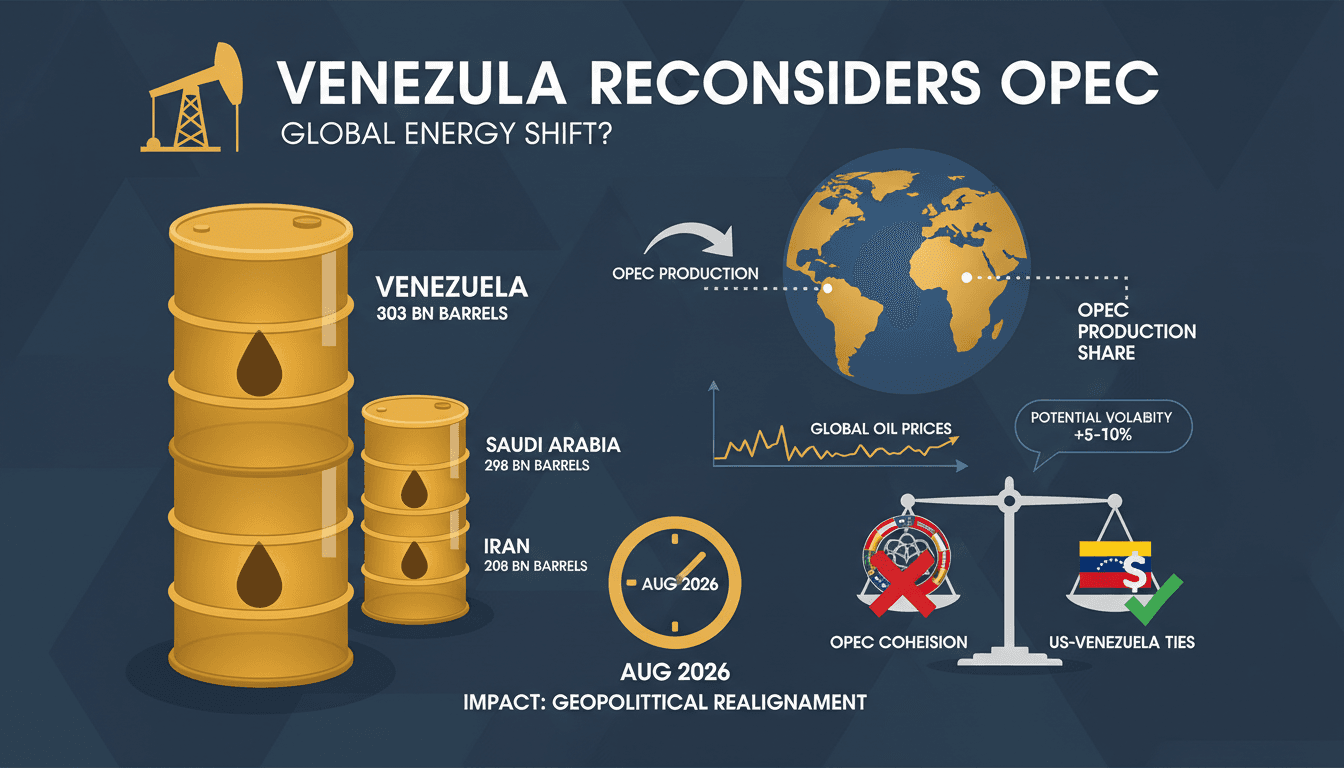
- Venezuela's oil output has plummeted from over 3 million barrels per day to approximately 1.12 million barrels per day due to sanctions and underinvestment.
The context you actually need
- Venezuela co-founded OPEC in 1960, but decades of political instability and sanctions have severely impacted its oil production capacity.
- The UAE's recent departure from OPEC in May 2026 highlights growing internal tensions within the organization regarding production quotas.
- US investment proposals are targeting Venezuela's oil fields, which hold over 303 billion barrels of proven reserves, the largest in the world.
What's really happening
In late August 2026, reports surfaced that Venezuelan officials are actively considering a departure from OPEC during discussions with US counterparts. This potential exit aligns with a broader strategy to deepen commercial ties with the United States, particularly in the energy sector. The Venezuelan government, under new political leadership following the ouster of Nicolás Maduro, is exploring options that could lead to majority stakes or long-term leases in its oil fields, which are estimated to contain over 65 billion barrels of reserves.
The discussions have gained momentum as US energy firms, including Chevron, have expressed interest in expanding joint ventures within Venezuela. In July 2026, Venezuelan oil exports to the US reached approximately 786,000 barrels per day, the highest level since early 2019, indicating a significant uptick in commercial engagement. This renewed interest from US companies is driven by the potential for lucrative investments in Venezuela's oil infrastructure, which has been severely underfunded for years.
Venezuela's current output remains modest, hovering around 1.12 million barrels per day, and the country has been exempt from OPEC+ production quotas. This exemption has allowed Venezuela to maintain some level of production despite its challenges. However, the broader implications of a potential exit from OPEC could lead to further fragmentation within the organization, especially as other member states, like Iraq, express concerns over production quotas.
Market analysts are closely monitoring these developments, as the immediate supply effects of Venezuela's potential exit are expected to be limited due to its current output levels. However, the long-term implications could reshape the global oil landscape, particularly if Venezuela successfully attracts significant US investment and increases its production capacity.
Who feels it first (and how)
- Energy companies: US firms like Chevron could benefit from increased access to Venezuelan oil assets.
- Investors: Those with stakes in energy markets may experience volatility in oil prices as OPEC cohesion weakens.
- Consumers: Fluctuations in global oil prices could lead to changes in fuel costs, impacting everyday expenses.
What to watch next
- Investment proposals: Monitor the progress of US energy firms in securing deals with Venezuela, as this could significantly alter production levels.
- OPEC's response: Watch for any official statements or actions from OPEC regarding Venezuela's potential exit and its implications for remaining members.
- Oil price fluctuations: Keep an eye on benchmark crude prices, as any sustained fragmentation in OPEC could lead to increased volatility.
Venezuela is considering an exit from OPEC amid renewed US ties.
Increased US investment in Venezuelan oil assets could lead to higher production levels.
The long-term impact on global oil prices and OPEC's cohesion remains uncertain.
Frequently Asked Questions
- Why it matters?
- The potential exit of Venezuela from OPEC signals a shift in global oil dynamics, impacting supply chains and energy prices.
- What happened (in 30 seconds)?
- Venezuela is weighing an exit from OPEC as of late August 2026 amid renewed ties with the US. Discussions involve US energy firms seeking to invest in Venezuela's vast oil reserves, potentially exceeding $100 billion. Venezuela's oil output has plummeted from over 3 million barrels per day to approximately 1.12 million barrels per day due to sanctions and underinvestment.
- What's really happening?
- In late August 2026, reports surfaced that Venezuelan officials are actively considering a departure from OPEC during discussions with US counterparts. This potential exit aligns with a broader strategy to deepen commercial ties with the United States, particularly in the energy sector. The Venezuelan government, under new political leadership following the ouster of Nicolás Maduro, is exploring options that could lead to majority stakes or long-term leases in its oil fields, which are estimated
- Who feels it first (and how)?
- Energy companies: US firms like Chevron could benefit from increased access to Venezuelan oil assets. Investors: Those with stakes in energy markets may experience volatility in oil prices as OPEC cohesion weakens. Consumers: Fluctuations in global oil prices could lead to changes in fuel costs, impacting everyday expenses.
- What to watch next?
- Investment proposals: Monitor the progress of US energy firms in securing deals with Venezuela, as this could significantly alter production levels. OPEC's response: Watch for any official statements or actions from OPEC regarding Venezuela's potential exit and its implications for remaining members. Oil price fluctuations: Keep an eye on benchmark crude prices, as any sustained fragmentation in OPEC could lead to increased volatility.
English-language digital publication covering business, politics, technology, and current affairs.
"The Arabian Post mixes original and syndicated-style coverage with a broad regional and global business-news orientation."
— A47 Editor
Venezuela weighs departure as OPEC influence weakens
Venezuela is contemplating a potential exit from OPEC as its energy ties with the United States strengthen, raising concerns about the cohesion of the organization following the recent departure of the United Arab Emirates. Discussions involving Vene...
English-language digital publication covering business, politics, technology, and current affairs.
"The Arabian Post mixes original and syndicated-style coverage with a broad regional and global business-news orientation."
— A47 Editor
Venezuela exit threat deepens OPEC strains
Venezuela is contemplating a potential exit from OPEC, raising concerns about the organization's stability following the recent departure of the United Arab Emirates. This consideration comes as Venezuela engages in discussions with U.S. officials to...
Macro commentary, policy analysis, growth/inflation themes, and global outlooks.
"Contextual macro coverage that complements day-to-day market headlines."
— A47 Editor
Venezuela weighs OPEC exit as U.S. ties deepen, Bloomberg reports
Venezuela is contemplating its exit from OPEC as its ties with the United States strengthen, according to a report by Bloomberg. This potential departure from the oil cartel comes amidst significant shifts in Venezuela's economic strategies, includin...
Business and economy coverage focused on Dubai, the UAE, Saudi Arabia, and the wider Middle East.
"Arabian Business is a well-known regional business outlet with strong focus on Gulf markets, leadership, and investment stories."
— A47 Editor
Venezuela could follow the UAE out of OPEC
Venezuela, a founding member of OPEC since 1960, is considering a potential exit from the organization, following a similar move by the UAE. This shift reflects ongoing challenges within the oil market and the country's economic situation.