
Chinese National Rescued from Nepal Hydropower Tunnel After Glacial Flooding
Why it matters
This disaster underscores the increasing risks associated with climate change, particularly for international construction projects in vulnerable areas.
What happened (in 30 seconds)
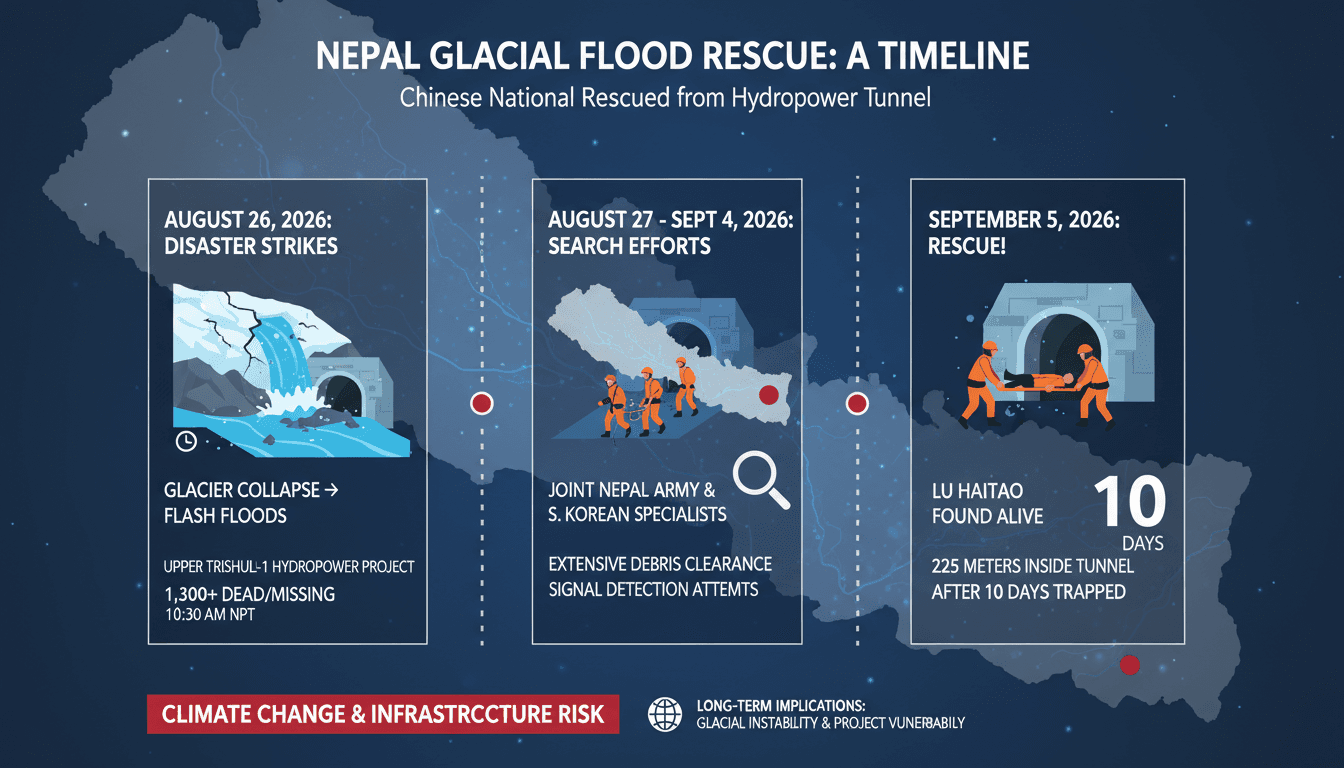
- On September 5, 2026, Lu Haitao was rescued alive from a 225-meter tunnel in Nepal, ten days after a glacial collapse triggered a catastrophic flood.
- The disaster, which occurred on August 26, 2026, resulted in over 1,300 fatalities and left thousands missing across the Nepal-Tibet border.
- Rescue efforts involved a joint team from the Nepal Army and international specialists, with ongoing operations to locate additional survivors among an estimated 900 individuals trapped.
The context you actually need
- The glacial collapse at approximately 5,200 meters elevation unleashed a flood wave equivalent to a magnitude 5.2 seismic event, devastating infrastructure in the region.
- Rescue operations have been complicated by ongoing risks from climate-influenced glacial instability, raising concerns about future projects in similar environments.
- International collaboration was evident in the rescue efforts, with teams from Nepal, South Korea, and China working together, reflecting the interconnected nature of global disaster response.
What's really happening
The August 26, 2026, glacial collapse in Nepal was a stark reminder of the vulnerabilities inherent in high-altitude infrastructure projects. As glaciers recede due to climate change, the risk of catastrophic events like this increases, posing significant threats to workers and local communities. The collapse triggered a flash flood that inundated valleys along the Nepal-China border, burying construction sites and trapping hundreds of workers in tunnels.
Lu Haitao's rescue is a beacon of hope amid widespread devastation. His extraction from 225 meters inside the Upper Trishuli-1 tunnel was made possible by a coordinated effort involving the Nepal Army and a South Korean disaster relief team. This operation not only highlights the immediate human impact of such disasters but also raises questions about the long-term viability of hydropower projects in glacial regions.
The aftermath of the disaster has seen a surge in international support for search and rescue operations, with authorities assessing ongoing risks from climate-influenced glacial instability. The situation remains fluid, with additional rescues occurring concurrently, including the extraction of a Nepali woman from rubble. This renewed optimism for further rescues is tempered by the grim reality that over 900 individuals may still be trapped in tunnels, emphasizing the urgent need for effective disaster management strategies.
The implications of this event extend beyond immediate rescue efforts. As climate change continues to reshape the landscape of natural disasters, the construction and energy sectors must adapt to new realities. Companies involved in infrastructure projects in vulnerable regions will need to reassess risk management protocols and invest in more resilient designs. The global community must also consider the humanitarian aspects of such disasters, as the interconnectedness of economies means that events in one region can have ripple effects worldwide.
Who feels it first (and how)
- Construction workers in high-risk areas face immediate dangers from natural disasters.
- Energy sector stakeholders may experience disruptions in project timelines and increased costs due to enhanced safety measures.
- Local communities in Nepal and surrounding regions are directly impacted by loss of life and infrastructure, affecting their livelihoods and safety.
- International aid organizations are mobilized to provide support, influencing global humanitarian efforts and resource allocation.
What to watch next
- Ongoing rescue operations: Continued efforts to locate and extract additional survivors will provide insights into the effectiveness of current disaster response strategies.
- Climate impact assessments: Monitoring the long-term effects of climate change on glacial stability will be crucial for future infrastructure planning in vulnerable regions.
- International collaboration: The response to this disaster may set precedents for future international disaster relief efforts, influencing how countries work together in crises.
Lu Haitao was rescued alive from the Upper Trishuli-1 tunnel.
Ongoing search operations will yield additional rescues, but risks remain high due to unstable conditions.
The long-term impacts on infrastructure projects in glacial regions and how companies will adapt to these challenges.
Frequently Asked Questions
- Why it matters?
- This disaster underscores the increasing risks associated with climate change, particularly for international construction projects in vulnerable areas.
- What happened (in 30 seconds)?
- On September 5, 2026, Lu Haitao was rescued alive from a 225-meter tunnel in Nepal, ten days after a glacial collapse triggered a catastrophic flood. The disaster, which occurred on August 26, 2026, resulted in over 1,300 fatalities and left thousands missing across the Nepal-Tibet border. Rescue efforts involved a joint team from the Nepal Army and international specialists, with ongoing operations to locate additional survivors among an estimated 900 individuals trapped.
- What's really happening?
- The August 26, 2026, glacial collapse in Nepal was a stark reminder of the vulnerabilities inherent in high-altitude infrastructure projects. As glaciers recede due to climate change, the risk of catastrophic events like this increases, posing significant threats to workers and local communities. The collapse triggered a flash flood that inundated valleys along the Nepal-China border, burying construction sites and trapping hundreds of workers in tunnels. Lu Haitao's rescue is a beacon of hope
- Who feels it first (and how)?
- Construction workers in high-risk areas face immediate dangers from natural disasters. Energy sector stakeholders may experience disruptions in project timelines and increased costs due to enhanced safety measures. Local communities in Nepal and surrounding regions are directly impacted by loss of life and infrastructure, affecting their livelihoods and safety. International aid organizations are mobilized to provide support, influencing global humanitarian efforts and resource allocation.
- What to watch next?
- Ongoing rescue operations: Continued efforts to locate and extract additional survivors will provide insights into the effectiveness of current disaster response strategies. Climate impact assessments: Monitoring the long-term effects of climate change on glacial stability will be crucial for future infrastructure planning in vulnerable regions. International collaboration: The response to this disaster may set precedents for future international disaster relief efforts, influencing how coun
24/7 international news from a French perspective in multiple languages.
"France 24 is viewed as a globally focused outlet with balanced coverage and a European perspective."
— A47 Editor
Chinese national rescued from Nepal tunnel 10 days after flash flood
A Chinese national was rescued from a tunnel in Nepal on Saturday, ten days after a catastrophic flash flood devastated the region, resulting in over 1,300 fatalities and thousands reported missing. The floods, which struck the Nepal-Tibet border, tr...
Comprehensive coverage of Middle Eastern and global issues.
"Al Jazeera is a prominent voice from the Global South, especially the Middle East, with an emphasis on underreported stories."
— A47 Editor
Rescuers pull Chinese worker, Nepali woman from flood wreckage alive
Rescuers in Nepal successfully pulled a Chinese worker and a Nepali woman alive from the wreckage of a hydropower tunnel on September 5, ten days after catastrophic floods devastated the region, resulting in over 1,300 confirmed deaths and thousands ...
International coverage from The Guardian's global desks.
"The Guardian is known for its progressive editorial stance and in-depth analysis."
— A47 Editor
Rescuers in Nepal find two more people alive after flash flood disaster
Emergency responders in Nepal have successfully rescued a Chinese man and a Nepali woman ten days after devastating floods struck the region, with the rescues occurring at the Upper Trishuli-1 hydropower project and in Nuwakot. The Nepali military, i...