
Glacial Flooding in Nepal Traps Hundreds in Hydropower Tunnels
Here's what it means for you.
The devastating flooding in Nepal could disrupt global energy markets and impact electricity prices worldwide.
Why it matters
This disaster highlights vulnerabilities in energy infrastructure, particularly in regions prone to natural disasters.
What happened (in 30 seconds)
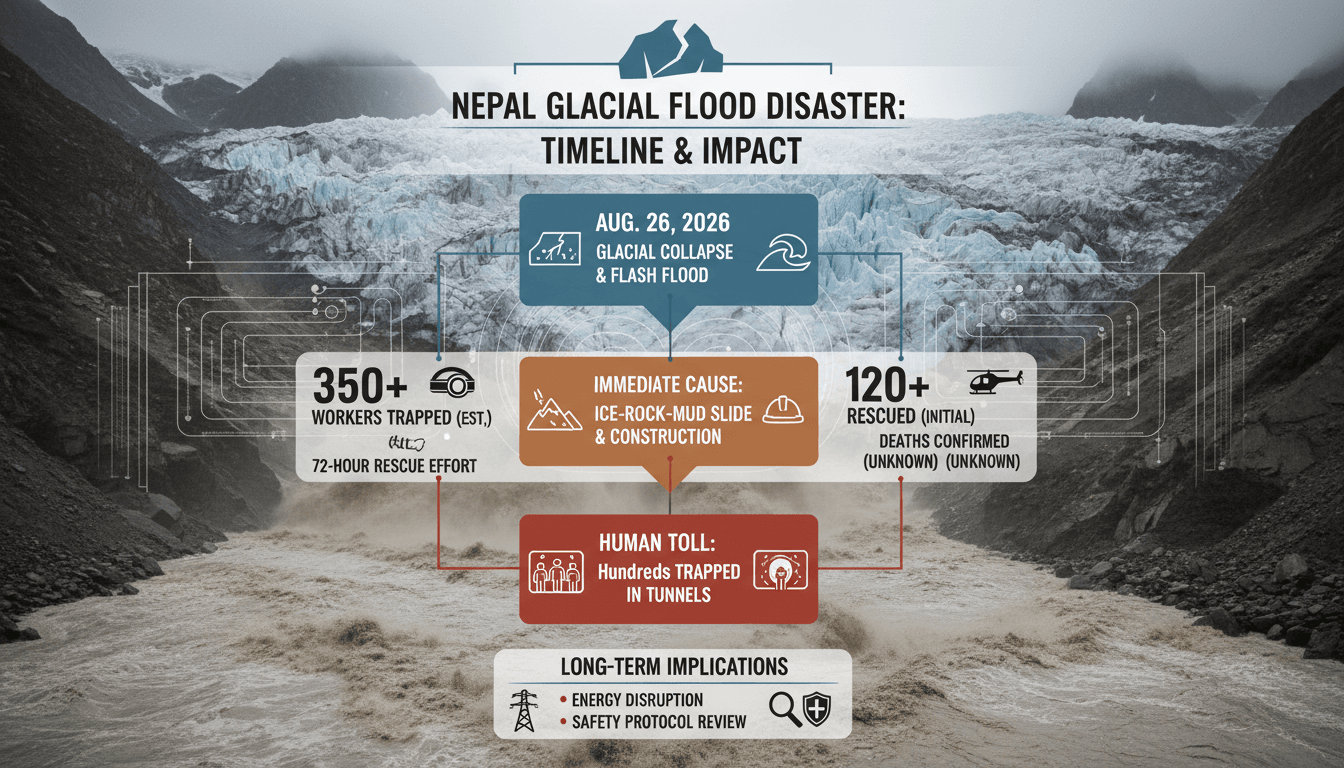
- On August 26, 2026, a glacial collapse triggered flash floods in Nepal, affecting hydropower projects and trapping hundreds of workers in tunnels.
- Survivor Dhan Bahadur Tamang recounted his harrowing escape from the Upper Trishuli 1 project, navigating through darkness and debris.
- As of early September 2026, over 1,200 people are confirmed dead, with thousands still missing, complicating ongoing rescue efforts.
The context you actually need
- Nepal's hydropower sector is crucial for its energy independence and economic growth, with multiple projects under construction to boost electricity generation.
- The region's geography makes it susceptible to glacial and mudslide events, raising concerns about the safety of infrastructure in high-risk areas.
- Rescue operations are ongoing, but challenges such as fog and difficult terrain hinder efforts, leaving many families in uncertainty.
What's really happening
The catastrophic flooding in Nepal's Trishuli and Bhote Koshi river valleys stemmed from a glacial collapse, which unleashed torrents of water and debris into the region's hydropower tunnels. This disaster is not just a local tragedy; it has far-reaching implications for Nepal's energy sector and beyond.
The Upper Trishuli 1 project, where survivor Dhan Bahadur Tamang worked, was one of several sites affected by the sudden influx of water. As floodwaters surged into access tunnels, workers found themselves trapped in near-total darkness, forced to navigate rising waters and debris. The harrowing accounts of survival highlight the immediate human cost of such disasters, but they also underscore the vulnerabilities of energy infrastructure in mountainous regions.
Nepal has been investing heavily in hydropower to meet its growing energy demands and reduce reliance on imported fossil fuels. However, the ongoing construction in high-risk areas raises questions about the adequacy of safety measures and disaster preparedness. The flooding has already claimed over 1,200 lives and left thousands missing, with rescue operations hampered by challenging conditions.
The implications extend beyond immediate rescue efforts. The disaster disrupts the timeline for energy projects critical to Nepal's economic development, potentially leading to energy shortages and increased electricity prices. As the country grapples with the aftermath, the focus will shift to rebuilding and reassessing the safety of existing and future hydropower projects.
International assistance from neighboring countries like India and China is being coordinated to aid rescue efforts, but the long-term impact on Nepal's energy sector remains uncertain. The disaster serves as a stark reminder of the risks associated with climate change and the need for robust infrastructure that can withstand natural disasters.
Who feels it first (and how)
- Construction workers: Many are directly affected, facing life-threatening situations and job insecurity.
- Energy sector stakeholders: Investors and companies involved in hydropower projects may face delays and financial losses.
- Local communities: Families of the missing and deceased are left in distress, impacting local economies and social structures.
What to watch next
- Rescue operation outcomes: The success or failure of ongoing rescue efforts will influence public sentiment and government response.
- Infrastructure assessments: Evaluations of hydropower projects for safety and resilience will be critical in shaping future energy policies.
- Market reactions: Watch for fluctuations in energy prices as the disaster's impact on Nepal's electricity generation becomes clearer.
Over 1,200 confirmed dead and thousands missing; ongoing rescue operations face significant challenges.
Delays in hydropower project timelines will affect Nepal's energy supply and economic growth.
The long-term impact on energy prices and market stability in the region and beyond.
Frequently Asked Questions
- Why it matters?
- This disaster highlights vulnerabilities in energy infrastructure, particularly in regions prone to natural disasters.
- What happened (in 30 seconds)?
- On August 26, 2026, a glacial collapse triggered flash floods in Nepal, affecting hydropower projects and trapping hundreds of workers in tunnels. Survivor Dhan Bahadur Tamang recounted his harrowing escape from the Upper Trishuli 1 project, navigating through darkness and debris. As of early September 2026, over 1,200 people are confirmed dead, with thousands still missing, complicating ongoing rescue efforts.
- What's really happening?
- The catastrophic flooding in Nepal's Trishuli and Bhote Koshi river valleys stemmed from a glacial collapse, which unleashed torrents of water and debris into the region's hydropower tunnels. This disaster is not just a local tragedy; it has far-reaching implications for Nepal's energy sector and beyond. The Upper Trishuli 1 project, where survivor Dhan Bahadur Tamang worked, was one of several sites affected by the sudden influx of water. As floodwaters surged into access tunnels, workers fou
- Who feels it first (and how)?
- Construction workers: Many are directly affected, facing life-threatening situations and job insecurity. Energy sector stakeholders: Investors and companies involved in hydropower projects may face delays and financial losses. Local communities: Families of the missing and deceased are left in distress, impacting local economies and social structures.
- What to watch next?
- Rescue operation outcomes: The success or failure of ongoing rescue efforts will influence public sentiment and government response. Infrastructure assessments: Evaluations of hydropower projects for safety and resilience will be critical in shaping future energy policies. Market reactions: Watch for fluctuations in energy prices as the disaster's impact on Nepal's electricity generation becomes clearer.
24/7 international news from a French perspective in multiple languages.
"France 24 is viewed as a globally focused outlet with balanced coverage and a European perspective."
— A47 Editor
‘Fight through darkness, water’: Nepal survivor recounts escape from flood-hit tunnel
A Nepalese worker has described his terrifying escape from a tunnel at a hydropower project following devastating floods that struck the Nepal-Tibet border, leaving around 900 workers trapped and raising the number of missing persons to 5,624. The fl...
International coverage from The Guardian's global desks.
"The Guardian is known for its progressive editorial stance and in-depth analysis."
— A47 Editor
Dozens of trapped hydropower tunnel workers in Nepal could still be alive, official says
Authorities in Nepal have reported that approximately 46 workers are believed to be trapped in a 'room-like' structure inside the Rasuwagadhi hydropower plant tunnel, following severe flash floods that have left hundreds missing and caused significan...
RT is a Russian state-funded network covering global events from a Russian perspective.
"RT is widely criticized for promoting pro-Kremlin narratives and is considered by many to be a state propaganda outlet."
— A47 Editor
Nepal deaths cross 1,000 as rescuers continue search for hundreds trapped in tunnels
Rescue efforts in Nepal are ongoing as the death toll from catastrophic floods has surpassed 1,000, with hundreds of workers still trapped in hydropower tunnels. The floods, triggered by a glacier collapse, have caused significant destruction along t...
English-language news from Qatar covering domestic and regional affairs.
"Gulf Times reflects Qatari perspectives on regional developments."
— A47 Editor
China-Nepal flood toll tops 1,000 as tunnel rescue offers last hope
The death toll from the catastrophic floods in the Himalayan region has surpassed 1,000, with rescue teams from China and Nepal urgently searching for survivors, particularly those trapped in hydropower tunnels. The floods were triggered by significa...
Global political, business, and cultural coverage from WSJ international desks.
"The Wall Street Journal offers extensive international reporting with a reputation for financial insight and a center-right editorial stance."
— A47 Editor
Nepal Focuses on Dangerous Tunnel Rescues as Flood Toll Tops 900
Catastrophic flooding in Nepal has resulted in over 900 confirmed deaths and left more than 4,700 individuals missing, many of whom are workers trapped in hydropower project tunnels. Rescue efforts are hampered by extensive mud and debris blocking ac...
RT is a Russian state-funded network covering global events from a Russian perspective.
"RT is widely criticized for promoting pro-Kremlin narratives and is considered by many to be a state propaganda outlet."
— A47 Editor
Nepal flood deaths climb past 900 as thousands remain missing
Catastrophic flooding in Nepal has resulted in over 900 confirmed deaths, with more than 4,200 individuals reported missing. The disaster, triggered by a glacier collapse, has severely impacted communities, particularly around the Nepal-Tibet border,...
English-language news from Qatar covering domestic and regional affairs.
"Gulf Times reflects Qatari perspectives on regional developments."
— A47 Editor
Rescuers dig into tunnel as missing toll from Nepal, China flood nears 3,000
Rescuers in Nepal and China are engaged in urgent search operations following catastrophic floods that have left nearly 3,000 individuals missing and resulted in a rising death toll, currently at 633. The floods, triggered by a significant collapse o...