
Iran's Strategic Leverage in Strait of Hormuz Declines Amid U.S. Sanctions and Blockade
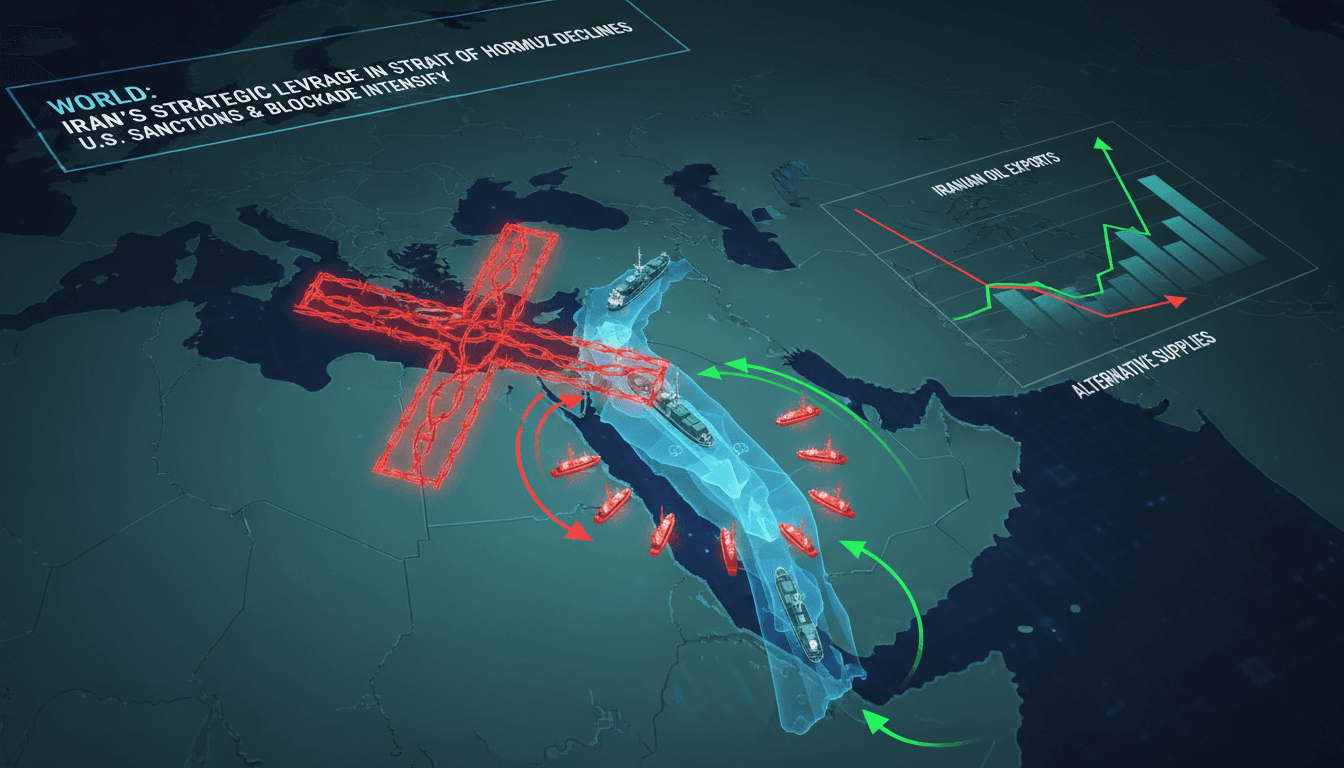
Here's what it means for you.
The shifting dynamics in the Strait of Hormuz could impact global oil prices and energy security, affecting businesses and consumers worldwide.
Why it matters
The Strait of Hormuz is a critical chokepoint for global oil and LNG supplies, making its stability essential for international energy markets.
What happened (in 30 seconds)
- U.S. economic pressure: A naval blockade and stringent sanctions have been implemented to curb Iranian oil exports and restrict foreign currency access.
- Iran's diminishing leverage: Tehran's ability to disrupt oil flows through the Strait of Hormuz is waning, as markets adapt and alternative supplies emerge.
- Ongoing discussions: Mediators are exploring new resolution formulas, potentially involving shipping fees without requiring full Iranian capitulation.
The context you actually need
- February conflict: The situation escalated following a conflict in February 2026, leading to increased tensions and a subsequent interim agreement in June.
- Economic impact: Iranian insiders report significant economic damage, with challenges in accessing foreign currency and imports.
- U.S. strategy: U.S. officials describe their approach as a "one-two punch," combining military and economic tactics to pressure Iran.
What's really happening
The U.S. has intensified its economic offensive against Iran, particularly targeting its oil revenues and financial networks. This strategy follows a series of escalations that began with the February 2026 conflict, where U.S.-Iran exchanges heightened regional tensions. The U.S. aims to compel Iran to allow unrestricted passage through the Strait of Hormuz, a vital waterway that transports approximately one-fifth of global oil and LNG supplies.
Iran has historically leveraged threats to close the Strait as a means of exerting influence. However, the recent U.S. measures, including a naval blockade and escalated sanctions, have significantly altered the balance of power. Iranian analysts, such as Arash Azizi, note that Iran is struggling to fully close the strait or trigger the anticipated global economic shock. Instead, markets have adapted, with alternative supplies flowing in to mitigate potential disruptions.
The economic damage to Iran is becoming increasingly evident. Senior Iranian sources acknowledge mounting difficulties in accessing foreign currency, which is critical for imports and maintaining economic stability. The Revolutionary Guards, a key power center in Iran, have shown resilience, but there are fears of renewed unrest among the populace due to the economic strain.
U.S. officials express optimism that the pressure may lead to concessions from Iran or internal strains that could destabilize the regime. However, experts caution that while Iranian leadership is under pressure, it retains the capacity for calibrated responses. Discussions are ongoing between mediators and Iran regarding potential resolution paths, which may include arrangements for Hormuz navigation services that do not require full capitulation from Tehran.
As the situation evolves, the implications for global energy markets and regional stability remain significant. The U.S. strategy aims to ensure the free flow of oil through the Strait, which is crucial for maintaining global energy security.
Who feels it first (and how)
- Energy companies: Fluctuations in oil prices could impact profitability and operational costs.
- Consumers: Rising oil prices may lead to increased costs for transportation and goods.
- Investors: Market volatility in energy stocks and commodities could affect investment strategies.
- Regional economies: Countries reliant on oil exports may experience economic shifts due to changes in supply dynamics.
What to watch next
- Iran's economic indicators: Monitor foreign currency access and import levels to gauge the economic impact of sanctions.
- U.S. military presence: Changes in naval deployments in the region could signal shifts in U.S. strategy or responses to Iranian actions.
- Negotiation outcomes: Watch for developments in discussions between mediators and Iran regarding potential resolutions and their implications for Hormuz navigation.
The U.S. has implemented a naval blockade and sanctions targeting Iranian oil exports.
Iran will continue to face economic challenges, impacting its ability to exert influence in the region.
The long-term effectiveness of U.S. strategies in achieving concessions from Iran remains uncertain.
Frequently Asked Questions
- Why it matters?
- The Strait of Hormuz is a critical chokepoint for global oil and LNG supplies, making its stability essential for international energy markets.
- What happened (in 30 seconds)?
- U.S. economic pressure: A naval blockade and stringent sanctions have been implemented to curb Iranian oil exports and restrict foreign currency access. Iran's diminishing leverage: Tehran's ability to disrupt oil flows through the Strait of Hormuz is waning, as markets adapt and alternative supplies emerge. Ongoing discussions: Mediators are exploring new resolution formulas, potentially involving shipping fees without requiring full Iranian capitulation.
- What's really happening?
- The U.S. has intensified its economic offensive against Iran, particularly targeting its oil revenues and financial networks. This strategy follows a series of escalations that began with the February 2026 conflict, where U.S.-Iran exchanges heightened regional tensions. The U.S. aims to compel Iran to allow unrestricted passage through the Strait of Hormuz, a vital waterway that transports approximately one-fifth of global oil and LNG supplies. Iran has historically leveraged threats to close
- Who feels it first (and how)?
- Energy companies: Fluctuations in oil prices could impact profitability and operational costs. Consumers: Rising oil prices may lead to increased costs for transportation and goods. Investors: Market volatility in energy stocks and commodities could affect investment strategies. Regional economies: Countries reliant on oil exports may experience economic shifts due to changes in supply dynamics.
- What to watch next?
- Iran's economic indicators: Monitor foreign currency access and import levels to gauge the economic impact of sanctions. U.S. military presence: Changes in naval deployments in the region could signal shifts in U.S. strategy or responses to Iranian actions. Negotiation outcomes: Watch for developments in discussions between mediators and Iran regarding potential resolutions and their implications for Hormuz navigation.
Regional coverage and analysis focused on politics, diplomacy, and business across the Middle East.
"Al-Monitor is known for analytical reporting on Middle East politics and policy developments."
— A47 Editor
Analysis-Iran's Hormuz leverage wanes as US economic squeeze bites
The ongoing conflict between Iran and the United States has intensified, with the U.S. implementing unprecedented economic sanctions aimed at crippling Iran's economy and diminishing its influence in the Gulf region. This shift comes six months after...
Global political, business, and cultural coverage from WSJ international desks.
"The Wall Street Journal offers extensive international reporting with a reputation for financial insight and a center-right editorial stance."
— A47 Editor
Time Is No Longer on Iran’s Side in the Battle of the Blockades
The United States is actively assisting Gulf states in exporting substantial quantities of oil while simultaneously obstructing shipments from Tehran, indicating a strategic shift in the region's energy dynamics. This development highlights the ongoi...
English-language digital publication covering business, politics, technology, and current affairs.
"The Arabian Post mixes original and syndicated-style coverage with a broad regional and global business-news orientation."
— A47 Editor
Iran fiscal squeeze strains households as defence demands rise
Iran is experiencing a significant fiscal squeeze as collapsing oil revenues, a record-low currency, and rising prices challenge the government's ability to maintain essential services while meeting military demands. Crude oil exports have plummeted ...