
Saudi Arabia Issues Severe Weather Alerts for Heavy Rain and Flash Floods
Here's what it means for you.
If you operate in or trade with southwestern Saudi Arabia, prepare for disruptions due to severe weather alerts.
Why it matters
Severe weather can disrupt supply chains, impact local economies, and pose safety risks, affecting businesses and residents alike.
What happened (in 30 seconds)
- Red and orange alerts were issued by Saudi Arabia's National Center for Meteorology on September 6, 2026, for heavy rain and thunderstorms.
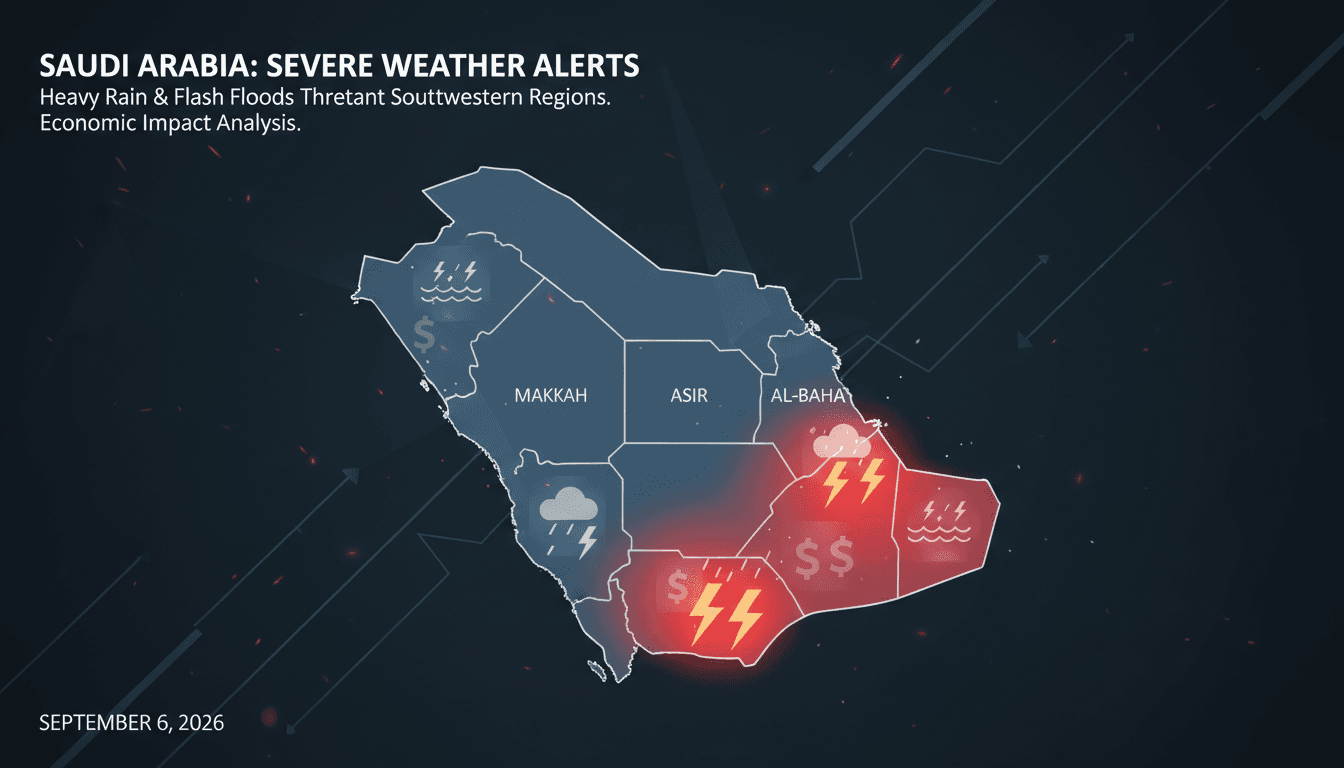
- Affected regions include Makkah, Jazan, Asir, and Al-Baha, with forecasts of flash floods and raised dust.
- Active warnings are currently in effect, with ongoing monitoring for potential flash flood responses.
The context you actually need
- Seasonal patterns: These alerts align with typical late-summer convective weather patterns in southwestern Saudi Arabia, influenced by regional topography and moisture influx.
- Previous alerts: Similar warnings were issued in late August 2026, indicating ongoing monitoring by the NCM amid variable monsoon-related influences.
- Public safety measures: The NCM is actively disseminating real-time warnings and safety protocols through official platforms and applications.
What's really happening
On September 6, 2026, the National Center for Meteorology (NCM) issued severe weather alerts for several southwestern regions of Saudi Arabia, including Makkah, Jazan, Asir, and Al-Baha. The red alerts indicate a high risk of heavy rain and thunderstorms, which could lead to flash floods. Orange alerts specify moderate rain in parts of Jazan, while yellow alerts cover light rain and dust in additional areas. This weather pattern is typical for the region during late summer, driven by seasonal convective activity and moisture influx from the surrounding areas.
The NCM's proactive approach reflects a commitment to public safety, as they continuously monitor weather conditions and issue alerts to mitigate risks. The alerts are disseminated through various channels, including the Anwa application, ensuring that residents and businesses are informed in real-time. The potential for flash floods poses significant risks, particularly in vulnerable areas where drainage systems may be inadequate.
The economic implications of these weather events can be substantial. Disruptions to local businesses, transportation, and supply chains are likely, especially in sectors reliant on outdoor operations or logistics. For example, agricultural activities may be hindered, and construction projects could face delays. Additionally, the tourism sector, particularly in Makkah, could see a decline in visitor numbers if severe weather persists.
While the immediate impact is localized to southwestern Saudi Arabia, the ripple effects can extend beyond the region. Businesses engaged in trade or logistics with Saudi Arabia should prepare for potential disruptions. Companies may need to adjust their supply chains or logistics plans to account for delays or cancellations due to adverse weather conditions.
Furthermore, the NCM's alerts highlight the importance of preparedness in the face of changing weather patterns. As climate change continues to influence weather systems globally, regions like southwestern Saudi Arabia may experience more frequent and intense weather events. This necessitates a reevaluation of infrastructure, emergency response protocols, and public awareness campaigns to ensure safety and resilience.
Who feels it first (and how)
- Local residents: Face immediate risks from flash floods and severe weather conditions.
- Businesses: Particularly in agriculture, construction, and tourism, may experience disruptions and economic losses.
- Transport and logistics sectors: Could see delays and increased costs due to adverse weather impacting operations.
What to watch next
- Weather updates: Monitor the NCM for ongoing forecasts and alerts, as conditions can change rapidly.
- Economic impact assessments: Watch for reports on how local businesses are affected, particularly in tourism and agriculture.
- Infrastructure responses: Observe any government or private sector initiatives aimed at improving resilience against severe weather.
Active red alerts for heavy rain across affected regions as of September 7, 2026.
Disruptions to local businesses and transportation due to severe weather conditions.
The long-term economic impact on sectors reliant on stable weather conditions.
Frequently Asked Questions
- Why it matters?
- Severe weather can disrupt supply chains, impact local economies, and pose safety risks, affecting businesses and residents alike.
- What happened (in 30 seconds)?
- Red and orange alerts were issued by Saudi Arabia's National Center for Meteorology on September 6, 2026, for heavy rain and thunderstorms. Affected regions include Makkah, Jazan, Asir, and Al-Baha, with forecasts of flash floods and raised dust. Active warnings are currently in effect, with ongoing monitoring for potential flash flood responses.
- What's really happening?
- On September 6, 2026, the National Center for Meteorology (NCM) issued severe weather alerts for several southwestern regions of Saudi Arabia, including Makkah, Jazan, Asir, and Al-Baha. The red alerts indicate a high risk of heavy rain and thunderstorms, which could lead to flash floods. Orange alerts specify moderate rain in parts of Jazan, while yellow alerts cover light rain and dust in additional areas. This weather pattern is typical for the region during late summer, driven by seasonal co
- Who feels it first (and how)?
- Local residents: Face immediate risks from flash floods and severe weather conditions. Businesses: Particularly in agriculture, construction, and tourism, may experience disruptions and economic losses. Transport and logistics sectors: Could see delays and increased costs due to adverse weather impacting operations.
- What to watch next?
- Weather updates: Monitor the NCM for ongoing forecasts and alerts, as conditions can change rapidly. Economic impact assessments: Watch for reports on how local businesses are affected, particularly in tourism and agriculture. Infrastructure responses: Observe any government or private sector initiatives aimed at improving resilience against severe weather.
English-language reporting on Saudi politics, policy, and society.
"Saudi Gazette reflects mainstream Saudi institutional perspectives."
— A47 Editor
Red, orange alerts warn of heavy rain, thunderstorms and flash floods across regions
The National Center for Meteorology (NCM) has issued red alerts for heavy rain and thunderstorms across Makkah, Jazan, Asir, and Al-Baha, warning of potential flash floods. Orange alerts have been issued for moderate rain in parts of Jazan, while yel...
English-language reporting focused on Saudi Arabia and regional affairs.
"Saudi Gazette provides English-language coverage that often aligns with mainstream Saudi news priorities."
— A47 Editor
Red, orange alerts warn of heavy rain, thunderstorms and flash floods across regions
The National Center for Meteorology (NCM) has issued red alerts for heavy rain and thunderstorms across Makkah, Jazan, Asir, and Al-Baha, warning of potential flash floods. Orange alerts have been issued for moderate rain in parts of Jazan, while yel...
Arabic-language reporting focused on domestic developments in Saudi Arabia.
"Okaz is a mainstream Saudi newspaper that often reflects domestic priorities and official-facing coverage."
— A47 Editor
«الأرصاد»: أمطار رعدية غزيرة وسيول متوقعة على 4 مناطق
The National Center of Meteorology has forecasted moderate to heavy thunderstorms and potential flooding in parts of Jazan, Asir, Al-Baha, and the mountainous areas of Makkah region, accompanied by hail showers. Dusty winds may lead to reduced visibi...
Arabic-language reporting focused on domestic developments in Saudi Arabia.
"Okaz is a mainstream Saudi newspaper that often reflects domestic priorities and official-facing coverage."
— A47 Editor
أمطار رعدية وبَرَد وسيول على عدة مناطق بالسعودية
The National Center of Meteorology in Saudi Arabia has forecasted moderate to heavy thunderstorms accompanied by hail and flash floods in several regions, including Najran, Jazan, Asir, and Al-Baha, extending to the southern parts of the Mecca highla...